






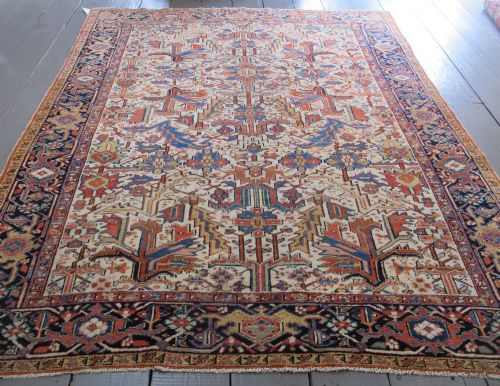

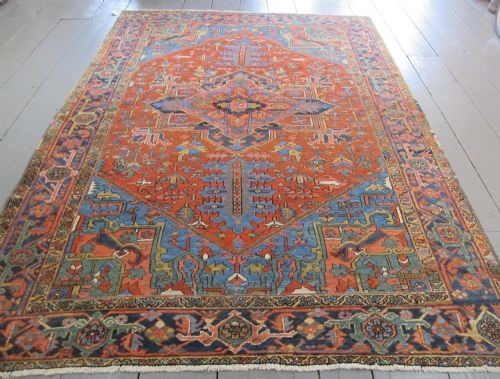
Large Terracotta Heriz Rug
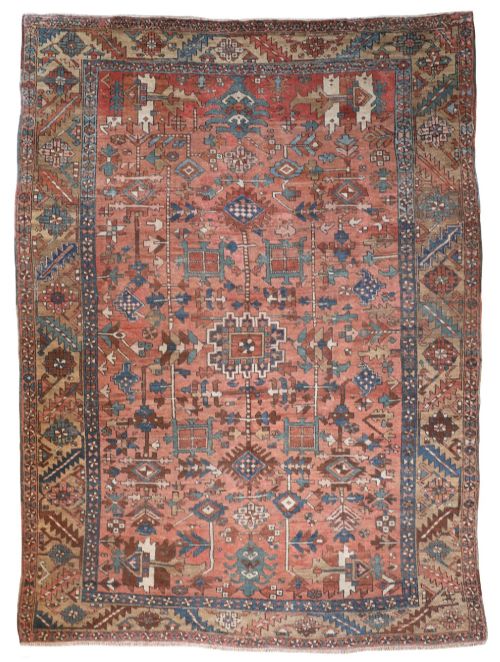
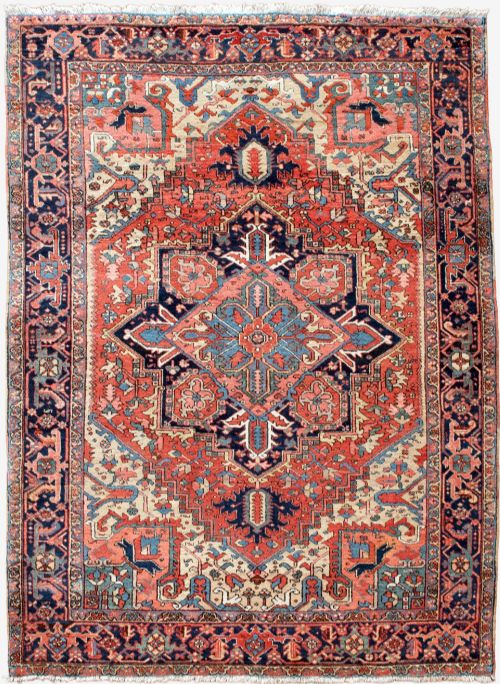
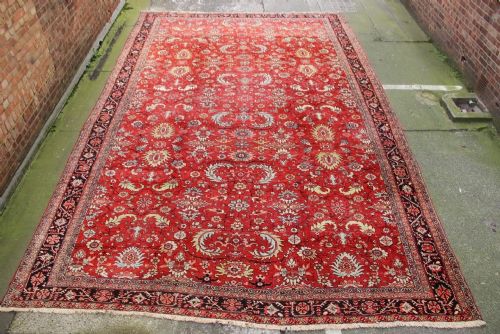
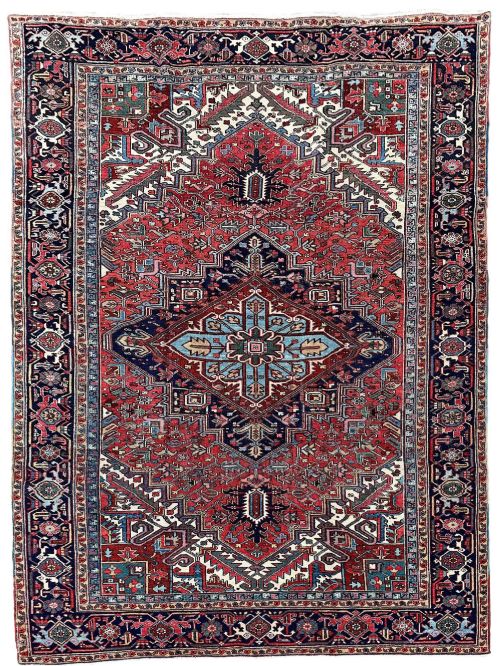
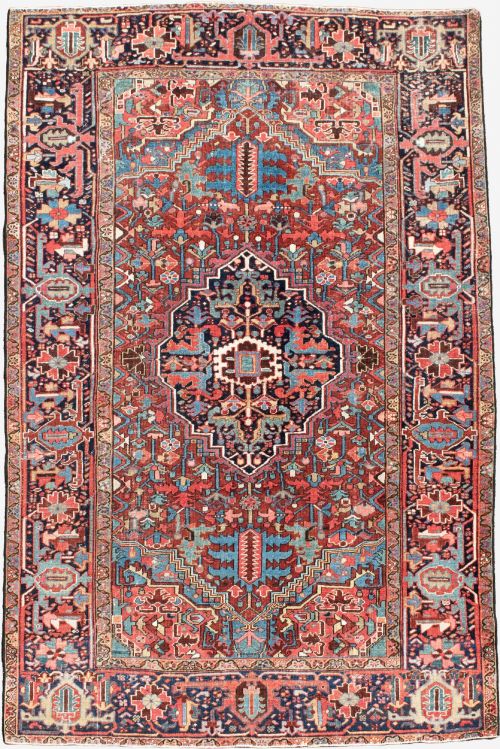
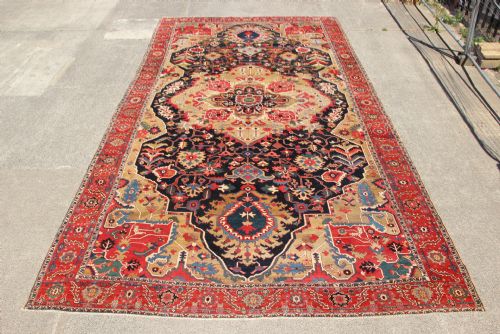
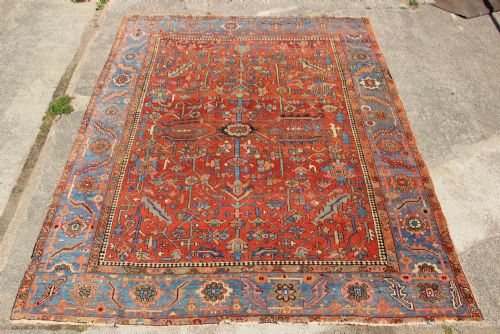
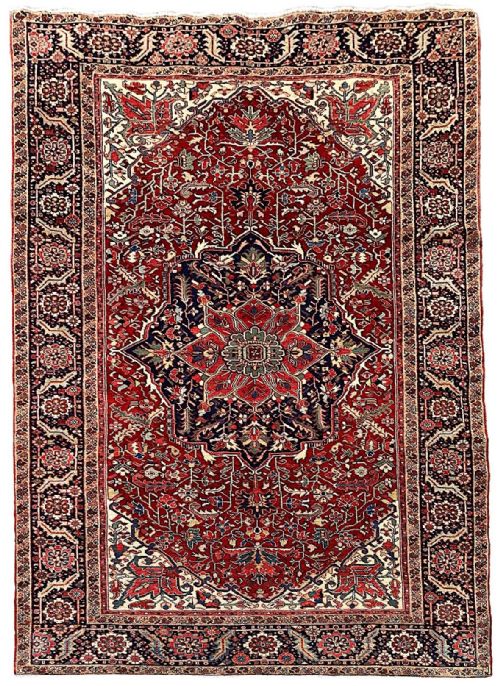
A large terracotta heriz rug anchors a grand room with geometric medallion work and robust wool construction.
Large Terracotta Heriz Rug
A large terracotta heriz rug is a room-sized floor covering originating from the towns and villages of North-West Persia. These carpets take their name from the region around Heriz, where weaving traditions produced distinct, large-scale geometric designs.
Buyers searching for this phrase encounter pieces dating from the mid-nineteenth century through the early twentieth century. The palette commonly centres on terracotta tones, balanced by contrasting shades in the borders and central fields.
Most examples found in these listings take the form of substantial area rugs and carpets, designed for substantial country houses and principal reception rooms. The aesthetic combines village weaving robustness with formal medallion compositions.
How these rugs were constructed
The foundation relies on sturdy cotton warps and wefts, providing the structural grid for heavy traffic. Artisans knot thick wool onto this cotton foundation by hand, creating a dense and resilient pile that endures for generations.
Dyers utilise natural materials to produce the characteristic terracotta ground colours and deep blues seen in the pile. The wool is spun by hand before dyeing, yielding subtle tonal variations across the expanse of the carpet.
Large Terracotta Heriz Rug Retail Price Guide 2026
Typical asking prices for large terracotta heriz rug among the pieces listed under this phrase on Sellingantiques today, from the lower quarter to the upper quarter. They describe what is for sale here now, not the wider market.
Listings span production dates from eighteen-fifty through nineteen-thirty, utilising traditional wool and cotton materials.
What separates examples
Knot density and fineness of drawing set the standard for quality across these carpets. Tighter knotting allows for sharper delineation in the geometric medallions and angular vine scrolls.
The harmony and saturation of the terracotta ground dictate visual impact. Superior pieces display thoughtful colour placement and balanced abrashe, where natural dye batches shift subtly across the field.
The Large Terracotta Heriz Rug Glossary
- Medallion
- The large central ornamental motif dominating the field of the rug. It anchors the geometric symmetry characteristic of Persian village weaving.
- Abrashe
- Variations in shade caused by changes in dye lots during production. This tonal variation adds depth and authenticity to the terracotta ground.
- Warps
- The vertical threads stretched tightly on the loom that form the skeletal foundation. Cotton is standard in this regional group.
- Wefts
- The horizontal threads passed alternately over and under the warp threads to secure the knots. They bind the structure together row by row.
- Pile
- The upright cut ends of the knotted wool yarn that form the wearable surface. Its thickness contributes to the substantial weight of the carpet.
Large Terracotta Heriz Rug: Frequently Asked Questions
Where were these carpets made?
These rugs originate from the mountainous North-West region of Persia, centred around the town of Heriz and surrounding villages. Local workshops adapted classic curvilinear designs into robust geometric interpretations suitable for heavy domestic use.
The weavers utilised locally sourced materials, combining durable wool from mountain flocks with sturdy cotton foundations. This geographic isolation helped maintain a distinct regional style that persisted across decades of production.
How do I date an antique Heriz?
Dating relies on examining the palette, wool quality, and structural characteristics visible on the reverse. Pieces from the nineteenth century often display softer terracotta dyes and finer knotting, whilst early twentieth-century examples tend toward bolder outlines and heavier cotton foundations.
Changes in chemical dye introduction towards the end of the nineteenth century also help demarcate periods. Comparing the secondary ornaments and border structures against documented examples narrows the decade of origin.
How do Serapi and Heriz differ?
Serapi rugs represent an earlier, finer subset of production from the same region, typically dating to the nineteenth century. They feature more open fields, finer knot counts, and a softer, more luminous terracotta and pale blue palette.
Standard Heriz carpets from later periods generally present bolder, denser geometric patterns with stronger contrast. Both share the same structural foundations and village weaving heritage, but the Serapi designation denotes greater age and refinement.
How do I care for a large carpet?
Protect the wool pile by placing the rug in areas with moderate foot traffic and avoiding direct, continuous sunlight. Regular gentle vacuuming without a beater bar removes trapped grit from the cotton foundation.
Rotate the carpet periodically to ensure even wear across the terracotta field. Professional cleaning by a specialist in antique textiles preserves the natural lanolin in the wool.