



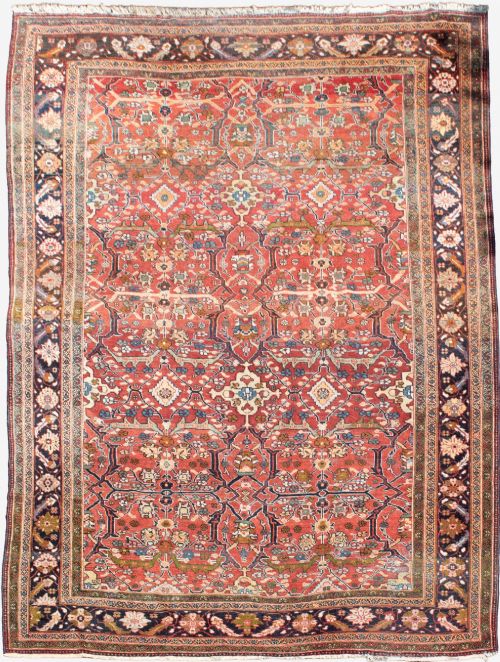
Large Terracotta Floor Rug
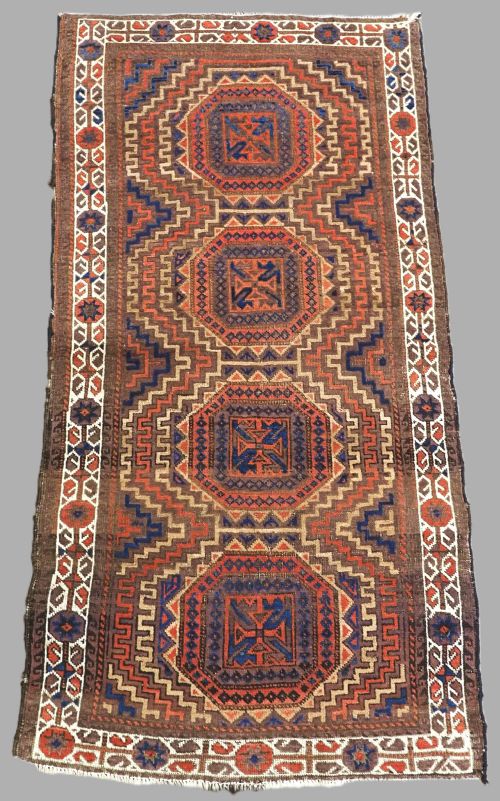
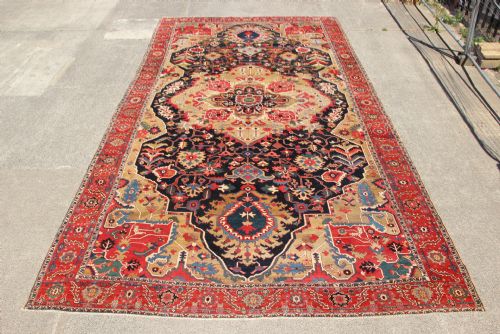
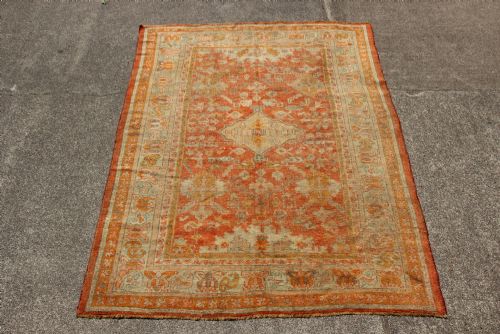
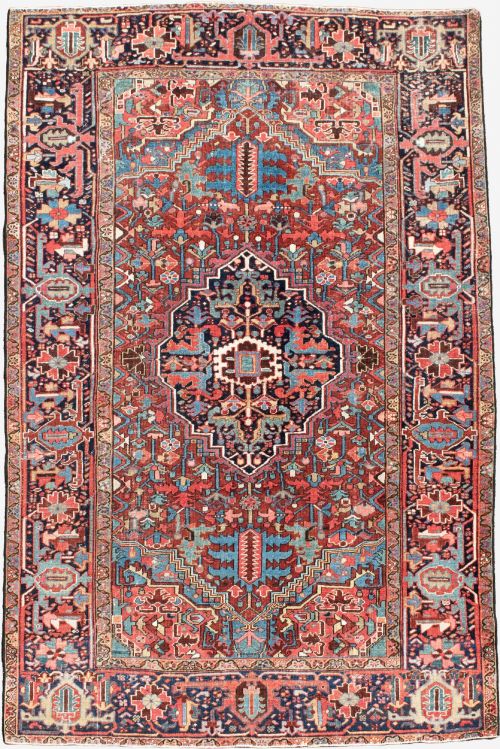
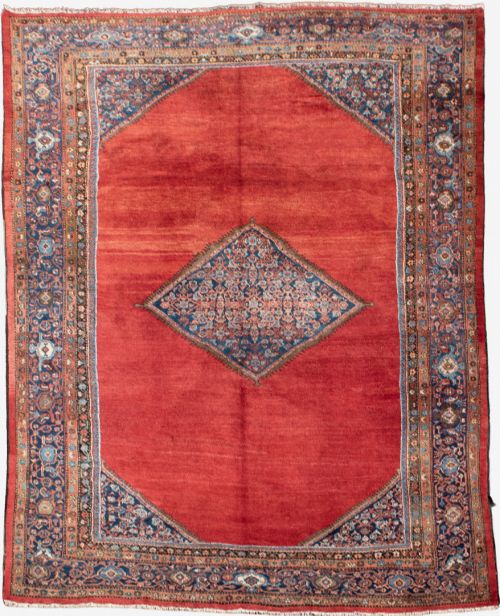
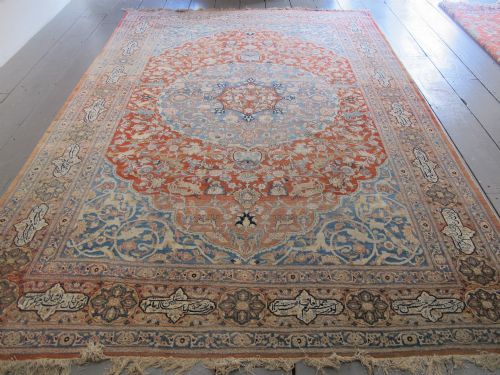
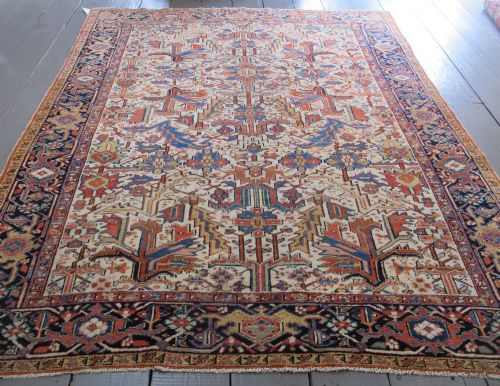
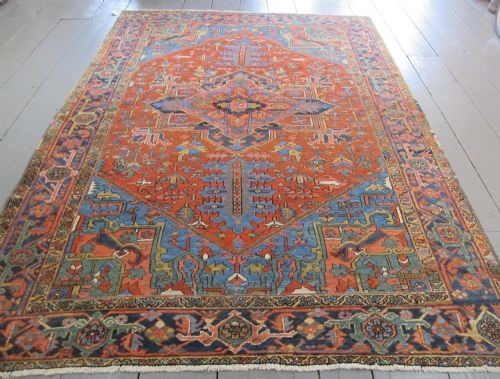
These large terracotta floor rug options bring substantial warmth and depth to a room through traditional Persian, Anatolian, and Turkmen designs.
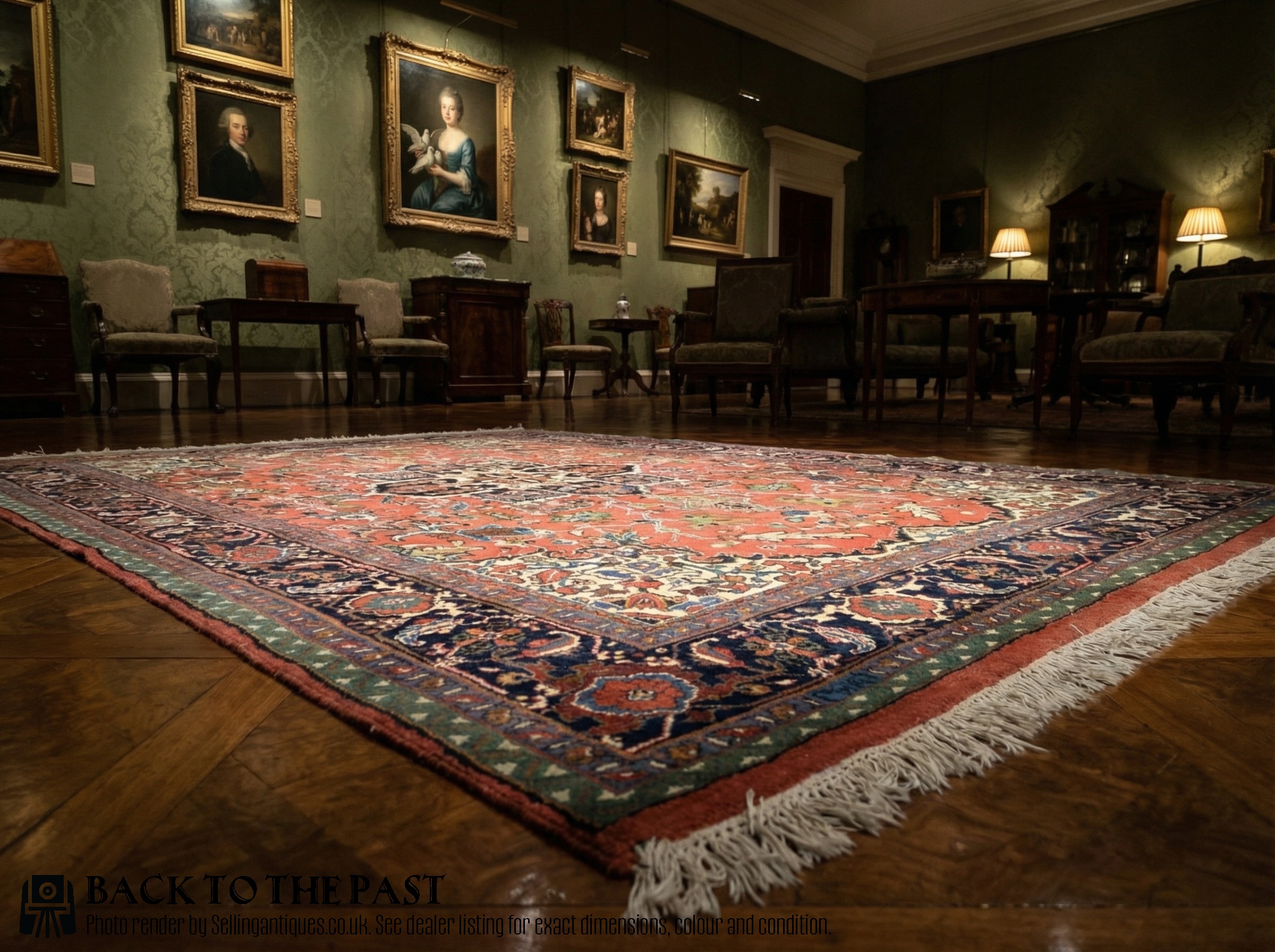
Large Terracotta Floor Rug
These floor coverings span various large dimensions, including grand room formats extending beyond six metres in length. Makers and weavers across regions such as North-West Persia, Ghiordes, and Sultanabad produced these pieces for substantial spaces, utilising distinct regional patterns like bold geometric medallions and intricate all-over floral designs.
What varies in quality
Quality differences stem from the fineness of the knotting and the complexity of the design execution, separating standard tribal output from exceptionally fine city workshop productions. Master weavers in centres like Tabriz or Serapi achieved greater precision in line and detail than local village makers.
The sophistication of the palette and the harmony of the dyes also distinguish superior examples. Carpets retaining vibrant, evenly saturated terracotta tones alongside crisp geometric or organic drawing sit at the upper end of the scale.
Listings span eight distinct decades of production, ranging from 1850 examples up to pieces created in 1930.
Haji Jalili·Benlian
The Large Terracotta Floor Rug Glossary
- Heriz
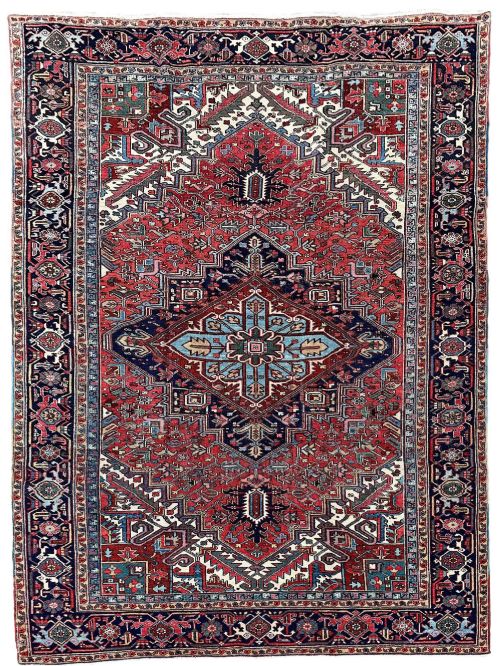
- A style of carpet originating from North-West Persia, known for bold geometric medallions and robust structural wool. These pieces often feature prominent terracotta fields.
- Oushak
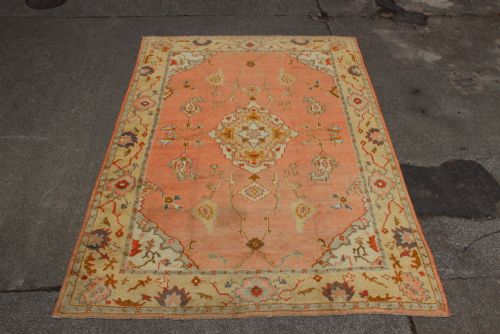
- A Turkish carpet type historically produced in Ushak, recognised by softer wools, muted or faded colour palettes, and large-scale floral patterns.
- Gul
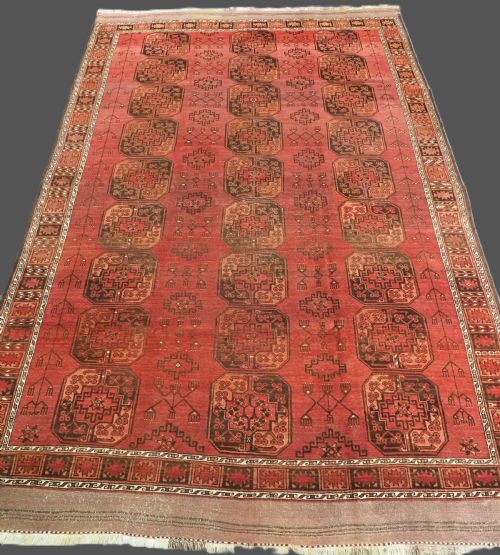
- A medallion or repeating floral motif utilised in Turkmen and Afghan tribal carpets, often arranged in structured rows across the field.
- Kelleh
- A specific long and narrow format of carpet traditionally suited to room dimensions requiring an elongated runner-like proportion.
Large Terracotta Floor Rug: Frequently Asked Questions
Where were these carpets originally made?
The pieces originate primarily from traditional weaving centres across Persia and Anatolia, including regions like Heriz, Tabriz, and Oushak. Local workshops and tribal groups produced them for domestic and international markets.
Production spans the mid-nineteenth century through to the early decades of the twentieth century, reflecting the distinct cultural motifs of each specific area.
How do I style a large room-sized carpet?
A large carpet anchors the furniture in a spacious reception room or dining area, providing a warm terracotta foundation for seating arrangements to rest upon. Keeping surrounding floorboards or walls neutral allows the traditional Persian or Anatolian patterns to stand out.
Ensure you measure the room thoroughly to leave an appropriate border of exposed flooring around the edges of the textile.
What materials are used in these rugs?
The pieces are constructed using natural wool and cotton fibres for both the pile and the foundational warp and weft threads. Wool provides the soft, resilient surface texture necessary for heavy floor traffic.
Cotton foundations offer structural stability and allow the dense knotting characteristic of Persian and Turkish carpet traditions to maintain its shape.
How can I tell different regional styles apart?
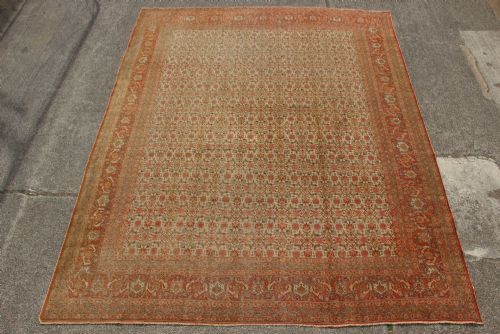
Regional styles reveal themselves through distinct drawing characteristics, such as the sharp geometric angles of Heriz and Serapi designs versus the softer, curvilinear floral forms of Tabriz and Oushak carpets. Palette choices also vary, with certain areas favouring terracotta grounds paired with ivory or deep blues.
Tribal pieces like those from Afghan or Turkmen makers display repeating guls and strong geometric borders unique to their nomadic heritage.