





Large Swing Mirror
A large swing mirror brings light and presence to a room, offering both practical reflection and a strong architectural anchor.
Large Swing Mirror
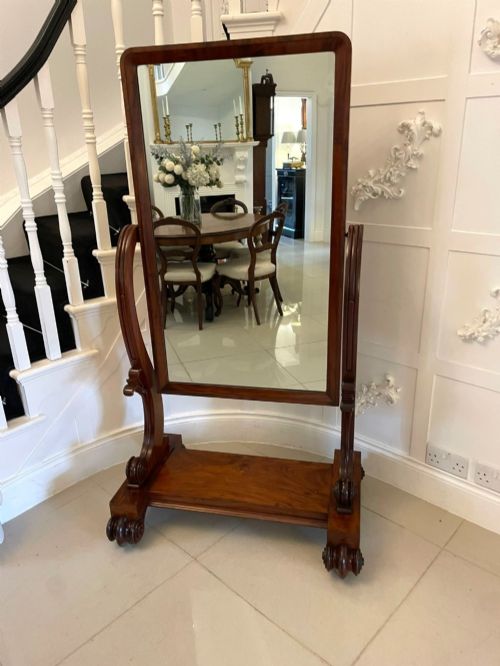
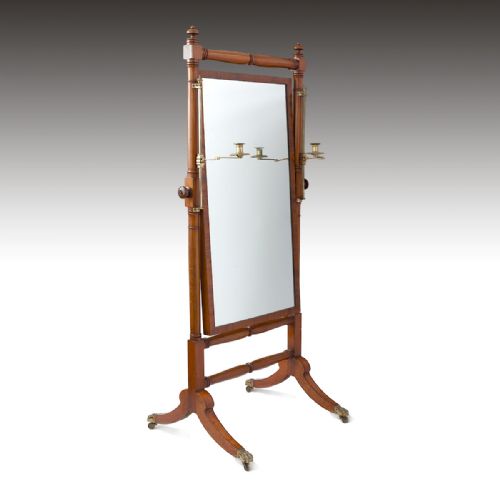
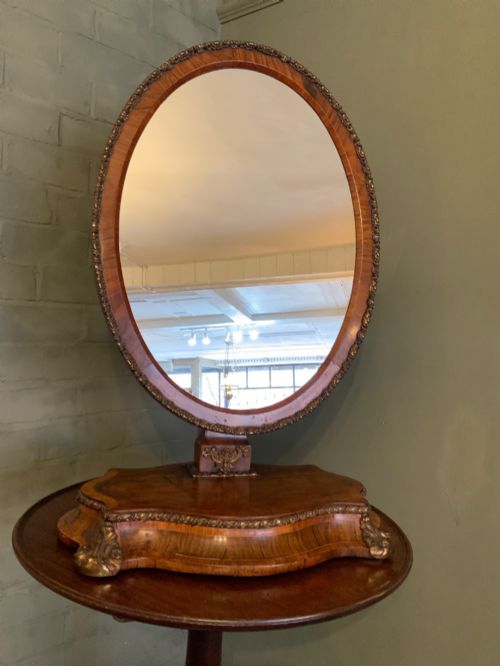
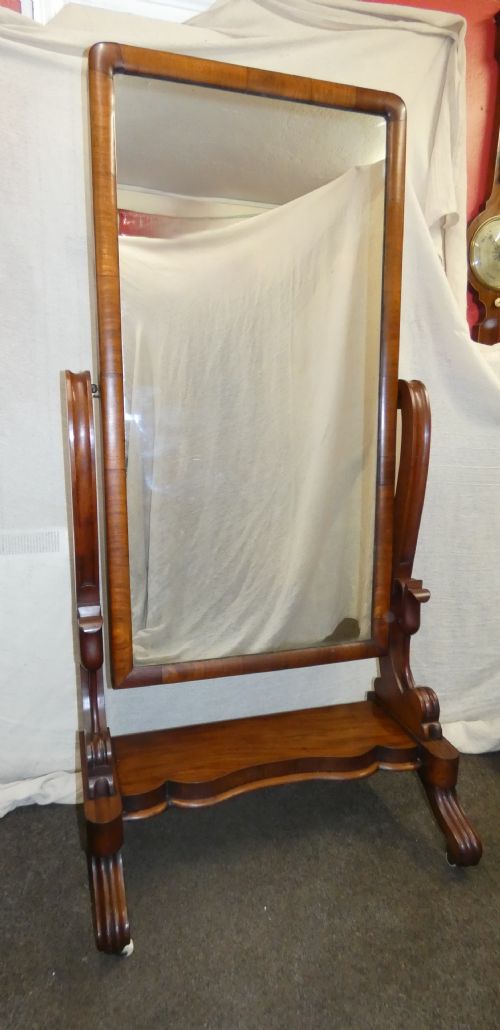
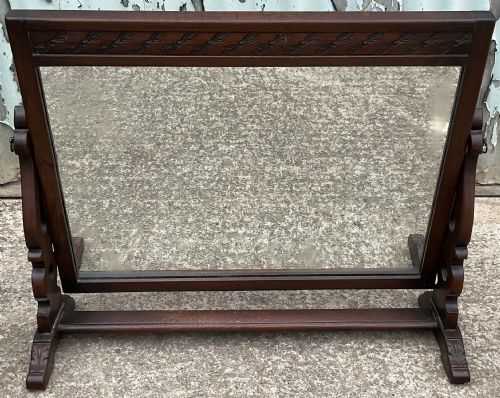
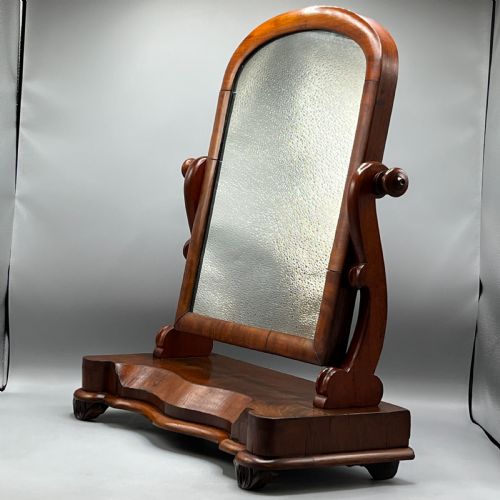
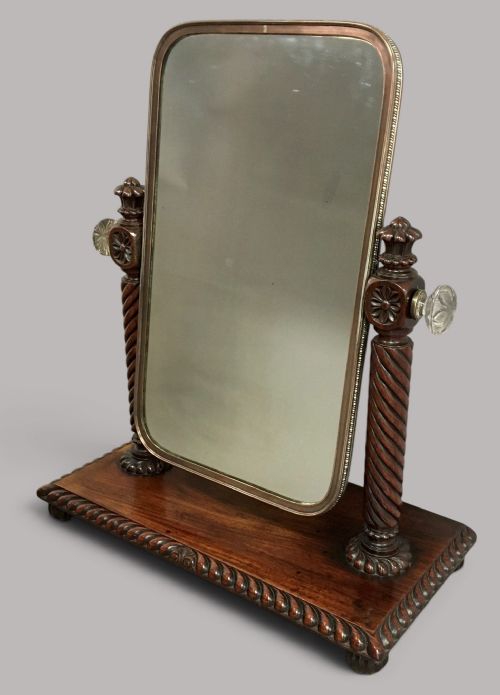
When you search for a large swing mirror, you encounter pieces designed to tilt within a fixed frame, spanning eras from the Georgian period through the Victorian age into the early twentieth century. These furnishings range from substantial floor-standing cheval mirrors to smaller dressing table and toilet mirrors meant for furniture tops.
How they were made
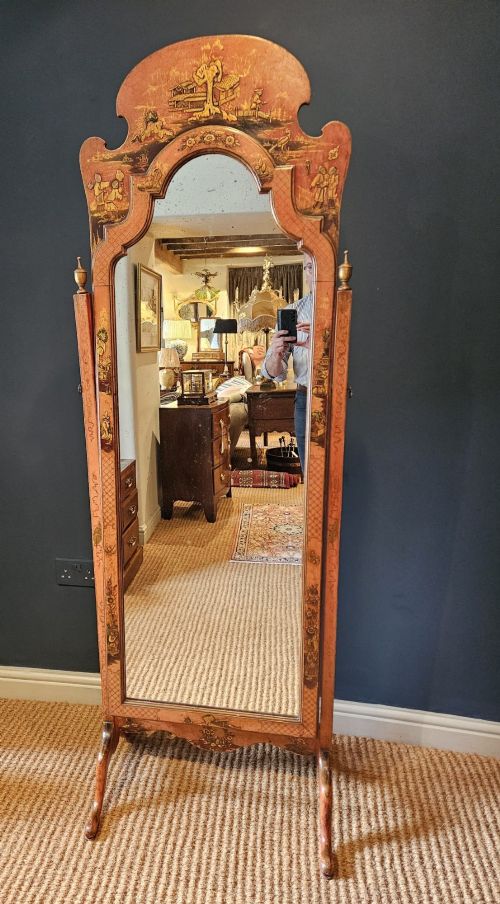
Cabinet makers utilised dense hardwoods such as mahogany, oak, walnut, and padouk, constructing sturdy frames capable of supporting heavy glass plates. Timber was frequently polished to a deep lustre, while specialist pieces incorporated decorative elements like ormolu mounts, gilt bronze, champlevé, and hand-painted Chinoiserie lacquered wood.
The tilting mechanism relied on brass pivots, screws, or adjustable side arms set into upright supports. This allowed the glass to angle freely while remaining securely balanced within its supporting structure.
Large Swing Mirror Retail Price Guide 2026
Typical asking prices for large swing mirror among the pieces listed under this phrase on Sellingantiques today, from the lower quarter to the upper quarter. They describe what is for sale here now, not the wider market.
The selection spans from compact table mirrors of the Georgian era to tall floor-standing cheval mirrors from the late Victorian and Edwardian periods.
What varies in quality
Quality rests in the selection of timber and the sophistication of the joinery, particularly where the uprights meet the base. Finer examples display carefully chosen wood grains, such as burr walnut or figured mahogany, alongside crisp mouldings and well-cast brass hardware.
The integrity of the frame construction and the weight of the supporting structure determine durability. Superior pieces maintain a balanced proportion between the pivoting glass plate and the robust chassis that holds it.
The Large Swing Mirror Glossary
- Cheval mirror
- A large floor-standing swing mirror designed to show the full figure. These tall pieces typically feature four legs or a heavy supportive frame.
- Toilet mirror
- A smaller swing mirror designed to sit on top of a dressing table or chest. They often incorporate small drawers in the base plinth.
- Ormolu
- Gilt bronze ornamentation applied to furniture and decorative objects. This technique creates a rich metallic contrast against dark woods like walnut and mahogany.
- Champlevé
- An enamelwork technique where recesses are carved into metal and filled with vitreous paste before firing. It appears on decorative frames from the late nineteenth century.
Large Swing Mirror: Frequently Asked Questions
Where should I place a large swing mirror?
Floor-standing cheval mirrors suit bedrooms, dressing rooms, and hallways where they can reflect natural light and provide a full-length view. Smaller table versions anchor the top of a chest of drawers or a heavy dressing table.
Position the piece opposite or adjacent to a window to bounce daylight deeper into the interior space.
How do the tilting mechanisms work?
Most designs use threaded brass screws or pivot pins set through the upright posts into the sides of the mirror frame. Tightening these fixings holds the glass at your preferred angle.
Older examples rely on balanced tension within the side arms, allowing smooth adjustment without slipping.
How do I tell a Georgian mirror from a Victorian one?
Georgian and Regency pieces tend to feature lighter timber grains, finer cockbeading around the glass, and elegant serpentine or bow-fronted drawer bases. Victorian examples often present heavier proportions, denser mahogany or pitch pine, and more robust turned supports.
Stylistic cues like Chinoiserie decoration or Arts and Crafts simplicity also point clearly toward specific nineteenth and twentieth-century decades.