

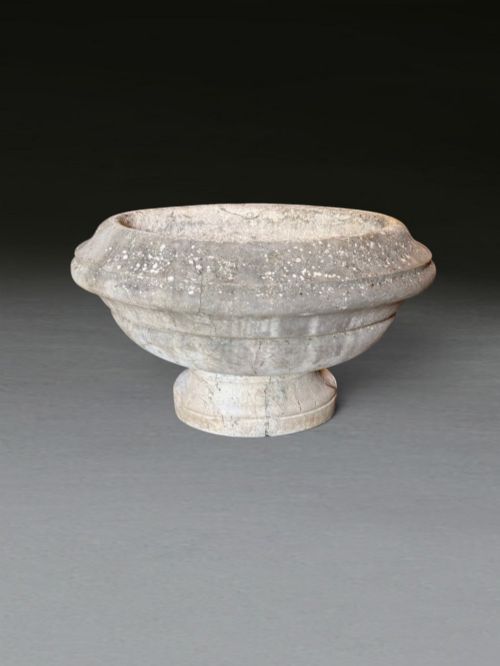
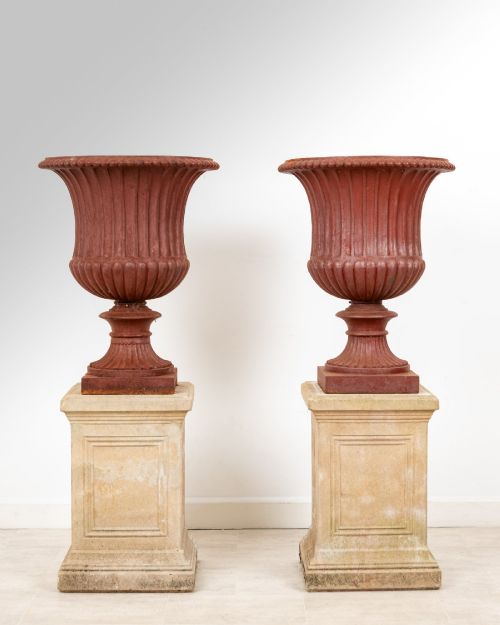


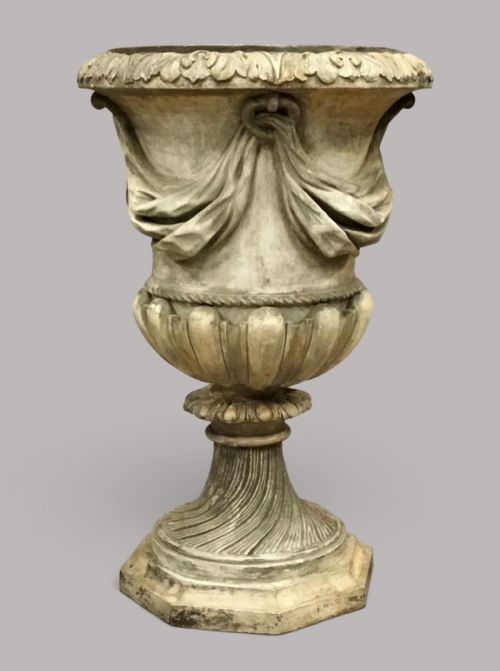


Large Stone Garden Planter
A large stone garden planter anchors a terrace with heavy presence, offering deep root space for substantial planting and enduring outdoors.
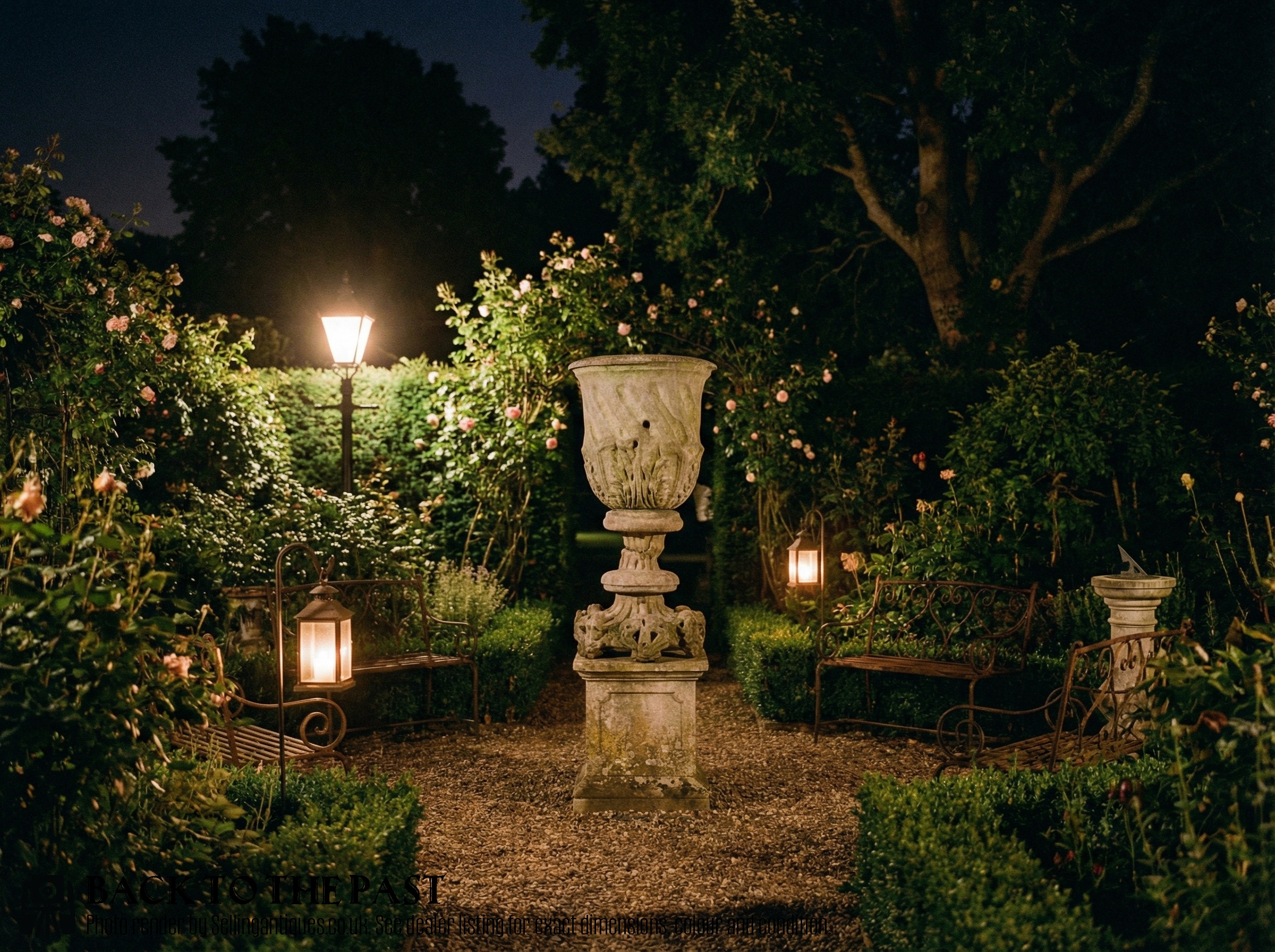
Large Stone Garden Planter
A large stone garden planter stands as a weighty focal point in yards and courtyards, taking the form of campana urns, square troughs, and grand seven-sided vessels. These substantial garden ornaments arrive most frequently from the nineteenth century, alongside eighteenth-century examples and twentieth-century interpretations.
Buyers encounter single vessels and matched pairs raised on stone pedestals or plinths. The forms span neoclassical urn shapes, rustic country vernacular pans, and classical revival designs shaped for formal gardens and terrace settings.
How they were made
Makers shaped these pieces from natural sandstone, marble, and quarried stone using manual carving techniques. Artisans also utilised cast stone, reconstituted stone, and concrete poured into moulds to achieve classical details.
Foundries produced robust examples in cast iron, while workshops also utilised composite materials and plaster for classical campana forms. Weathering occurs naturally across these surfaces through decades of exposure to the elements.
Large Stone Garden Planter Retail Price Guide 2026
Typical asking prices for large stone garden planter among the pieces listed under this phrase on Sellingantiques today, from the lower quarter to the upper quarter. They describe what is for sale here now, not the wider market.
Some seven-sided vessels turn up unexpectedly in the garden, offering a curious departure from standard round urns.
What varies in quality
Quality rests in the crispness of carved detail and the depth of natural weathering across the stone surface. Early hand-carved marble and sandstone vessels show superior definition in classical foliage and moulding compared to later moulded pieces.
Proportion and structural balance define the finer specimens, particularly where urns sit harmoniously upon matching pedestals. The integrity of the material determines how cleanly edges hold up after generations outdoors.
The Large Stone Garden Planter Glossary
- Campana urn
- A bell-shaped garden vessel with an everted rim, often mounted on a pedestal base. This classical silhouette originates from ancient metal and pottery prototypes.
- Plinth
- A heavy base or pedestal that elevates a garden urn above ground level. It provides architectural stability and presence to large planters.
- Reconstituted stone
- A durable material made from crushed natural stone aggregate mixed with a binder. It allows workshops to cast complex classical revival shapes.
- Trough
- A rectangular stone vessel traditionally utilised for agricultural or domestic holding. In gardens, these deep rectangular basins suit alpine and specimen planting.
- Weathering
- The natural surface patina and textural change acquired through prolonged exposure to weather. Collectors prize surfaces softened by age and lichen.
Large Stone Garden Planter: Frequently Asked Questions
How do I place a heavy stone planter?
Position these heavy vessels on firm, level ground or stone paving using lifting equipment where necessary. Their substantial weight requires stable foundations to prevent shifting once filled with soil.
Ensure the base makes contact evenly across the surface to distribute the immense load safely.
Can these planters stay outside in winter?
Natural stone and well-cured cast stone withstand winter weather reliably. Ensure drainage holes remain unblocked so that water does not freeze and expand inside the vessel.
Elevating planters slightly on pot feet prevents moisture absorption from frozen ground below.
How do I distinguish eighteenth-century stone?
Eighteenth-century pieces display hand-tooled chisel marks and softer, weathered contours shaped by prolonged atmospheric exposure. The mineral composition and hand-carved detailing set them apart from later cast reproductions.
Examine the underside and hidden surfaces for tool signatures left by period masons.
What plants suit large garden urns?
Deep campana urns and large troughs accommodate structural shrubs, small conifers, and trailing flowering plants. The generous soil volume maintains adequate moisture for established root systems.
Pair symmetrical urns with matching topiary specimens to frame doorways and terrace edges.