


Large Silver Tray Handles
Large silver tray handles define these substantial serving pieces, offering practical utility and period elegance for modern hospitality.
Large Silver Tray Handles
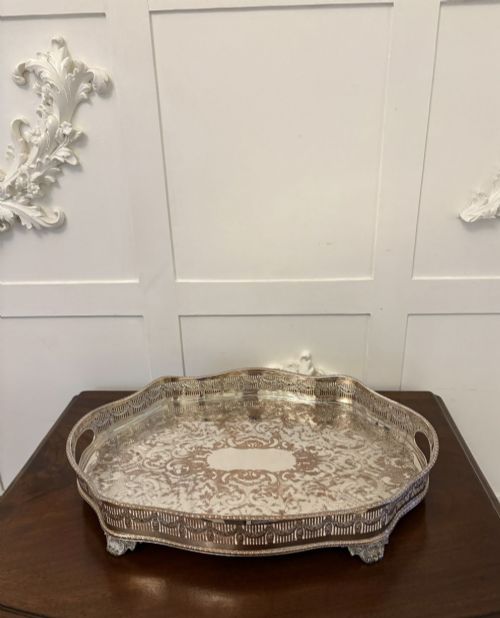
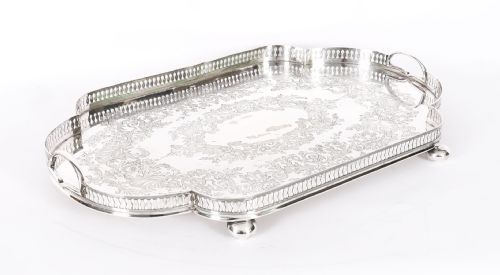
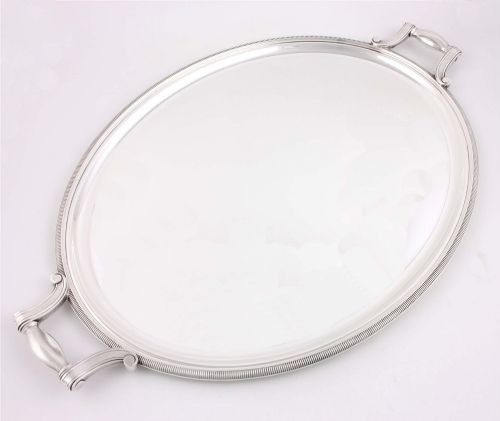
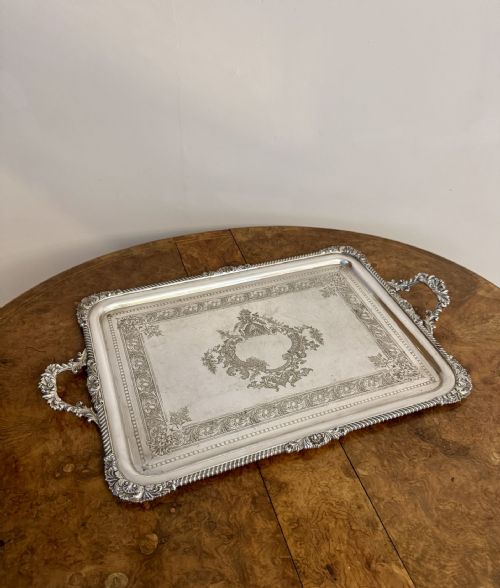
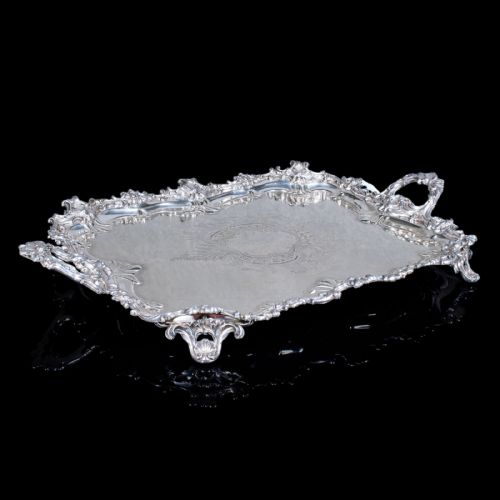
Large silver tray handles appear across Victorian, Edwardian, and mid-century designs, serving as robust grips for heavy hospitality and presentation ware. These pieces range from formal gallery trays with pierced brass or silver borders to wide oval platters intended for afternoon tea or cocktail service.
Most examples found here date from the nineteenth and early twentieth centuries, reflecting the high domestic standards of the period. Makers utilised durable base metals or copper beneath heavy silver plating, ensuring the structural integrity required to bear substantial weight.
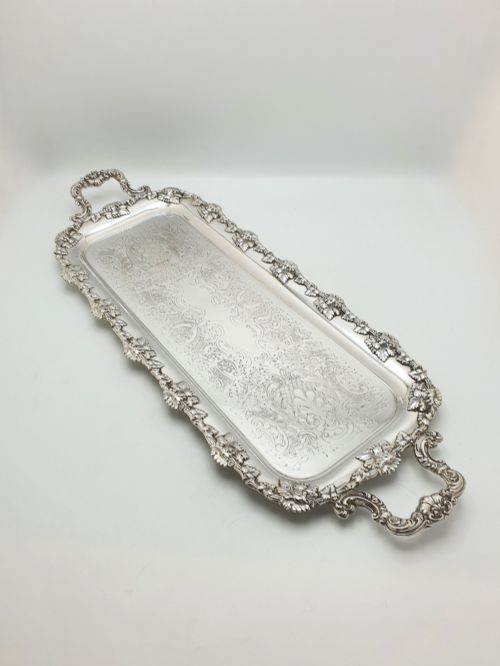
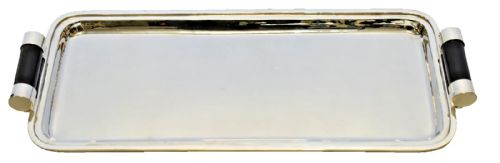
Forms vary from plain oblong serving surfaces to elaborately engraved trays featuring grapevine borders and integrated wooden bases. The handles themselves are frequently cast or applied separately, designed to withstand the physical demands of passing drinks and dishes.
Materials and Construction
Makers constructed these items using sterling silver, electroplated nickel silver, and older Sheffield plate over copper or base metal. Silver plate and EPNS provided a bright, resilient surface finish while keeping the considerable weight of a large tray manageable.
Workers applied decorative borders, handles, and feet using soldering and riveting techniques on heavy metal blanks. Many surfaces feature detailed hand-engraving, combining floral motifs and geometric patterns across the central field.
Listings feature Edwardian, Victorian, and mid-century periods alongside materials including copper, sterling silver, and wood.
Assessing Quality
Quality rests upon the thickness of the silver application and the rigidity of the core metal. Thicker plating resists wear through decades of polishing, while a rigid base prevents the tray from flexing under heavy loads.
The crispness of the chased or engraved ornament distinguishes standard production from superior workshop output. Well-cast handles securely integrated into the rim denote careful hand-assembly rather than mass-produced shortcut methods.
James Deakin·Christofle·Harrison Bros·Mappin & Webb·Hukin & Heath·Elkington & Co·Atkin Brothers·Barker Brothers
The Large Silver Tray Handles Glossary
- Sheffield Plate
- An early form of silver plating created by fusing a sheet of sterling silver to a copper ingot before rolling them together. This technique often reveals thin lines of underlying copper where the silver has worn away over generations of use.
- EPNS
- Electroplated nickel silver, a common base material developed in the nineteenth century for silver-plated wares. It provides a strong, silvery foundation that holds plating well.
- Gallery Tray
- A serving tray featuring an upright pierced or solid gallery wall around its perimeter. This raised edge prevents decanters and glasses from sliding off during transport.
- Salver
- A flat serving tray typically supported on small feet rather than resting flat on a surface. These pieces were traditionally used for presenting letters, calling cards, or drinks.
- Old Sheffield Plate
- An antique method predating electroplating, valued by collectors for its distinctive sandwich-metal construction. Items produced this way display genuine period craftsmanship.
Large Silver Tray Handles: Frequently Asked Questions
Are these trays suitable for daily use?
Most solid silver and heavy silver-plated trays withstand regular use for serving drinks or afternoon tea. Ensure you lift them properly using both handles to protect the soldered joints.
Avoid placing acidic foods directly on older plated surfaces for extended periods to prevent tarnishing.
What is the difference between EPNS and sterling silver?
Sterling silver consists of a solid precious metal alloy containing high purity silver throughout the entire piece. EPNS uses a base metal core coated with a thin layer of silver through an electrical process.
Solid silver pieces bear official hallmarking stamps indicating their metallic composition.
How can I tell the age of a tray?
Examine the style of engraving, the form of the handles, and any maker stamps or hallmarks present on the rim or underside. Edwardian and Victorian designs often incorporate distinct floral motifs or heavy cast borders.
Researching registered maker marks helps narrow down the production decade accurately.