



Large Serving Console
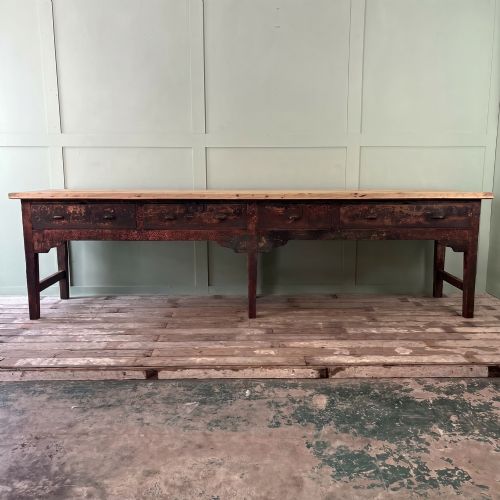
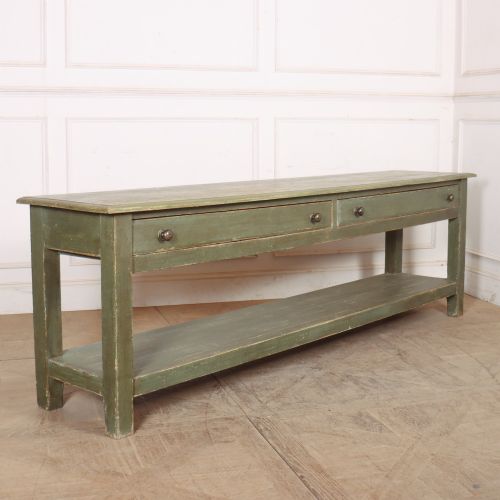
A large serving console anchors a dining room or hall, offering grand proportion and surface space derived from Georgian and Victorian centuries.
Large Serving Console
A large serving console brings substantial proportions to domestic spaces, drawing from a lineage of Georgian, Victorian, and nineteenth-century forms. These pieces often merge the functions of serving tables, sideboards, and console tables into singular, commanding furniture.
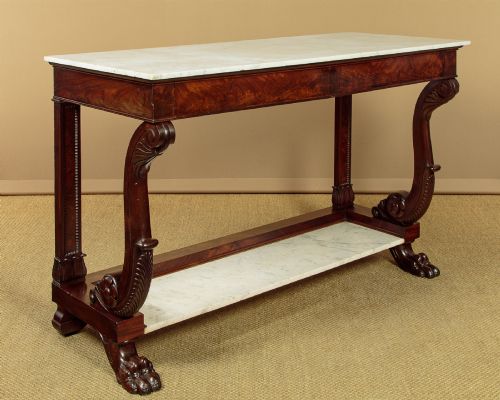
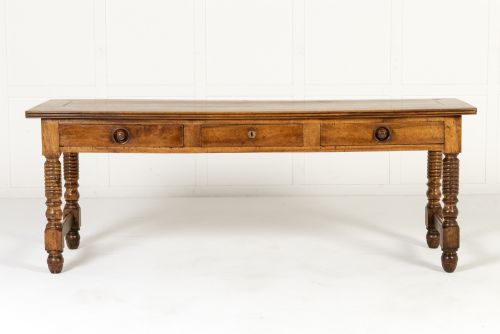
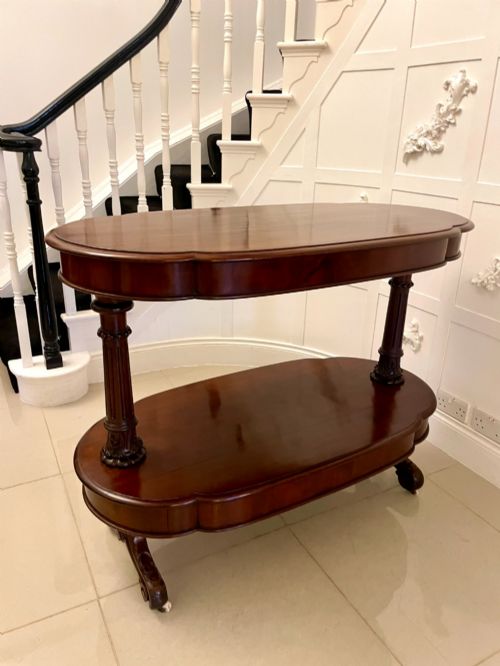
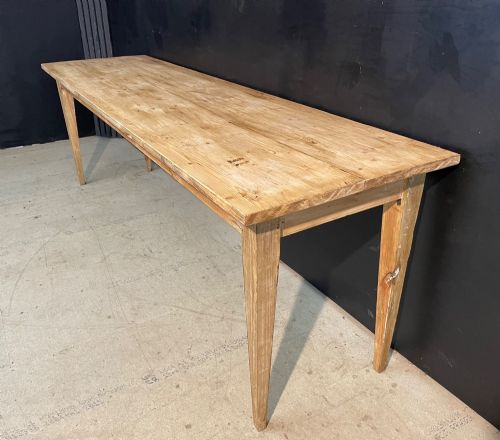
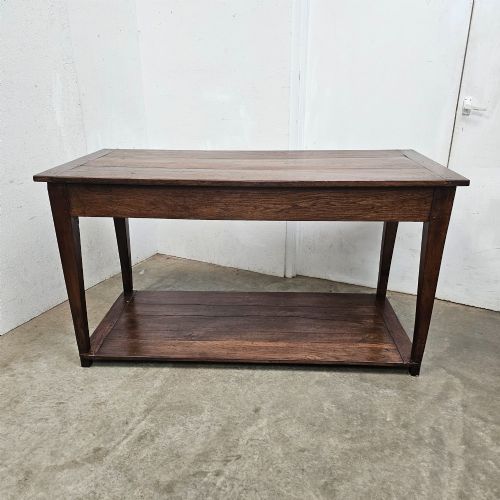
Buyers encounter numerous variations on this page, ranging from oak potboard tables and walnut drapers tables to flame mahogany and painted timber constructions. Origins span English country houses, Scottish workshops, and French provincial settings.
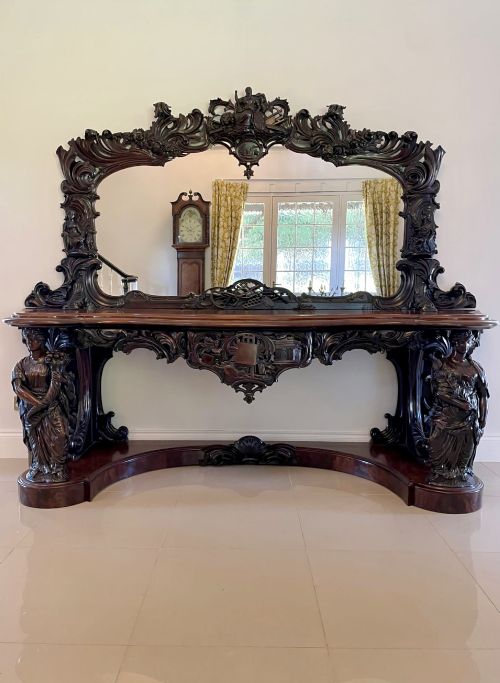
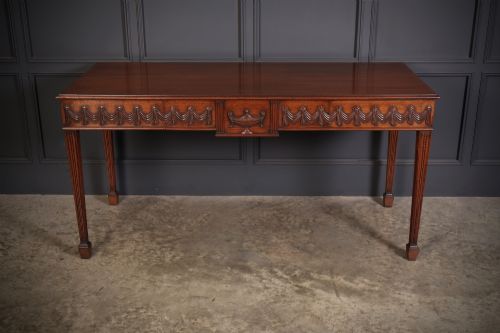
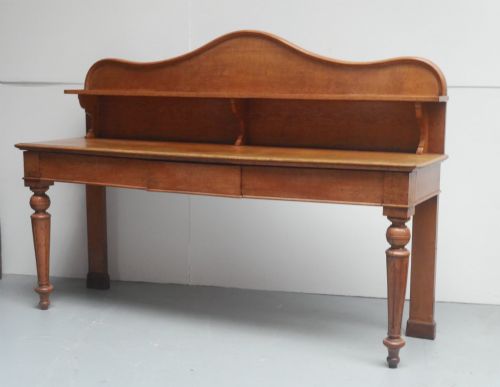
The prevalent forms include freestanding oval tables, mirror-backed exhibition pieces, and long rectangular servers designed to stand against walls in halls and dining rooms.
Quality and execution
Distinction in quality rests upon the selection of timber, such as highly figured flame mahogany or dense old-growth oak, paired with the depth and precision of hand carving. Exhibition-grade pieces display superior architectural ambition, including mirror backs and complex classical detailing.
Proportion and structural integrity dictate the standing of a piece, where balanced scale and original timber surfaces outweigh later alterations. Regional provenance and maker attribution elevate certain examples beyond standard utilitarian furniture.
Large Serving Console Retail Price Guide 2026
Typical asking prices for large serving console among the pieces listed under this phrase on Sellingantiques today, from the lower quarter to the upper quarter. They describe what is for sale here now, not the wider market.
Regional variants span English country potboard servers, Scottish oak tables, and French provincial drapers tables.
Whytock & Reid
The Large Serving Console Glossary
- Potboard
- An open lower shelf fitted to a serving table for storing pots and serving dishes. This traditional feature is frequently seen on English country furniture.
- Drapers table
- A long, utilitarian table originally used in textile shops, featuring a generous top and often multiple tiers. They are typically constructed from pine or oak.
- Flame mahogany
- Mahogany timber exhibiting a distinctive flickering grain pattern resembling flames. Cabinetmakers utilised this veneer on prominent surfaces for visual impact.
- Mirror back
- An upright wooden frame inset with a mirror plate attached to the rear of a console table. These elements amplify light and reflect the room.
- Console table
- A table designed to be fixed or placed flat against a wall, frequently supported by ornate legs or brackets. They originated in seventeenth-century France.
Large Serving Console: Frequently Asked Questions
Where should I place a large serving console?
These pieces traditionally anchor dining rooms, long hallways, or entrance spaces where surface area and scale are required. Their depth demands a wall with sufficient clearance to maintain room flow.
In contemporary interiors, they function effectively as sideboards for serving food during gatherings or as display surfaces in wide corridors.
How do I care for antique timber surfaces?
Maintenance involves regular dusting with a soft, dry cloth and the occasional application of appropriate beeswax to nourish the wood. Avoid placing timber furniture in direct sunlight or near heat sources to prevent splitting.
Protect finished surfaces from moisture and heat by using coasters or mats during daily use.
What is the difference between a serving table and a console?
Serving tables were traditionally built sturdy and deep to hold heavy platters and dishes during meals in large dining spaces. Consoles were primarily designed as decorative architectural wall tables for display.
Over time, the terms merged as makers combined functional serving surfaces with the wall-abutting format of the console.
Can I use a drapers table for dining?
Drapers tables provide generous surface area and sturdy timber construction, making them suitable for casual dining or kitchen work. Their narrow profile allows comfortable seating along the sides.
Buyers often select pine or oak drapers tables specifically for their relaxed aesthetic in informal dining spaces.