





Large Red Kilim
A large red kilim brings warmth and geometric rhythm to a room through flatwoven wool and cotton.
Large Red Kilim
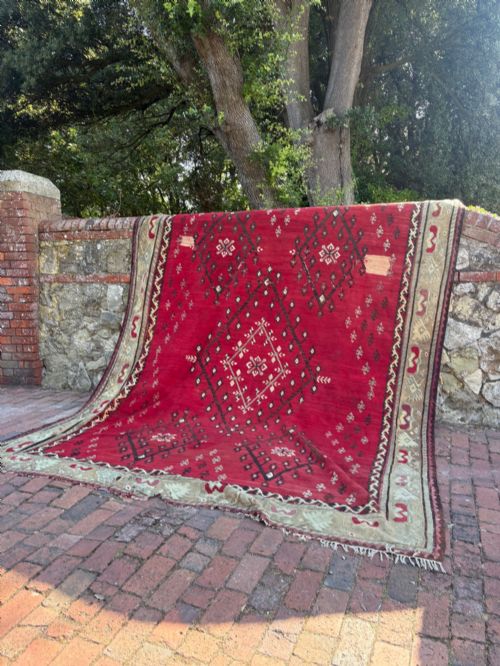
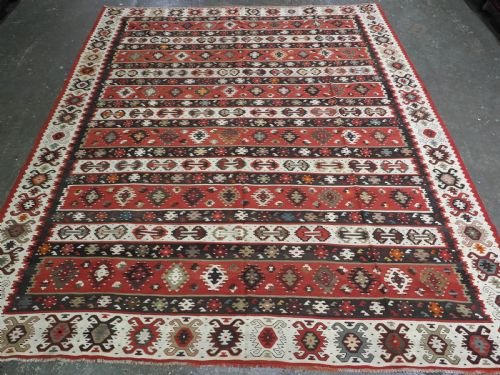
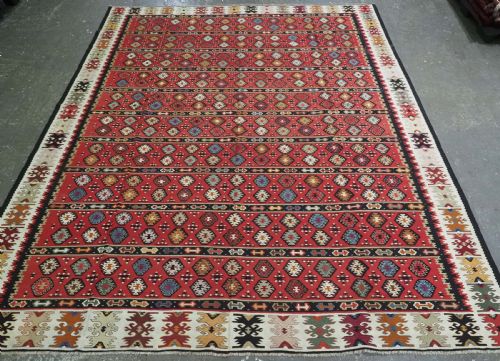
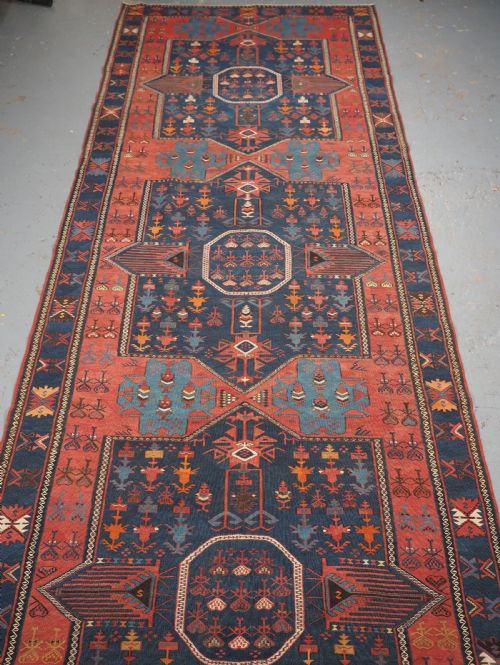
A large red kilim is a flatwoven textile created across regions such as Anatolia, the Caucasus, and the Balkans during the late nineteenth and early twentieth centuries. These floor coverings and room-sized carpets serve both practical and decorative functions in domestic spaces. The pieces seen here span from the 1880s to the 1920s, showing regional variations in pattern and weaving structure.
Most examples on this page date from the 1920s and include regional types such as Pirot, Sharkoy, and Turkish flatweaves. The formats range from large area rugs to two-part carpets joined together for expansive rooms. They bring traditional motifs, repeat medallions, and banded designs into modern interiors.
What varies in quality
The standard of a flatweave depends on the tightness of the weave and the precision of the geometric design. Tenser packing of the weft threads creates a more durable structure that lies flat on the floor. Finer regional examples display cleaner lines in repeat medallions and shield motifs.
Condition and integrity also influence the standing of an individual piece. Retained original dimensions and balanced dye saturation separate superior examples from those with heavy fading or extensive later repairs. The clarity of the traditional motifs remains a key indicator of skilled manufacture.
Some weavers cleverly hid tiny geometric signatures within the borders, leaving small playful markers for anyone patient enough to scan the entire edge.
The Large Red Kilim Glossary
- Kilim
- A flatwoven textile produced without a pile by tightly packing weft threads over warps. This technique creates a lightweight carpet suitable for floors or wall hanging.
- Flatweave
- A method of weaving where the surface is formed entirely by the warp and weft threads without knotted tufts. It results in a smooth, reversible fabric.
- Warp
- The vertical foundation threads stretched lengthwise on the loom before weaving begins. Wool or cotton is commonly utilised for this structural grid.
- Weft
- The horizontal threads passed through the warp to build the pattern and colour. These visible threads define the visual character of the textile.
- Medallion
- A central decorative motif placed symmetrically within the field of the carpet. Repeat versions feature frequently in Balkan and Anatolian designs.
Large Red Kilim: Frequently Asked Questions
How do I clean a kilim?
Gentle surface brushing and careful vacuuming without a beater bar remove loose dust from the flatwoven surface. Professional textile cleaning is recommended for deeper maintenance.
Water washing can affect natural dyes if not handled by a specialist. Regular rotation prevents uneven wear in high-traffic areas.
Where were these rugs made?
The pieces originate from traditional weaving centres across Anatolia, the Caucasus, Central Asia, and the Balkans. Specific regions include Pirot, Sharkoy, and various districts in Turkey and Afghanistan.
Local tribal groups and village workshops developed distinct colour palettes and geometric repertoires. These geographic origins dictate the specific style of flatweave.
Can I use a kilim on the floor?
These textiles function effectively as floor coverings in living rooms, dining areas, and hallways. A suitable rug underlay helps keep the flatweave stable and prevents slipping.
Their lack of a pile makes them easy to place beneath furniture. High-traffic placement benefits from sturdy wool construction and sound structural integrity.
What is a two-part kilim?
A two-part kilim consists of two separate long narrow panels woven independently and then stitched together lengthwise. This technique allowed weavers on standard narrow looms to produce large room-sized carpets.
The join is integrated carefully into the overall pattern so the design remains balanced. Afghan and Turkish workshops frequently utilised this construction method for expansive formats.