






Large Red Kilim Rug
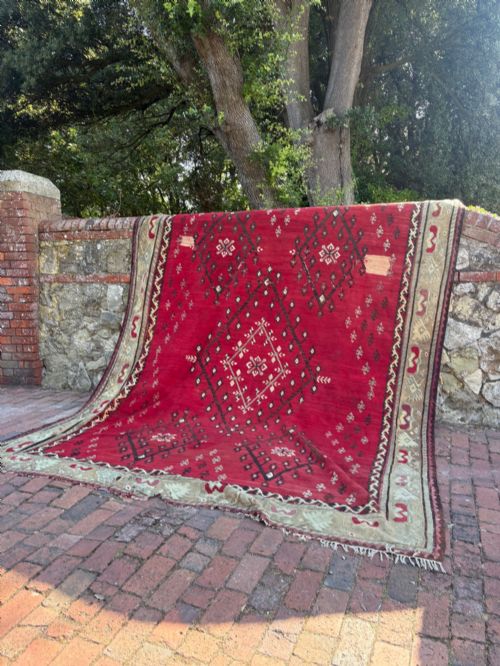
A large red kilim rug brings graphic geometric punch and flatweave history into a room, offering durability underfoot.
Large Red Kilim Rug
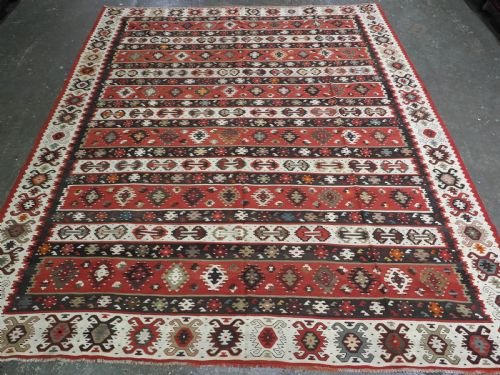
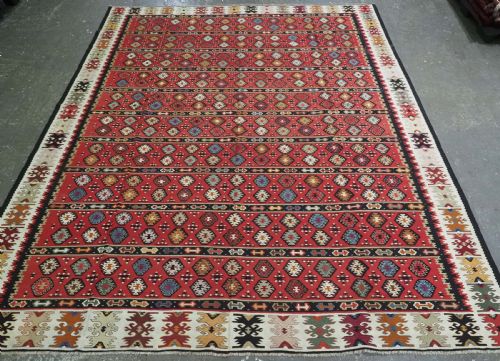
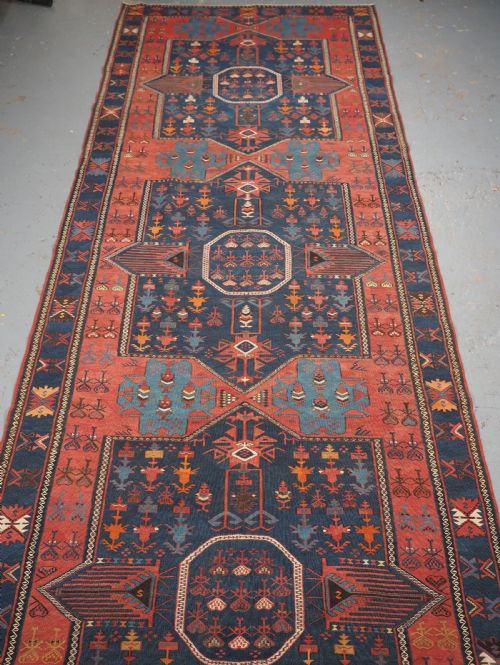
When you search for a large red kilim rug, you encounter flatwoven floor coverings originating from tribal and regional weaving centres across Anatolia, the Caucasus, the Balkans, and Central Asia. These textiles arrive in formats such as room-size carpets and expansive runner proportions, dating from the late nineteenth century through the decades up to nineteen-twenty.
The pieces on this page span distinct regional traditions including Pirot or Sarkoy, Bessarabian, and Anatolian tribal workshops. Each region contributes specific design vocabularies, ranging from banded patterns and repeat medallions to shield motifs executed on a prominent red ground.
How they were made
Weavers constructed these flatweaves using wool for the visible warp and weft designs, often supported by cotton foundations in specific regional types. The slit-weave technique creates sharp geometric boundaries where different colour blocks meet, preventing structural weakness along the vertical axes.
Natural and early aniline dyes yielded the saturated red tones that define these textiles, derived from local plant and insect sources. The handling of these dyestuffs results in subtle abrash, where shade variations occur naturally across the expanse of the weave.
What varies in quality
The visual impact of the design and the precision of the geometric repeat separate standard examples from finer works. Master weavers achieved tight, consistent tension across expansive dimensions, maintaining straight edges and balanced proportions without distortion.
State of preservation and the integrity of the original flatweave structure dictate the standing of each piece. Surviving examples retain their wool pile-free crispness and original length, while historical repairs reflect the functional life of the textile.
The Large Red Kilim Rug Glossary
- Kilim
- A flatwoven carpet or rug produced without a pile by tightly interweaving warp and weft strands. This construction method yields a lightweight textile suitable for both floor placement and wall hanging.
- Abrash
- Natural variations of colour within a single field of dye, caused by batch differences in wool preparation. This tonal shift adds depth and authenticity to antique tribal flatweaves.
- Warp
- The stationary vertical threads stretched onto a loom before weaving begins. In these flatweaves, the warp often frames the ends as visible fringes.
- Weft
- The horizontal threads passed back and forth through the warp to create the pattern. Tightly beaten wefts form the dense, durable fabric of the rug.
- Anatolian
- Pertaining to the historic region of Asia Minor, now modern Turkey. Weavings from this area frequently utilise bold tribal motifs and earthy red palettes.
Large Red Kilim Rug: Frequently Asked Questions
How do I clean a kilim rug?
Gentle surface brushing and professional specialist cleaning maintain the wool fibres without damaging the flatweave structure. Avoid excessive water immersion or harsh mechanical agitation.
Regular rotation prevents uneven sun exposure and balances wear patterns across high-traffic areas of the floor.
Are these rugs suitable for high traffic?
The dense flatweave construction provides robust durability for daily use in living spaces and dining rooms. The lack of a pile prevents crushing under furniture legs.
Placing an appropriate underlay beneath the textile prevents slipping and reduces friction against hard flooring surfaces.
How do I identify a Pirot kilim?
Pirot and Sarkoy pieces originate from the Balkan region, displaying refined banded arrangements and precise geometric repeat designs. Their aesthetic bridges European neoclassical tastes with traditional Balkan weaving methods.
These flatweaves frequently showcase pastel colour accents alongside deep red grounds, executed with exceptional fineness.
What is a two-part kilim?
Certain large-format rugs were woven in two separate narrow panels and subsequently stitched together down the centre to achieve room proportions. This technique allowed nomadic or regional weavers to produce expansive floor coverings on standard-width portable looms.
Expert joining ensures the pattern aligns seamlessly across the central seam, maintaining visual continuity.