






1920s Balkan Kilim
A 1920s balkan kilim brings bold folk geometry and warmth to a floor, woven with the flat-weave traditions of the region.
1920s Balkan Kilim
When you search for a 1920s balkan kilim, you encounter flat-woven floor coverings rooted in traditional Balkan, Ottoman Balkan, and traditional Turkish aesthetics. These pieces carry distinctive regional patterns that reflect local folk art traditions from the period.
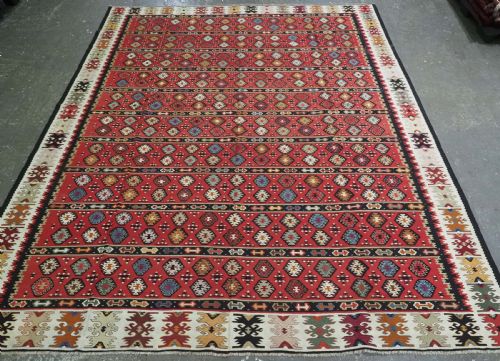
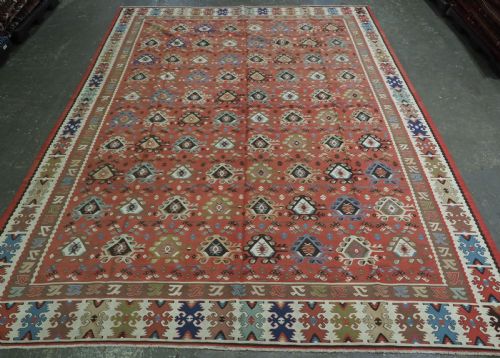
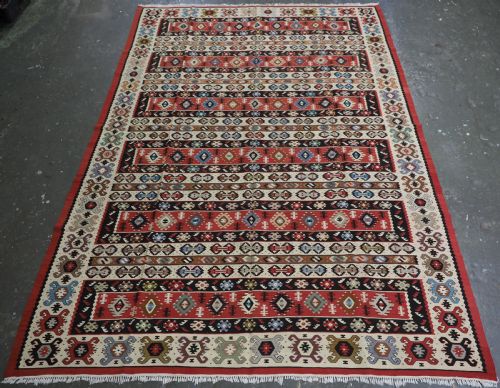
The pieces available on this page exclusively date to the 1920 period, showcasing classic, repeat medallion, banded, flowering tree, and lattice designs. Such rugs often arrive in large room sizes alongside standard area rug formats.
Makers utilised traditional design motifs passed down through generations, creating distinct tribal and folk layouts. Each rug serves as a practical textile that grounds a room with historic character.
Assessing quality in these flat-weaves
Quality in a 1920s balkan kilim rests upon the crispness of the woven design and the harmony of the wool palette. Finer examples display intricate banded, lattice, or flowering tree layouts with precise geometric control.
The distinction between standard and superior pieces also involves the preservation of the wool and the vibrancy of the dyes. Well-preserved condition and balanced colour distribution elevate the presence of any large size rug.
Woven entirely during the roaring twenties, these rugs quietly missed the jazz age to remain stubbornly traditional.
The 1920s Balkan Kilim Glossary
- Kilim
- A flat-woven rug or carpet produced without a pile by tightly interlacing warp and weft threads.
- Pirot
- A historic centre of rug weaving located in the Balkans, known for distinctive traditional flat-weaves.
- Sarkoy
- A designation often associated with specific Balkan and Ottoman flat-woven kilim traditions.
- Banded design
- A decorative layout organised in horizontal stripes or bands across the field of the rug.
- Repeat medallion
- A patterned arrangement featuring symmetrical geometric motifs repeated at regular intervals.
1920s Balkan Kilim: Frequently Asked Questions
How do I clean a wool kilim?
Gentle surface brushing and regular light vacuuming without a rotating brush help maintain wool flat-weaves.
Professional textile cleaners experienced with antique flat-weaves should handle deeper washing to protect the fibres.
Are these rugs suitable for high traffic?
Flat-woven wool rugs handle normal foot traffic well in living spaces and studies.
Using a quality underlay prevents slipping and cushions the weave against hard flooring.
What defines a Pirot or Sarkoy piece?
These designations point to regional weaving traditions of the Balkans and former Ottoman territories.
They share specific geometric vocabularies and flat-weave construction methods unique to those towns.
How do I identify a 1920s piece?
Dating relies on stylistic markers, wool preparation, and traditional regional design structures characteristic of that decade.
Comparing motif arrangements against documented examples helps confirm the production period.