


Large Prep Table
A large prep table provides serious surface area and rugged utility, anchoring a kitchen with honest working character.
Large Prep Table
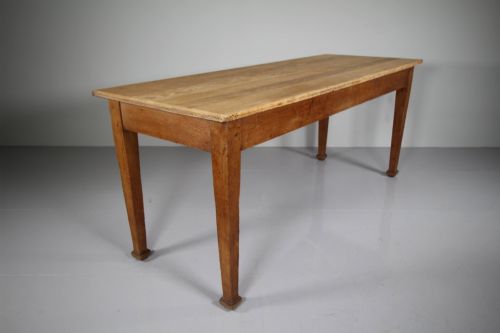
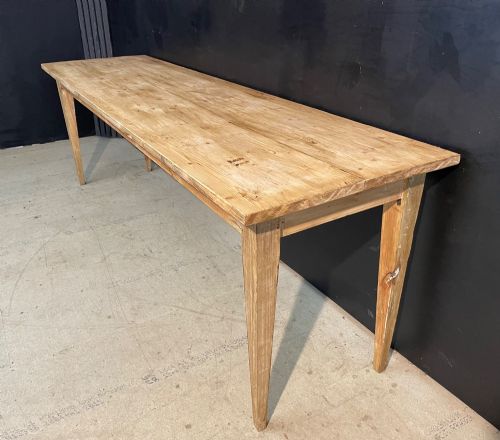
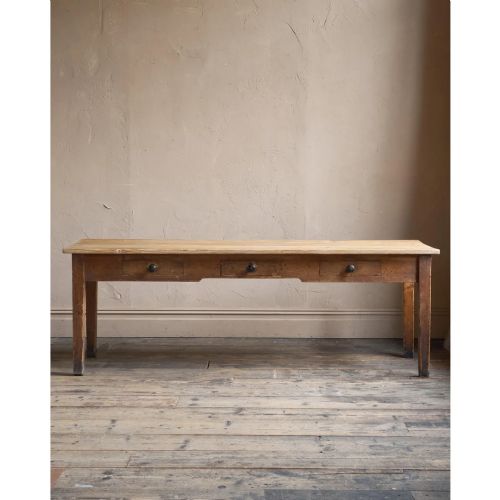
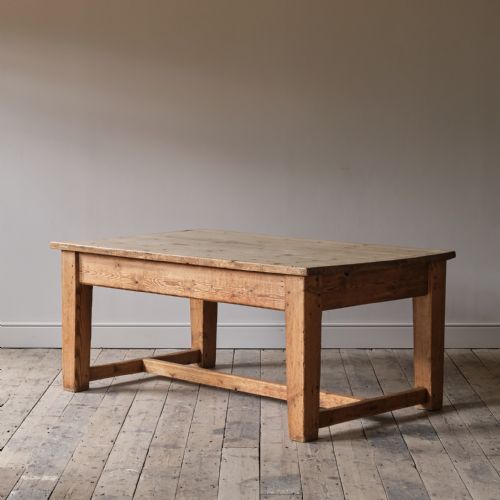
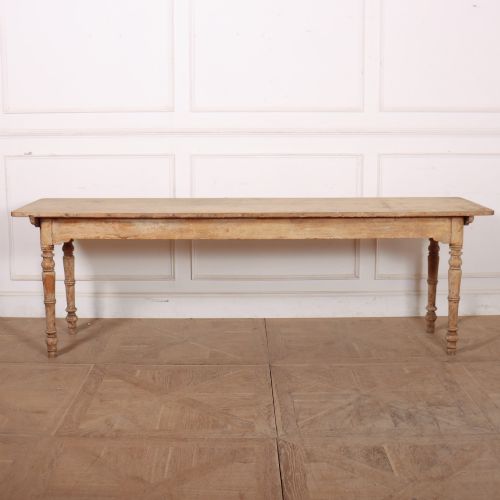
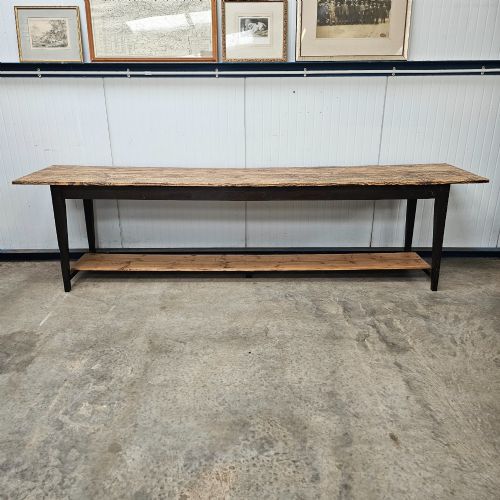
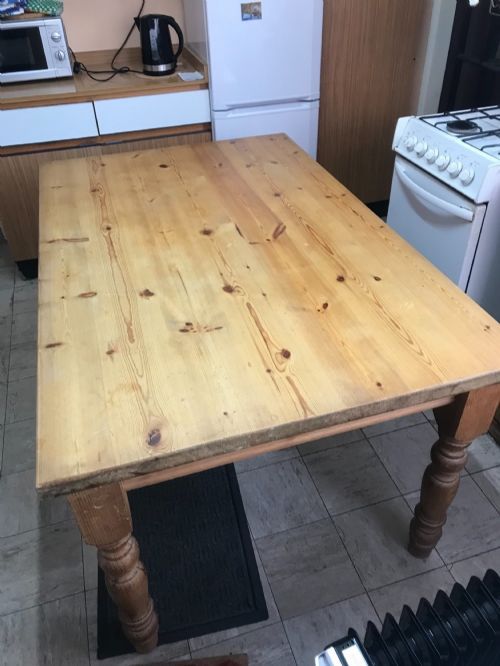
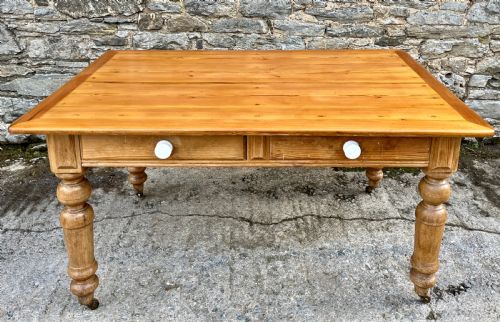
A large prep table is a heavy-duty utilitarian surface designed for practical domestic tasks, appearing frequently as scrubbed pine farmhouse tables, oak drapers tables, and serving tables. These pieces originate primarily from the nineteenth century and the Victorian era, spanning English, French, Scandinavian, and Hungarian workshops.
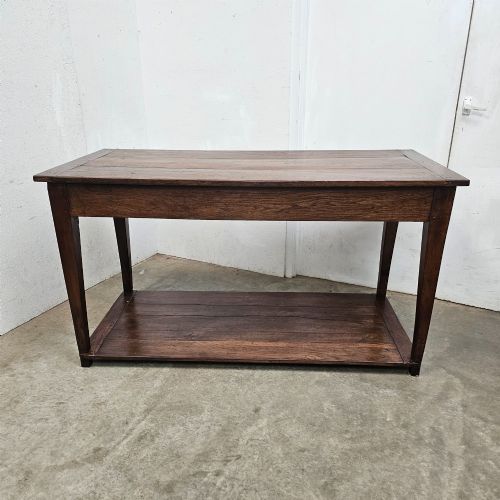
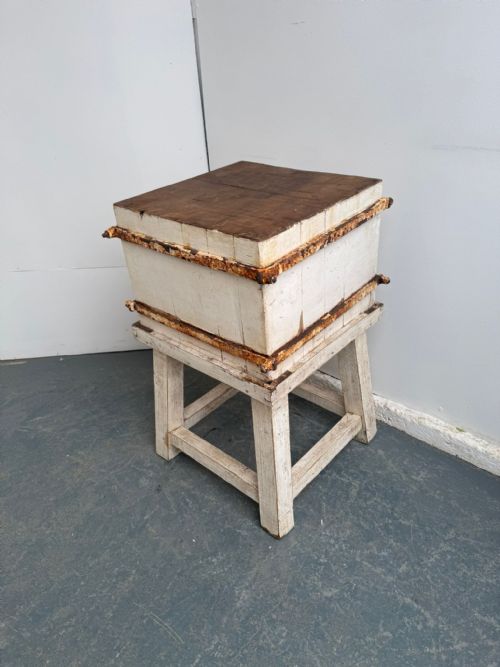
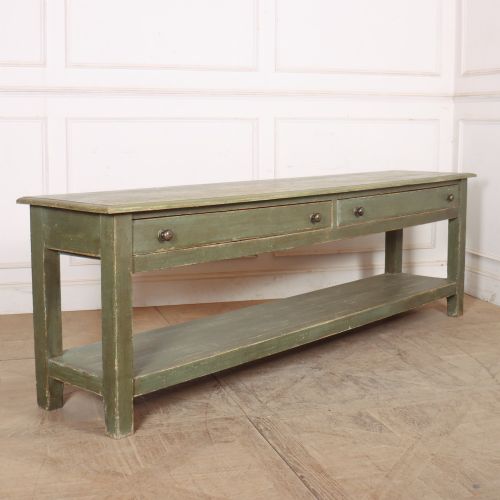
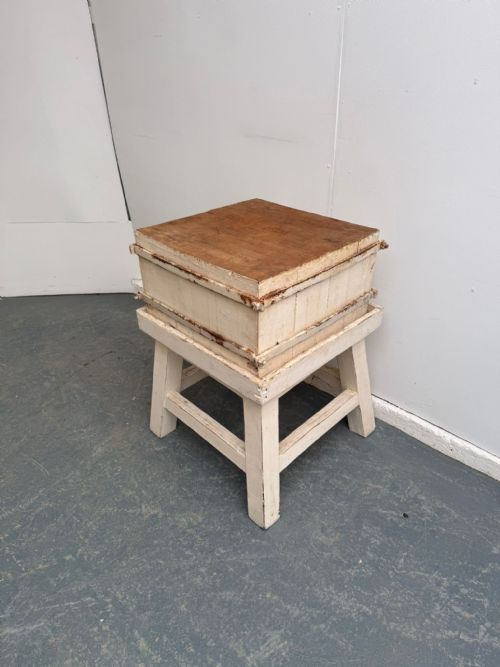
The form encompasses various functional types including kitchen islands, bakers preparation tables, butchers blocks, and potboard serving tables. Many feature drawers or two-tier storage arrangements beneath the main working top.
Buyers seeking a large prep table will find sturdy timber constructions suited for heavy daily use in modern kitchens and dining spaces. The inventory leans heavily towards substantial proportions, often accommodating multiple seats or offering extended working lengths.
What varies in quality
Quality differences rest in the integrity of the timber selection, such as the density of solid oak or the grain and thickness of scrubbed pine tops. Tables retaining original painted finishes or authentic patination command greater interest than heavily restored alternatives.
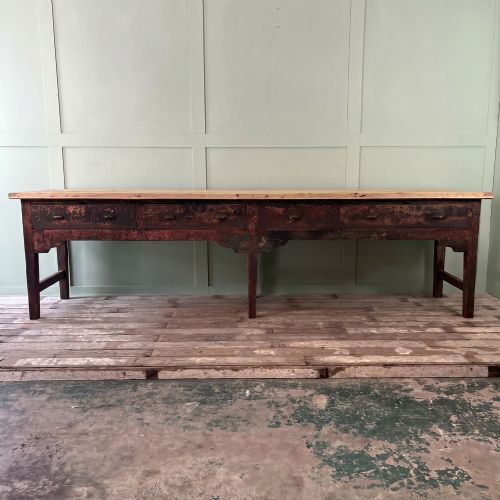
Structural heft and proportion dictate the calibre of the piece, with substantial four-metre drapers tables and heavy butcher blocks representing superior utility and robust original construction.
Listings feature nineteen-century origins predominantly, alongside Victorian, Edwardian, and early twentieth-century examples up to nineteen-thirty.
The Large Prep Table Glossary
- Drapers table
- A long, often multi-tiered work table originally utilised in cloth merchants' shops for measuring and folding textiles. These now serve effectively as large kitchen islands.
- Scrubbed pine
- A wood finish achieved through rigorous washing and scouring of softwood surfaces to remove grease and grime, leaving a pale, clean grain. This treatment is common on nineteenth-century kitchen tables.
- Potboard
- A low slatted shelf fitted between the lower stretcher base of a serving table or dresser, historically designated for storing heavy pots and pans.
- Dresser base
- A low cabinet form featuring drawers and occasionally lower shelving, built for kitchen storage and food preparation tasks.
Large Prep Table: Frequently Asked Questions
How were large prep tables used originally?
These tables served as the central workstation for heavy domestic chores, including baking bread, butchering meat, and preparing meals in large country houses and sculleries.
Commercial variants like drapers tables were utilised in mercantile settings for folding cloth before finding new life in domestic kitchens.
What woods are typical for these tables?
Pine and oak dominate the surviving examples, chosen for their structural strength and availability in large planks during the nineteenth century.
Other materials such as sycamore, beech, elm, and teak also appear in specific regional styles and preparation tables.
How do I date a nineteenth-century prep table?
Dating relies on examining construction methods, tool marks on the timber, and the style of the legs and stretcher base. Standard indicators include square-section supports and original brass or iron hardware.
Comparing the timber patina and wear patterns against known Victorian and Edwardian examples helps narrow the period of origin.
Are painted finishes on these tables original?
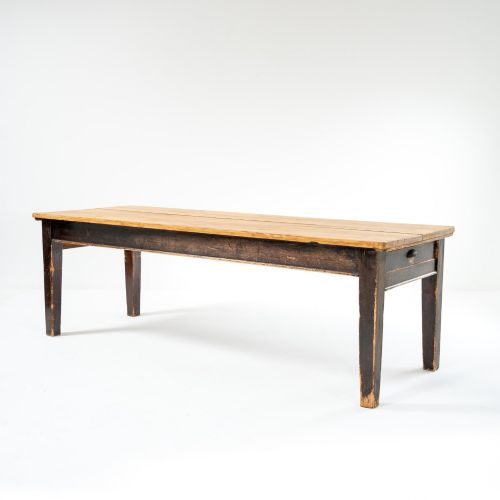
Many tables retain layers of old or original paint on their bases, particularly those originating from French, Swedish, and Hungarian provincial workshops.
Scrubbed timber tops are typically left bare from centuries of washing, while the lower framing often preserves historical painted coats.