




Large Pottery Jug
A large pottery jug is a bold utilitarian vessel holding historical presence and decorative punch for any room.
Large Pottery Jug
A large pottery jug is a substantial vessel designed for holding liquids, ranging from tavern measures to decorative ewers and commemorative pieces. When you search for this phrase, you encounter forms that span several centuries, including Victorian Staffordshire pieces, Georgian creamware, and earlier Dutch slipware.
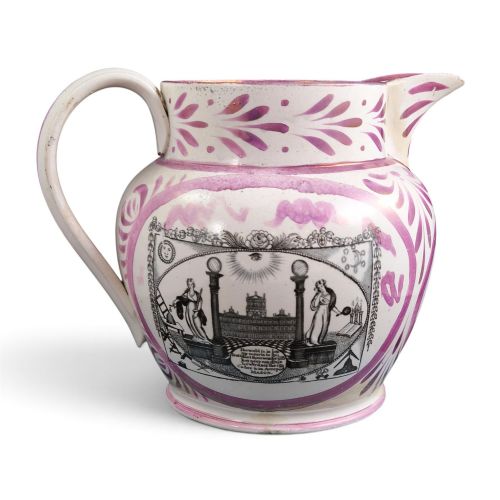
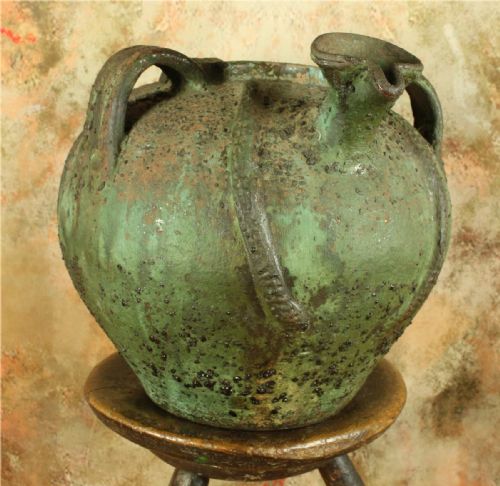
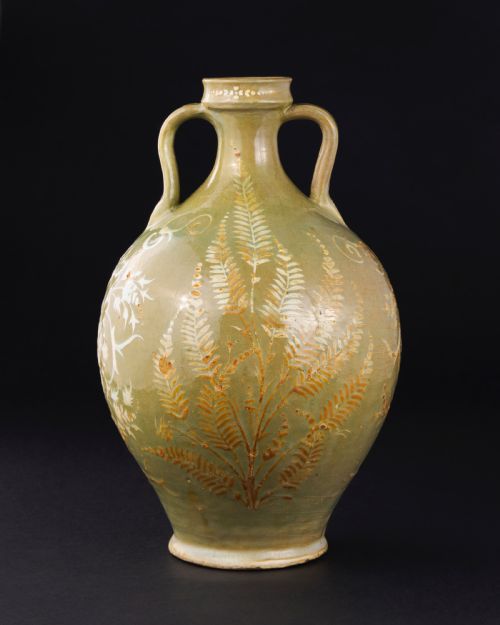
The selections on this page cover diverse origins, from French olive oil pots and Persian celadon vases to English lustreware and salt-glazed flagons. They appear in styles such as Victorian Arts and Crafts, Art Nouveau, and maritime themes featuring transfer prints or commemorative verses.
Most examples function as striking decorative centrepieces rather than everyday tableware due to their generous proportions and historic fragility. Buyers often choose them to anchor a rustic interior or to add weight to a collection of ceramic vessels.
How they were made
Potters built these vessels using foundational clays such as earthenware, creamware, and stoneware, shaped either by hand or upon a wheel. Artisans applied lead glazes, metallic lustres, enamels, and slip decoration to seal the body and provide colour.
Firing techniques varied from open kiln methods for early slipware to controlled salt glazing that yielded durable, textured surfaces on heavy stoneware. Specialist makers added sprigged reliefs, transfer-printed maritime scenes, or hand-painted details before secondary firings fixed the decoration.
Large Pottery Jug Retail Price Guide 2026
Typical asking prices for large pottery jug among the pieces listed under this phrase on Sellingantiques today, from the lower quarter to the upper quarter. They describe what is for sale here now, not the wider market.
Listings feature vessels spanning the seventeenth century through to the Art Nouveau period, utilising earthenware, stoneware, slip, and metallic glazes.
What varies in quality
Quality rests in the crispness of the moulded relief, the stability of the handle attachment, and the richness of the glaze or lustre finish. Early salt-glazed flagons and slipware pieces show the direct hand of the maker through fluid lines and natural kiln variations.
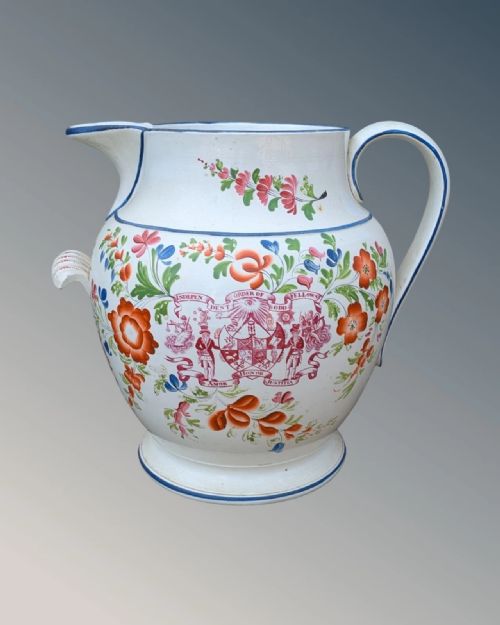
Later Victorian and Georgian jugs distinguish themselves through the complexity of their transfer printing, such as detailed masonic or maritime themes, and the preservation of delicate enamel colours. A well-potted body with balanced proportions commands attention above utilitarian pieces made purely for daily tavern use.
Doulton Lambeth·Minton·Mountford Staffordshire·Spode
The Large Pottery Jug Glossary
- Slipware
- Pottery decorated with slip, which is a liquid clay mixture applied to the wet body before firing. This technique creates contrasting surface patterns through trailing or combing.
- Salt glaze
- A glassy, textured finish achieved by throwing common salt into the kiln at the highest temperature. The salt vaporises and reacts with the silica in the clay body.
- Lustreware
- Earthenware featuring a metallic glaze that produces an iridescent sheen. Sunderland pink lustre is particularly common on maritime themed jugs from the nineteenth century.
- Creamware
- A refined earthenware developed in Yorkshire during the eighteenth century, noted for its pale straw colour and smooth lead glaze. It became a staple of Georgian table and display wares.
- Sprigged
- A decorative technique where moulded clay reliefs are applied to the surface of an unfired vessel using slip as an adhesive. This method adds tactile ornament to stoneware and creamware jugs.
Large Pottery Jug: Frequently Asked Questions
How were large pottery jugs used originally?
These vessels served diverse practical roles in domestic, tavern, and industrial settings, functioning as water pitchers, oil jars, milk containers, and ale measures. Their large capacity made them central to communal dining and hospitality before modern mass production.
Many also fulfilled commemorative purposes, marking weddings, maritime voyages, or fraternal memberships with personalised prints and verses rather than serving functional fluid storage.
How do I date an antique jug?
Dating relies on observing the clay body, glaze characteristics, and decorative motifs such as transfer-printed themes or maker marks. Earlier pieces from the seventeenth century typically feature organic slip decoration or heavy salt-glazed stoneware surfaces.
Nineteenth-century examples often incorporate bright pink lustre, moulded Victorian reliefs, or specific stylistic markers like Art Nouveau curves. Comparing the handle construction and base finish against known factory output provides further temporal clues.
Can I use an antique jug for liquids today?
Most antique pieces are best reserved for display rather than daily service, particularly older earthenware and porous slipware jugs that may have hairline fractures or degraded interior surfaces. Heavy salt-glazed stoneware is often more robust, but historical glazes can contain lead.
Displaying them dry protects the porous ceramic body and historic finishes from moisture damage, ensuring the vessel survives intact for future generations.
How do I style a large jug in a modern home?
A generous ceramic vessel works well as a standalone focal point on a mantelpiece, sideboard, or deep windowsill where its height and form draw the eye. You can display dried stems or foliage inside, though the sculptural presence of the piece often stands sufficiently on its own.
Grouping several jugs with contrasting glazes, such as pairing salt-glazed stoneware with glossy lustreware, creates a textured arrangement that highlights the variety of historic ceramic techniques.