







Large Porcelain Centrepiece
A large porcelain centrepiece commands the middle of a table with painted motifs, modelled figures, and gilt flourishes.
Large Porcelain Centrepiece
When you search for a large porcelain centrepiece, you encounter grand table vessels, punch bowls, fruit bowls, and figural compositions designed to anchor a dining setting. These pieces span the eighteenth, nineteenth, and early twentieth centuries, crossing English, continental European, and Asian traditions.
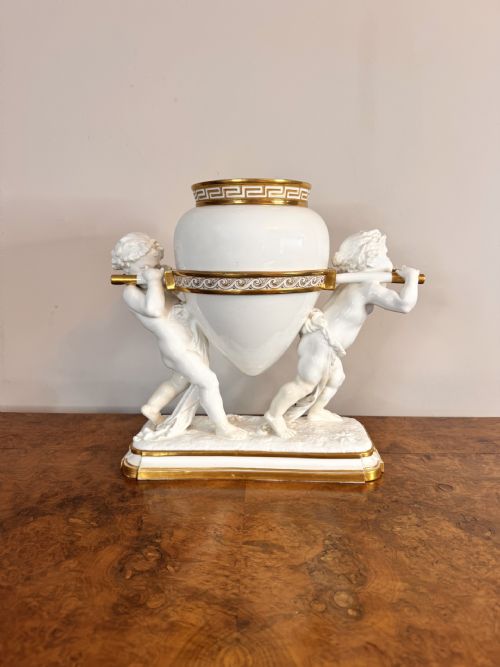
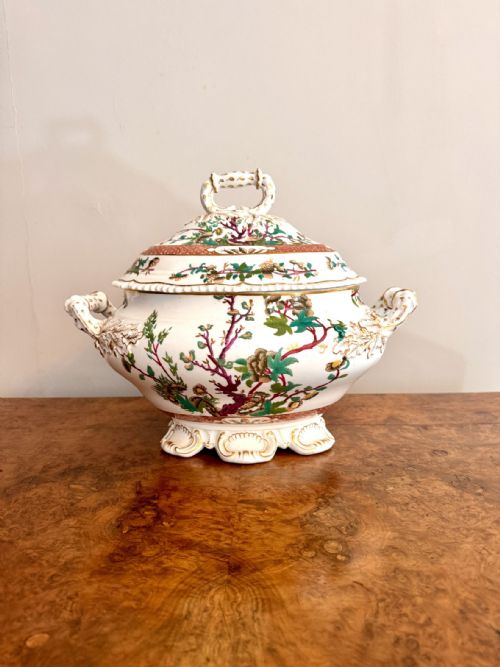
You meet heavy soup tureens with covers and stands, alongside open scalloped bowls and elaborate sculptural groups featuring applied roses and putti. Continental factories and Chinese export kilns both produced these substantial display items for wealthy households.
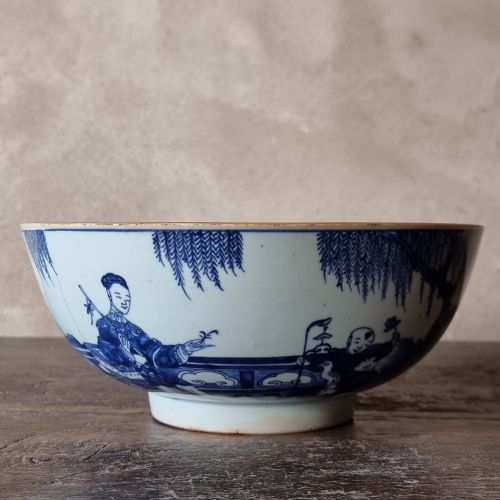
The domestic forms range from simple blue and white fruit containers to complex German and French floral centrepieces. Each type served either a practical role at large meals or a purely ornamental function in the principal rooms.
Materials and construction methods
Potters shaped these large items using ceramic and soft-paste porcelain bodies, applying white glazes and cobalt blue underglazes before firing. Artisans then added hand-painted enamel colours and gold leaf accents, sometimes using gilding to highlight moulded relief details.
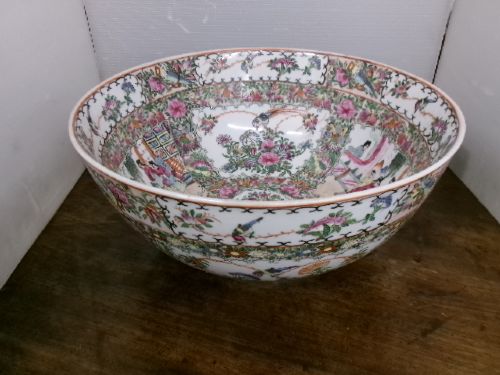
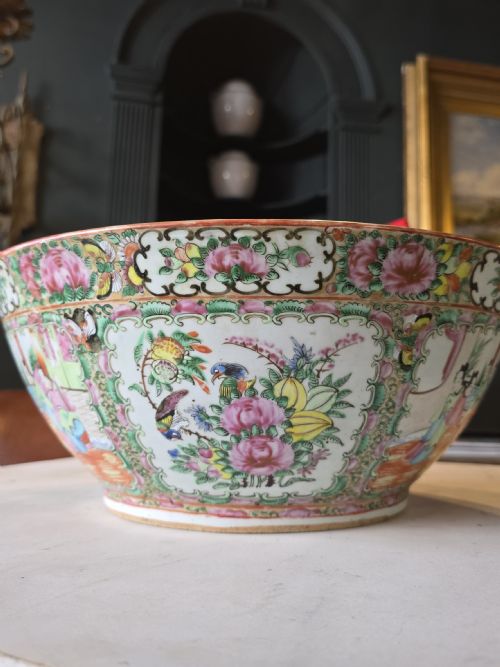
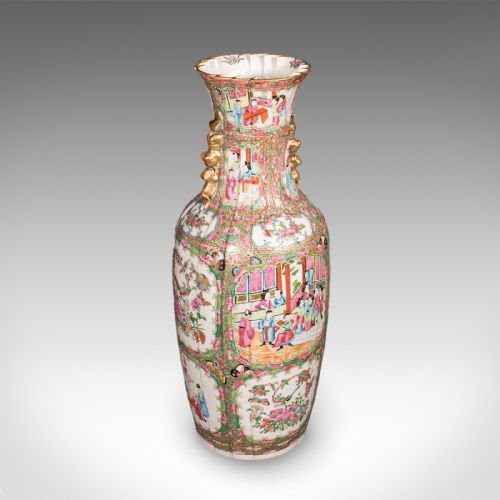
Many continental European workshops built complex centrepieces from multiple moulded sections, attaching applied porcelain flowers and sculptural figures by hand. Chinese export pieces relied on skilled brushwork across vast bowl surfaces, combining rich famille rose palettes with intricate geometric borders.
Large Porcelain Centrepiece Retail Price Guide 2026
Typical asking prices for large porcelain centrepiece among the pieces listed under this phrase on Sellingantiques today, from the lower quarter to the upper quarter. They describe what is for sale here now, not the wider market.
Listings include items from the 18th century through to the 1920s, spanning Chinese export, Art Nouveau, and Victorian styles.
Distinctions in execution and finish
The standard of a large porcelain centrepiece rests on the crispness of the modelled elements and the control of the hand-painted brushwork. Finer examples display delicate facial expressions on figures and precise registration in multi-coloured enamel and gilt panels.
Heavier body potting and thicker glaze layers separate robust utility vessels from finer display items meant for drawing room tables. The precision of the firing process also determines whether the colours remain vibrant and true without distortion or running.
Royal Dux Bohemia·Plaue Schierholz·Doulton Burslem·Minton
The Large Porcelain Centrepiece Glossary
- Famille rose
- A major palette of Chinese ceramic glazes introduced in the eighteenth century, dominated by opaque pink and rose enamel colours. It appears frequently on large export punch bowls and decorative vases.
- Imari
- A style of Japanese porcelain featuring underglaze cobalt blue combined with iron red, green, and gold highlights. These patterns repeat across wide scalloped bowls and centre vessels.
- Soft-paste
- A ceramic composition containing glassy frit and white clay, fired at lower temperatures than true hard-paste porcelain. French factories utilised this material for early figures and decorative containers.
- Putti
- Sculptural representations of chubby male infants, often winged, derived from classical art. They populate the bases and rims of late nineteenth-century continental centrepieces.
- Comport
- A raised dish or bowl on a pedestal foot, used for serving fruit or sweets at formal dinners. These pieces often match larger garniture sets on nineteenth-century tables.
Large Porcelain Centrepiece: Frequently Asked Questions
What is a porcelain centrepiece used for?
These large vessels originally held fruit, flowers, or punch for guests at formal nineteenth-century dining tables. They functioned as conversation pieces placed directly in the middle of the room.
Today, collectors use them primarily for display on large sideboards, tables, or open shelves where their painted scenes remain visible.
How do I date an antique porcelain bowl?
Dating relies on examining the factory marks stamped or painted on the base, along with stylistic cues like colour palettes and moulding techniques. Nineteenth-century pieces often feature impressed registration marks or factory ciphers.
Comparing the hand-painted motifs against documented patterns helps narrow down the decade of production.
Are these centrepieces fragile for daily use?
Most large antique porcelain items are delicate due to their age, thin walls, and applied decorative elements like flowers or figures. Hand washing in lukewarm water without harsh detergents is essential.
Placing them away from high-traffic areas prevents accidental knocks against protruding handles or delicate rims.