


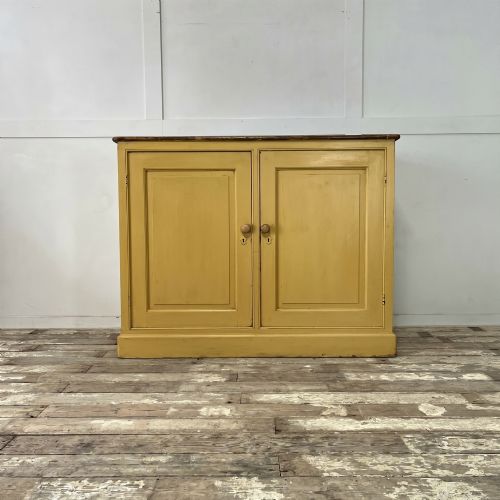


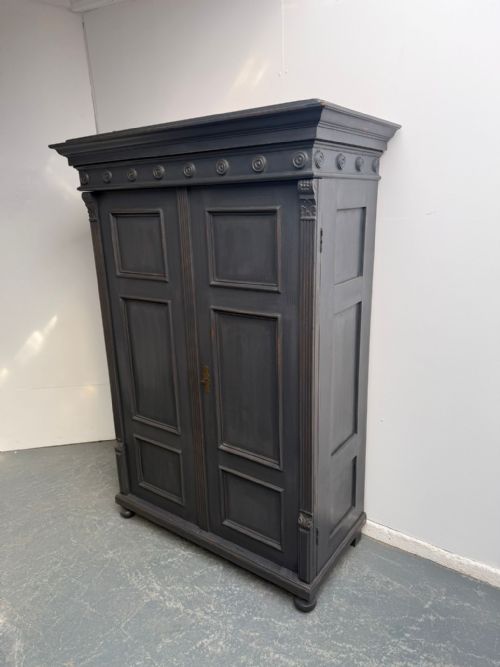


Large Pine Larder
A large pine larder gives a kitchen immense practical storage while anchoring the room with honest country character.
Large Pine Larder
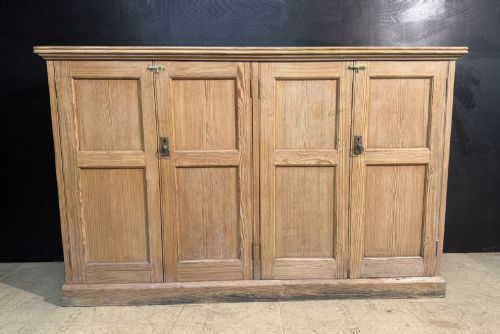
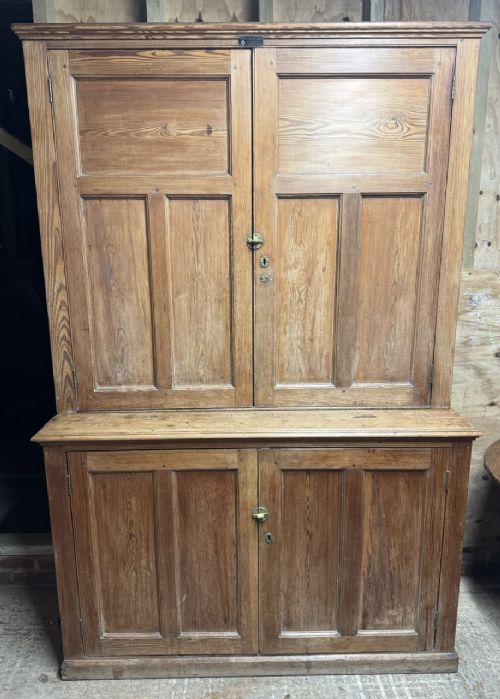
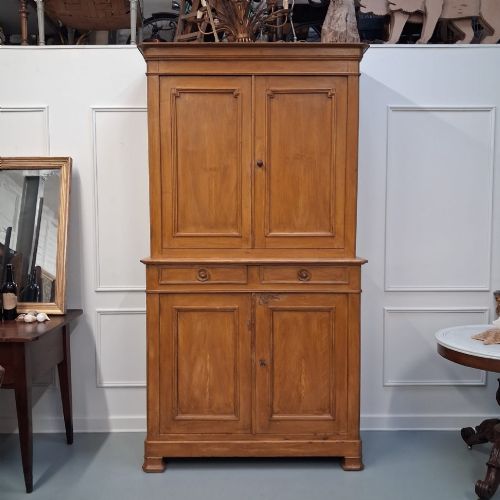
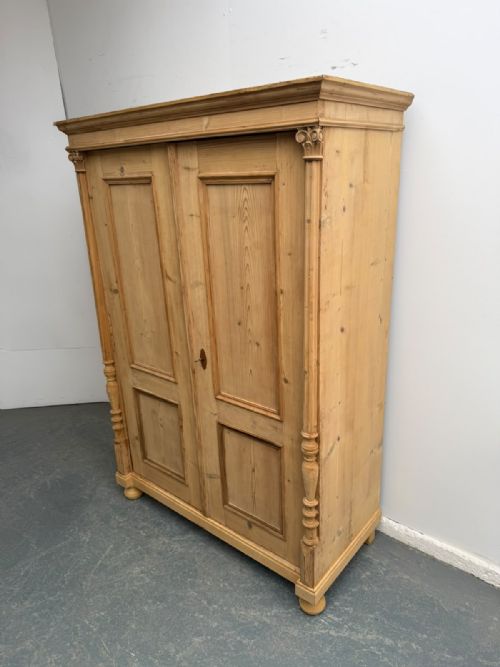
A large pine larder is a substantial storage piece designed for food provisions, household linen, or general kitchen goods. The listings show forms ranging from tall school cabinets and housekeeper's cupboards to dedicated larder cupboards with drawers.
Most examples found here date from the Victorian period or the nineteenth century, alongside earlier Georgian and eighteenth-century pieces. These cupboards originate from English, French, Danish, and Hungarian provincial settings, reflecting regional domestic traditions.
Buyers will most frequently encounter nineteenth-century housekeeper's cupboards and large pine storage cabinets standing several feet tall. These pieces often feature multi-door configurations, adjustable shelving, and functional internal divisions suited to heavy domestic use.
How they were made
Construction relies primarily on solid pine timbers assembled with iron and brass hardware such as hinges, latches, and pulls. Carpenters built these utilitarian pieces to withstand daily use in domestic sculleries, farmhouses, and school rooms.
Surface treatments vary between bare waxed wood, original paint finishes, and later painted applications in green or grey tones. Glazed sections appear on select cabinets, allowing light inside while keeping provisions secure.
Large Pine Larder Retail Price Guide 2026
Typical asking prices for large pine larder among the pieces listed under this phrase on Sellingantiques today, from the lower quarter to the upper quarter. They describe what is for sale here now, not the wider market.
Several cupboards still hide the faint scent of old baking flour and dried herbs tucked deep within their historic drawer corners.
What varies in quality
Quality rests upon the integrity of the timber frame, the proportion of the doors, and the survival of original hardware. Heavier timber thicknesses and untouched panel construction distinguish better provincial pieces from lighter utilitarian builds.
The state of the surface finish plays a major role in character, with surviving original paint or honest period wax patination holding particular distinction over later stripped surfaces. Internal configuration, such as intact shelving or original drawer banks, adds functional and structural merit.
The Large Pine Larder Glossary
- Housekeepers cupboard
- A large multipurpose storage piece traditionally used in country houses for linens, dry goods, and household stores. These units typically combine upper shelving with lower doors or banks of drawers.
- Scullery cupboard
- A utilitarian storage cabinet designed for auxiliary kitchen work and heavy domestic use. They are constructed with practical service in mind rather than formal reception rooms.
- Pine
- A softwood commonly used in British and European country furniture for its accessibility and resilience. It accepts both paint and wax finishes readily.
- Original paint
- A surface coating applied during the period of manufacture that has survived without later repainting. Collectors value this untouched finish for its authentic historical appearance.
- Beaded cupboard
- A cabinet featuring decorative relief mouldings around the door panels or frame edges. This detail adds architectural depth to the exterior.
Large Pine Larder: Frequently Asked Questions
How do I clean a pine larder?
Clean the surfaces of a large pine larder using a soft, dry cloth to remove dust and household grit. Avoid harsh chemical cleaners that strip historical wax or damage soft wood fibres.
Nourish dry pine by applying a traditional beeswax polish sparingly with a soft cloth. Buff the surface gently after application to maintain a soft, protective sheen.
Can these cupboards fit modern kitchens?
These large cupboards serve as standalone statement pieces that bring substantial storage to contemporary kitchens and pantries. Their generous interior capacity accommodates dry goods, crockery, and kitchen appliances with ease.
Measure ceiling heights and floor space carefully before purchase, as many historical pieces stand over seven or eight feet tall. Ensure clearance for doors to open fully within the room layout.
How do I tell Victorian pine from Georgian pine?
Georgian pine furniture generally exhibits finer proportions, hand-cut joinery details, and simpler classical mouldings. Timber selection in eighteenth-century pieces often shows tight, straight growth rings from mature trees.
Victorian pieces tend to be heavier in scale, accommodating industrial production methods and mass-produced hardware. Mouldings on Victorian cupboards are often machine-run and dimensions frequently push towards larger multi-door formats.