
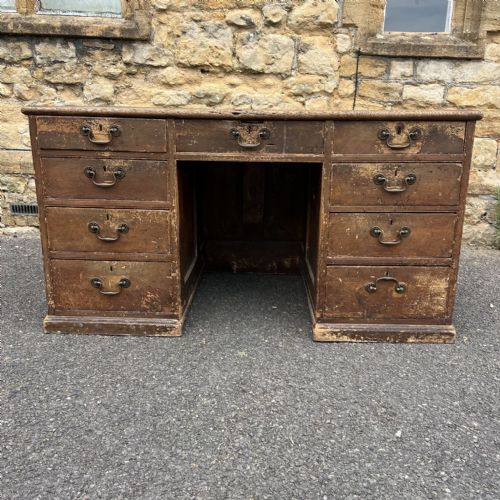
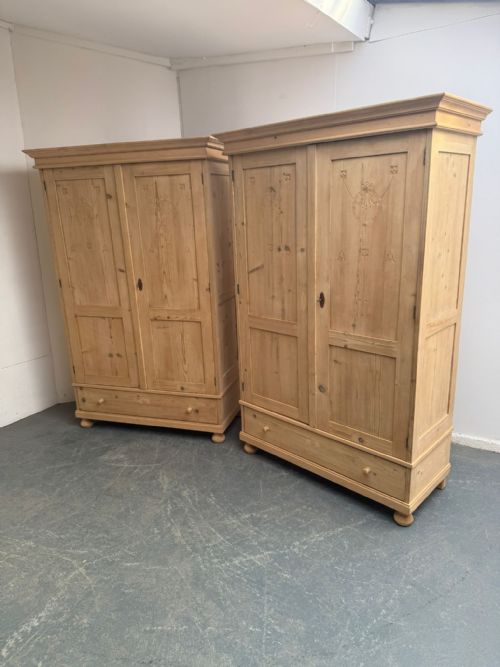

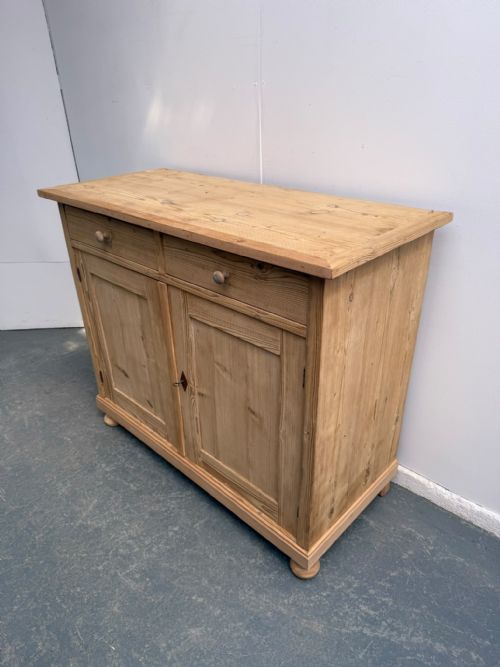
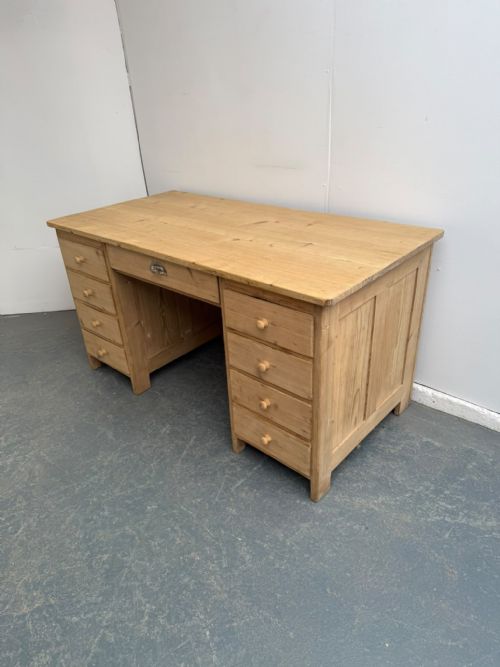
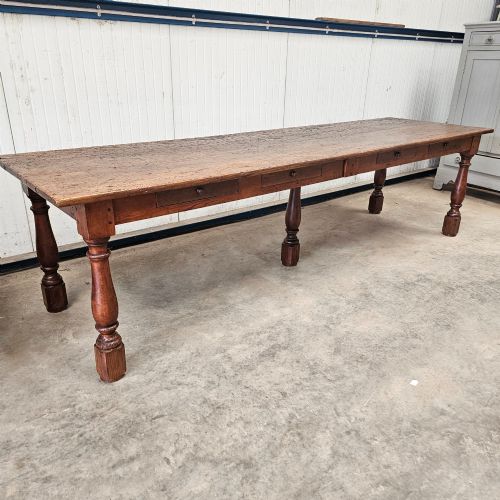
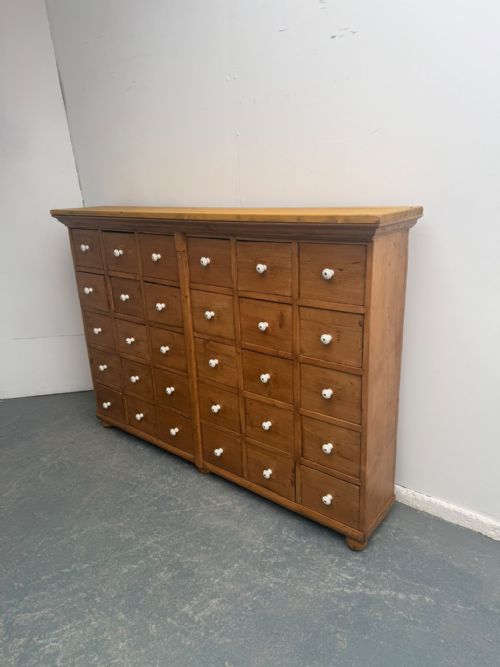


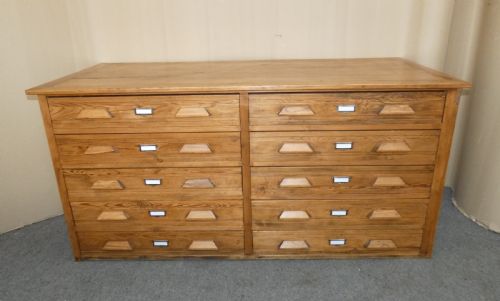
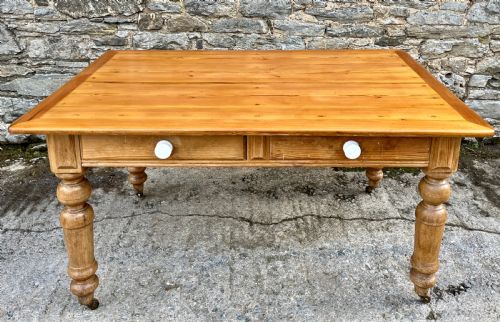

Large Pine Drawers
Large pine drawers offer substantial domestic storage with enduring utility, spanning tall banks of shop fittings and generous domestic chests.
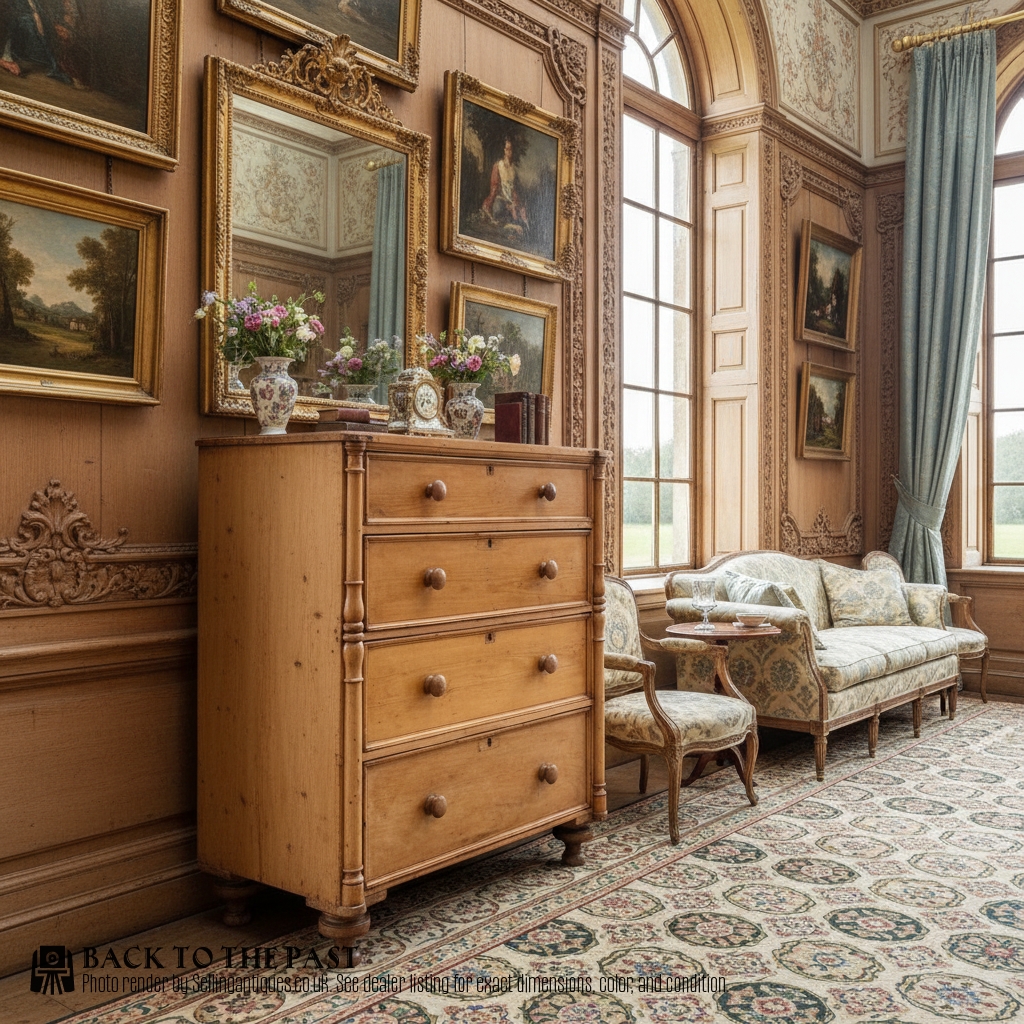
Large Pine Drawers
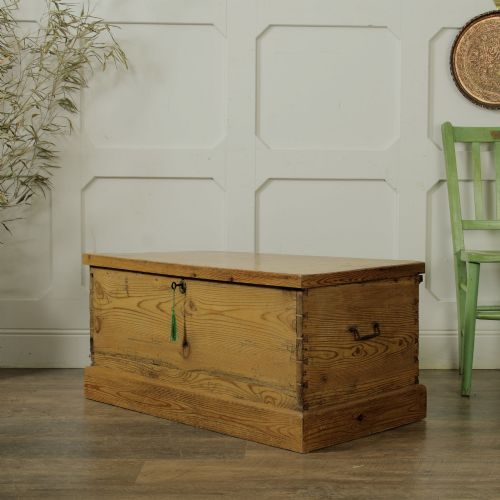
Large pine drawers primarily encompass substantial chests of drawers, banks of drawers, and dresser bases originating from the Victorian period through to the early twentieth century. Buyers seeking these items will regularly encounter multi-drawer configurations, vernacular farmhouse furniture, and commercial shop fittings built for heavy daily use.
The selection extends beyond standard bedroom chests to include wardrobe bases, linen presses, estate desks, and vestry chests. Many examples reflect regional British and continental European craftsmanship, notably Hungarian workshop pieces finished in wax or original paint.
Utility defines the category, with large proportions designed to accommodate extensive household linens, clothing, or mercantile goods. Pieces range from simple rustic farmhouse designs to multi-drawer shop fittings constructed for commercial environments.
Materials and construction
Construction relies heavily on solid pine and pitch pine timbers, frequently paired with secondary hardwoods such as oak or chestnut for structural elements. Surfaces are encountered in natural waxed finishes or retaining their original painted coats, ranging from cream and light grey to dark hues.
Hardware elements incorporate brass, iron, and metal pulls alongside ceramic and porcelain knobs. Joinery techniques prioritize durability, utilising sturdy carcase construction to support large banks of multiple drawers and heavy commercial use.
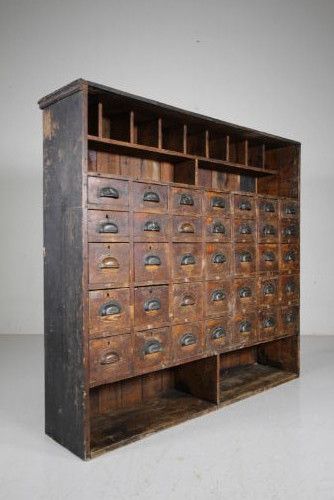
Some multi-drawer shop fittings contain up to fifty individual compartments once tasked with holding tiny haberdashery items.
Evaluating quality
Quality in large pine furniture rests upon timber selection, timber density, and the retention of original surface treatments. Dense pitch pine and well-figured standard pine distinguish finer workshops from utility pieces, while untouched original paint surfaces command distinct interest compared to later stripped finishes.
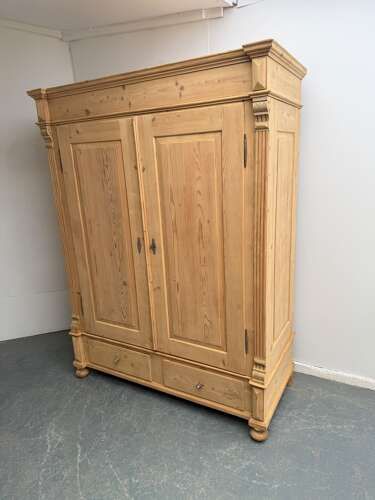
Proportional harmony and the complexity of drawer arrangements set exceptional pieces apart, visible in multi-drawer shop fittings, Wellington chests, and columned wardrobe designs. Superior execution shows in precise drawer construction, robust internal framing, and the survival of original brass or ceramic hardware.
The Large Pine Drawers Glossary
- Pitch pine
- A dense, resinous softwood variety prized for its durability and strong grain pattern, frequently utilised in high-quality Victorian furniture.
- Bank of drawers
- A large multi-drawer unit originally built for commercial, workshop, or shop-fitting purposes rather than domestic bedroom storage.
- Dresser base
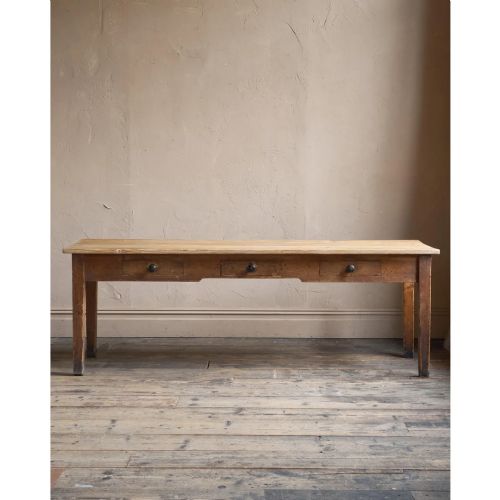
- A lower sideboard or server component featuring surface boards above integrated drawers and cupboards, common in country kitchens and dining spaces.
- Wellington chest
- A tall, narrow chest of drawers secured by a hinged locking side stile that fastens over the drawer edges.
- Knockdown
- Furniture constructed to be easily dismantled into separate panels and sections for transportation and installation.
Large Pine Drawers: Frequently Asked Questions
What rooms suit large pine drawers?
These large storage pieces suit bedrooms, kitchens, and hallways where substantial capacity is required. Their scale anchors a room while providing deep storage for linens, clothing, or household goods.
In living areas or dining spaces, lower dresser bases and multi-drawer units function effectively as sideboards or serving surfaces. The natural wood or painted finishes adapt readily to both traditional country interiors and more industrial settings.
How do I care for waxed pine furniture?
Waxed pine requires periodic application of natural beeswax to nourish the timber and maintain a protective barrier against moisture. Avoid placing these pieces near direct heat sources or in strong sunlight, which can dry out the wood and alter the finish.
Cleaning should be done with a soft, dry cloth rather than wet products. Gentle dusting preserves the patina built up over generations of use.
How can I date an antique pine chest?
Dating relies on examining construction methods, timber characteristics, and hardware styles across the piece. Victorian and late nineteenth-century examples often display hand-cut dovetails, thick drawer linings, and turned wooden or porcelain knobs.
Later pieces from the early twentieth century may incorporate machine-sawn elements or different interior framing. Original paint layers and historical locks also offer clues regarding the exact manufacturing era.