


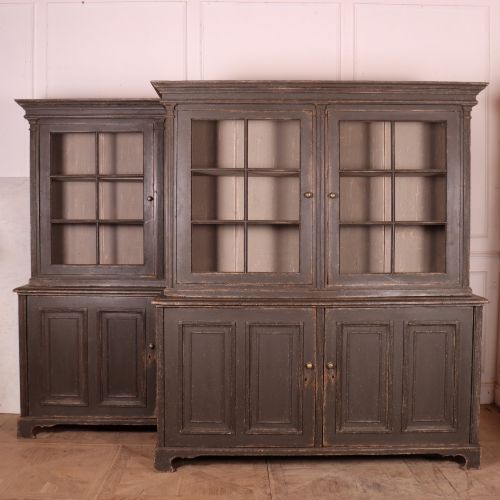
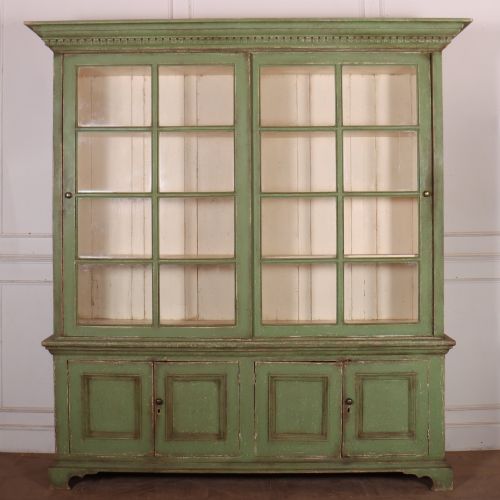
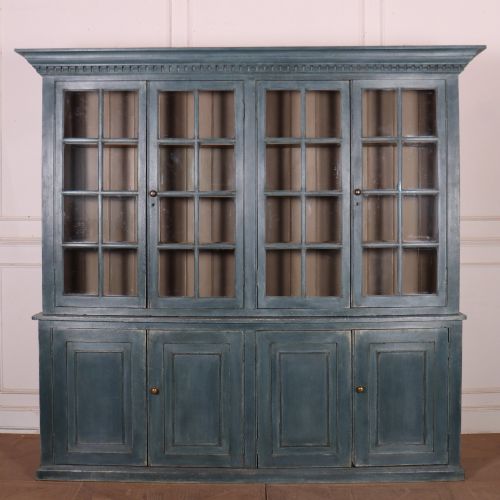
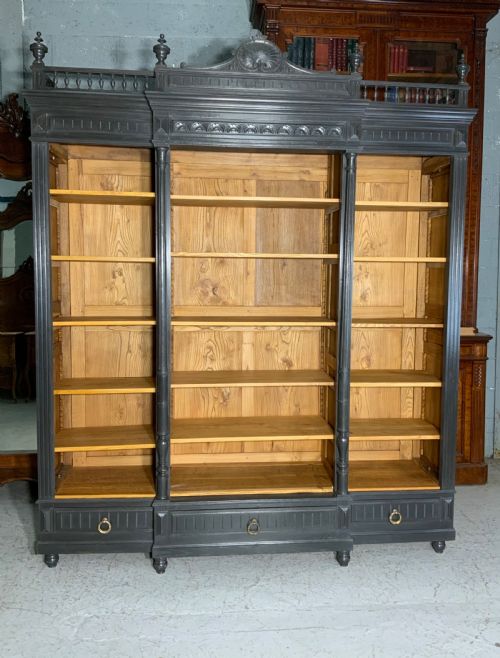
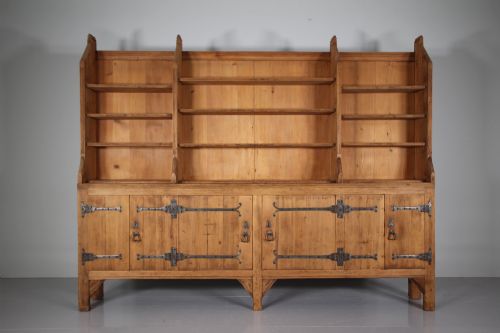
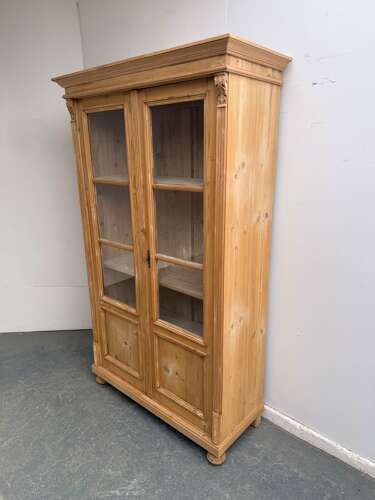
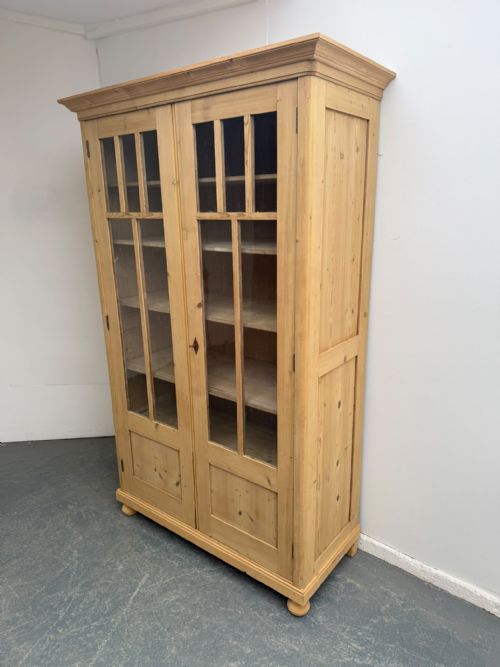


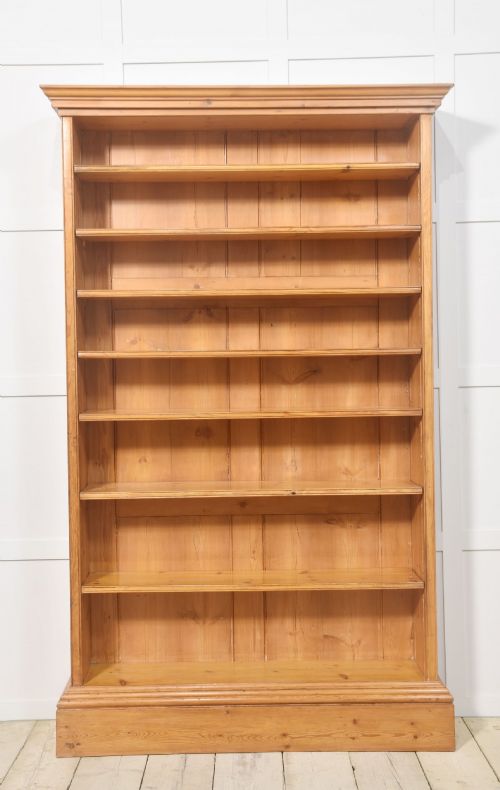
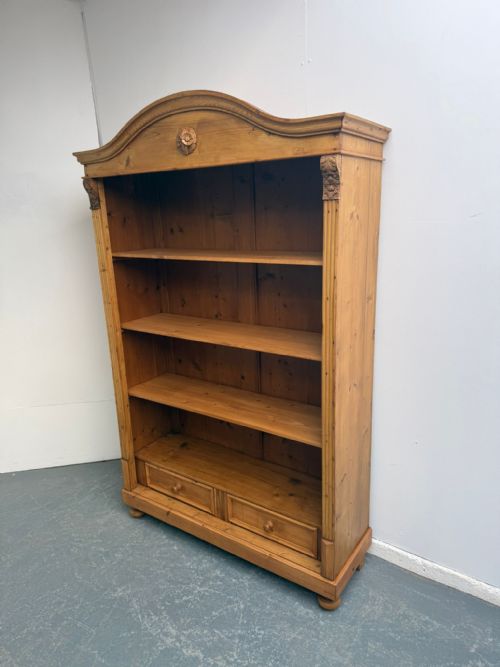


Large Pine Bookcase
A large pine bookcase brings substantial presence and warmth to a room, offering generous shelving framed in timber.
Large Pine Bookcase
A large pine bookcase serves as a commanding architectural element in a room, designed to hold substantial collections of volumes and display objects. When searching for a large pine bookcase, buyers encounter robust pieces built for utilitarian strength in libraries, kitchens, and country houses.
The selections span open shelving units, glazed display cabinets, and secretaire bookcases equipped with drop-down writing surfaces. Many examples date from the nineteenth century and the Victorian era, alongside Georgian, Edwardian, and twentieth-century interpretations.
Origins vary widely across the inventory, ranging from English and Scottish workshops to Irish, French, Scandinavian, and Eastern European provincial traditions. These regional pieces include kitchen dressers and larder-style cupboards that double as bookcases.
How they were made
Construction relies primarily on pine and deal wood, occasionally utilising pitch pine for denser grain and darker tones. Cabinetmakers joined heavy timbers using traditional joinery methods suited to supporting significant weight.
Surfaces exhibit either natural waxed finishes that highlight the grain or historic painted layers, sometimes finished with wax or left in original paint. Additional materials such as brass fittings, iron hardware, glass panes, and wire mesh appear on glazed cabinet doors and cupboards.
Large Pine Bookcase Retail Price Guide 2026
Typical asking prices for large pine bookcase among the pieces listed under this phrase on Sellingantiques today, from the lower quarter to the upper quarter. They describe what is for sale here now, not the wider market.
The inventory includes regional forms from England, Scotland, Ireland, France, Scandinavia, and Eastern Europe.
What varies in quality
The calibre of a piece rests on the integrity of its proportions and the honesty of its materials, distinguishing standard utility furniture from finer country house commissions. Superior examples display thoughtful architectural details, balanced breakfront layouts, and well-executed original paint or patinated waxed surfaces.
Structural adjustments, such as period knockdown systems or original adjustable shelving mechanisms, elevate the desirability of a piece. The presence of untouched historic surfaces rather than modern stripping distinguishes superior survivals from heavily restored alternatives.
The Large Pine Bookcase Glossary
- Deal wood
- A softwood timber derived from pine or fir trees, commonly utilised in nineteenth-century utilitarian furniture and large shelving units.
- Secretaire
- A cabinet or bookcase incorporating a fitted pull-out drawer with a hinged writing flap that conceals small compartments and pigeonholes.
- Breakfront
- A large piece of furniture featuring a central section that projects forward from the flanking outer wings, creating architectural depth.
- Pitch pine
- A dense, resinous variety of pine known for its prominent grain patterns and durability, frequently found in Scottish and Victorian cabinetry.
- Knockdown
- Furniture constructed to be disassembled into modular sections for ease of transport and installation in large town or country houses.
Large Pine Bookcase: Frequently Asked Questions
How were these large bookcases used originally?
These large pieces served primarily in libraries, studies, and substantial country houses to organise extensive private book collections and archive papers. Many functioned simultaneously as display cabinets for valued possessions or as kitchen dressers.
In larger domestic spaces, tall cupboards and larder cabinets were adapted to hold household volumes alongside provisions. Their robust construction was engineered for heavy daily utility rather than purely decorative display.
How do I tell Victorian pieces from Georgian ones?
Georgian pieces often display formal classical proportions, refined mouldings, and influences such as Chippendale design principles. The timber selection and joinery reflect eighteenth-century cabinetmaking standards.
Victorian examples tend to be heavier in scale, accommodating larger collections with robust shelving and architectural cornices. Pitch pine and deal wood frequently appear in these mid-to-late nineteenth-century constructions alongside glazed display doors.
Are these bookcases suitable for low ceilings?
Most large pine bookcases are built to considerable heights, often reaching eight feet or more, which requires careful measurement of ceiling clearances before purchase. Some regional variations or knockdown designs offer modular flexibility during installation.
Checking the exact dimensions listed for each cabinet ensures the cornice or pediment clears existing architectural mouldings in the room. Open shelf formats and lower dresser tops provide alternatives where vertical space is restricted.