
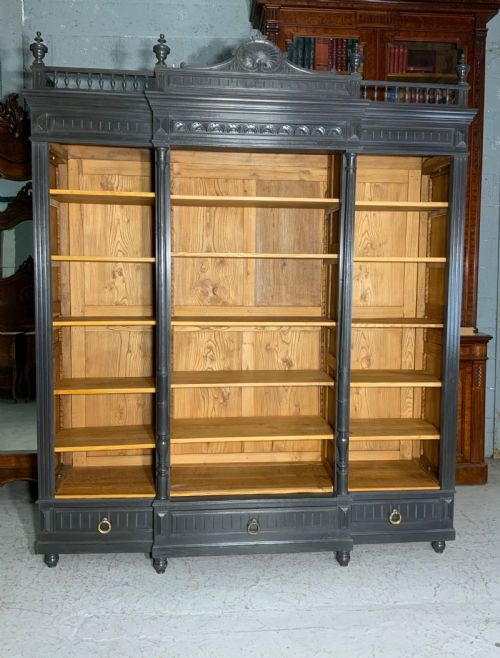
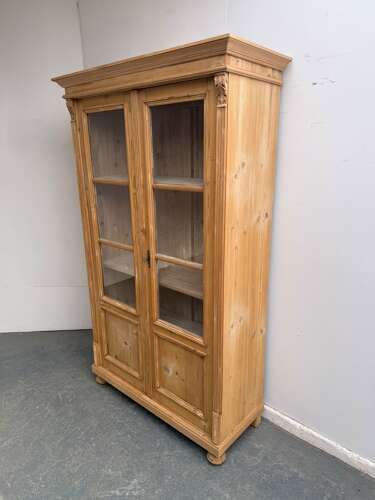
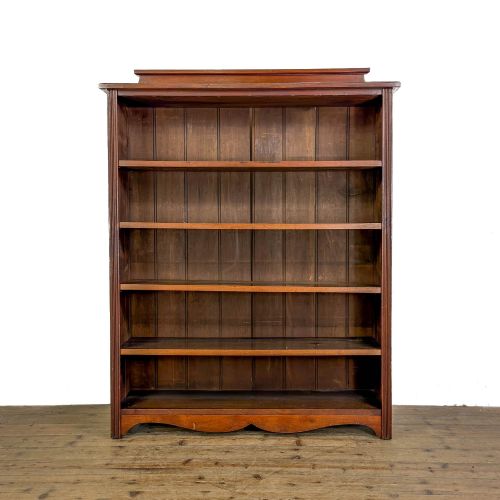
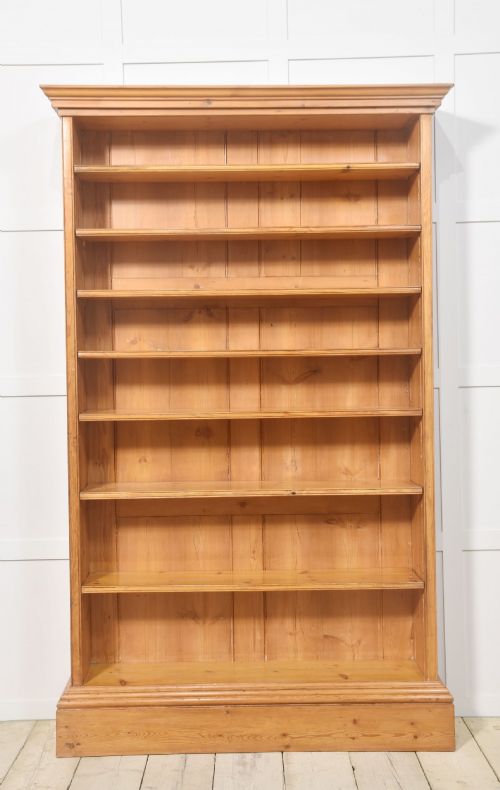


Pine Library Bookcase
A pine library bookcase offers practical storage with architectural presence, grounding a room through soft painted surfaces or warm waxed timber.
Pine Library Bookcase
A pine library bookcase provides sturdy shelving and storage for substantial collections of volumes, taking various forms from open frontages to glazed double doors and cabinet cupboards. When you search for a pine library bookcase, you encounter pieces originating from the nineteenth century alongside Georgian and twentieth-century examples.
The styles range widely across regions and aesthetics, including French Provincial, Swedish Gustavian, Irish Country, and George III Chippendale designs. Deal wood and pitch pine frequently appear alongside standard pine, sometimes left in a natural waxed finish or coated in historic paint.
Open bookcases appear alongside substantial architectural cupboards and double-sided room dividers suitable for larger spaces. These furnishings served working libraries and country houses alike, combining utility with distinct period character.
Construction and materials
Makers utilised resilient softwoods like pine, pitch pine, and deal wood to construct large frameworks capable of supporting heavy rows of books. Construction methods involve traditional joinery, fixed or adjustable shelving systems, and occasionally carved pediments or architectural cornices.
Surfaces receive either a simple wax finish to highlight the grain or coats of paint, with some pieces showing layers of historic painted decoration. Glazed doors incorporate timber framing with glass panes, while brass hardware secures cabinet sections.
Listings feature pine, deal wood, and pitch pine across Victorian, Georgian, and twentieth-century periods, finished in wax or historic paint.
Judging quality and proportion
Quality rests in the balance of proportions and the integrity of the timber, where dense pitch pine or well-figured deal wood provides superior weight and durability. Finer examples display thoughtful architectural details, such as carved pediments or refined glazing bars, rather than purely utilitarian assembly.
The handling of painted surfaces also distinguishes pieces, with original or historic paint holding greater character than recent commercial coats. Structural soundness in the shelving supports and smooth operation of doors or knockdown mechanisms dictate everyday usability.
The Pine Library Bookcase Glossary
- Deal wood
- A traditional term for softwood timber, typically fir or pine, frequently utilised in nineteenth-century cabinetmaking for its workable nature. It provides a pale canvas that accepts paint readily.
- Pitch pine
- A durable, resinous variety of pine prized for its distinct grain pattern and superior strength. It appears often in larger nineteenth-century library furniture.
- Pediment
- The decorative architectural structure surmounting the top of a bookcase, sometimes carved or triangular in form. It adds formal presence to tall library pieces.
- Knockdown
- A piece of furniture designed to be dismantled into sections for ease of transport and assembly. This method proved particularly useful for large library cabinets.
- Gustavian
- A Swedish neoclassical style characterised by restrained classical motifs and pale painted finishes. These pieces bring a lighter palette to traditional room schemes.
Pine Library Bookcase: Frequently Asked Questions
How do I choose the right size bookcase?
Measure both your available wall height and floor space carefully before selecting, keeping in mind that nineteenth-century pieces can be exceptionally tall or deep.
Consider whether an open shelf format or a glazed cabinet better suits your room's proportions and the items you intend to store.
Are antique pine bookcases sturdy enough for heavy books?
Solid pine and particularly pitch pine offer robust structural support, making these pieces well-suited for holding large collections of heavy volumes.
Many examples feature adjustable shelving or thick timber boards designed specifically to prevent sagging under weight.
Should I choose painted or waxed pine?
Waxed pine highlights the natural grain and knots of the timber, offering a warm and traditional appearance that fits country house interiors.
Painted finishes, including historic or provincial paint, introduce colour and soften the visual impact of large architectural furniture.
How do I care for antique pine furniture?
Maintain waxed surfaces with occasional applications of quality beeswax to nourish the timber and preserve its soft lustre.
Keep wooden bookcases away from direct heat sources and strong sunlight to prevent the timber from drying out or warping over time.