



Large Pine Blanket Box
A large pine blanket box offers generous domestic storage wrapped in the honest utility of past centuries.
Large Pine Blanket Box
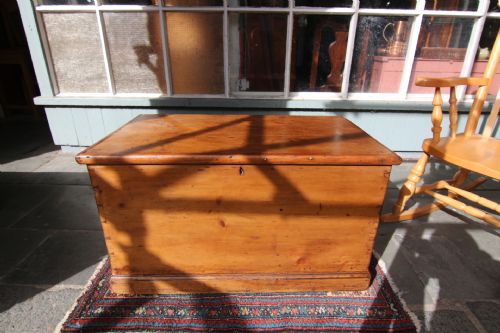
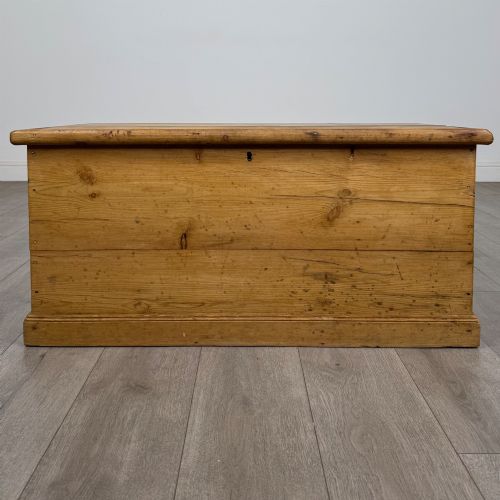
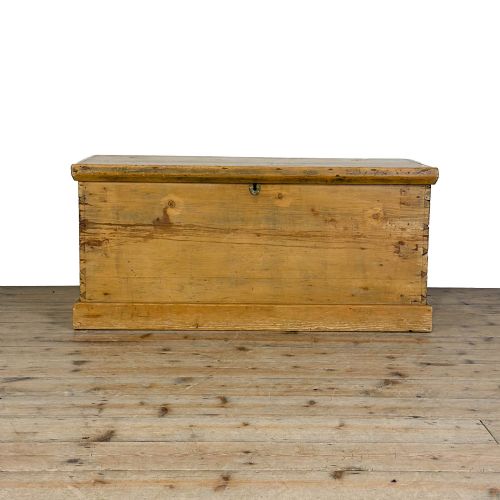
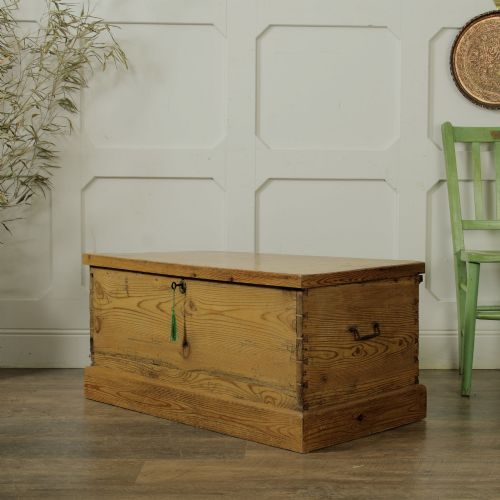
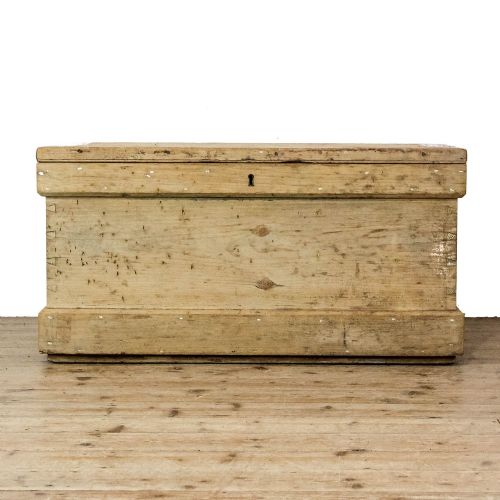
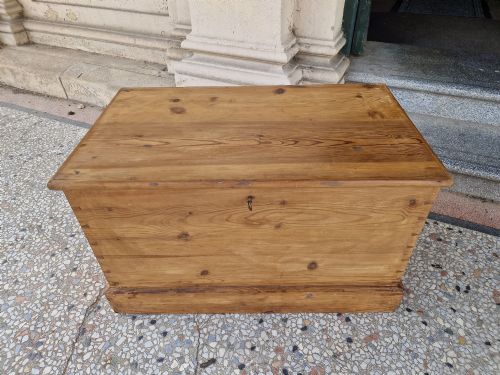
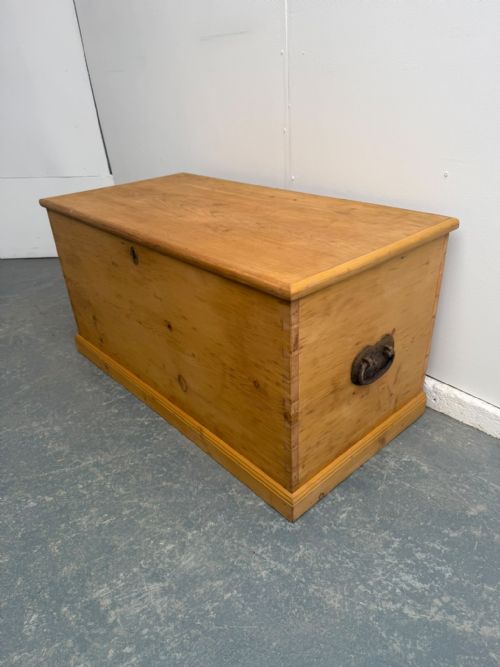
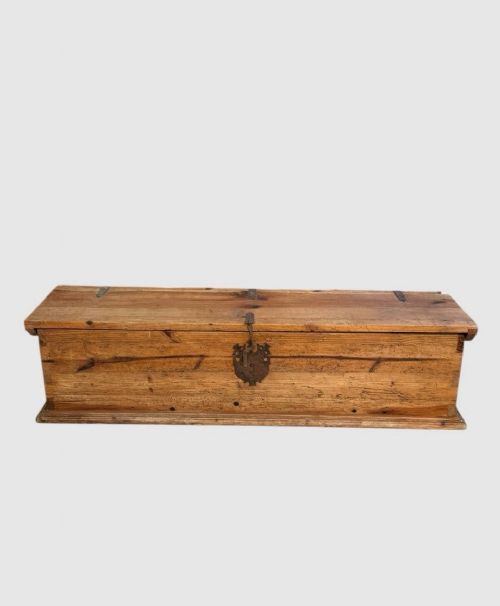
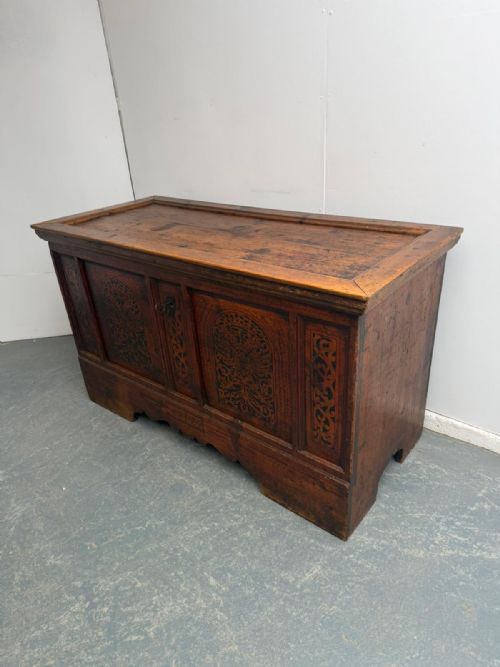
When you search for a large pine blanket box, you are looking at substantial timber storage pieces designed to hold textiles, linen and domestic goods. The versions you are most likely to meet on this page span the Georgian, Victorian and Edwardian eras, with many originating from British workshops alongside continental examples from Hungary and the Netherlands. These containers take the form of simple boarded chests, mule chests with lower drawers, domed trunks and heavily reinforced travel lockers.
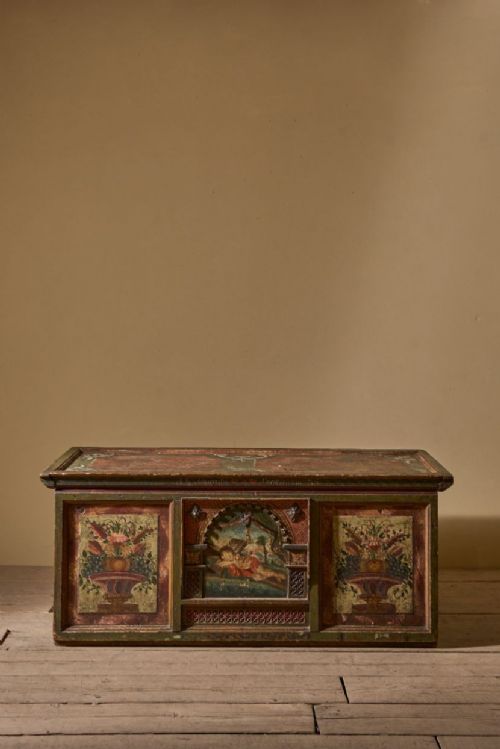
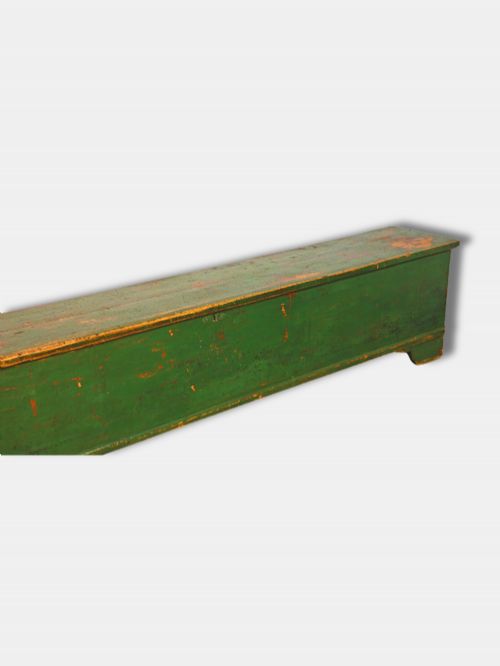
The utility of these items dictated their robust construction, often incorporating internal candle boxes, secret compartments or dividers to organise smaller belongings. Many survive with their original iron or brass handles, hinges and lock plates intact, bearing the marks of generations of domestic use. Whether finished in a waxed golden tone or retaining fragments of historical pigment and scumble paint, each box provides a functional focal point for modern rooms.
How they were made
Carpenters constructed these pieces primarily from solid pine and pitch pine, selecting straight-grained softwoods that could be worked quickly with hand tools and dovetailed at the corners for strength. Iron and brass hardware - such as strap hinges, carrying handles and binding plates - was fastened by hand to reinforce lids and edges against heavy daily wear.
Surface finishes varied from simple clear wax polishes to complex multi-layered paint applications, including pigmented scumble glazes designed to mimic more expensive hardwoods. Interiors often received minimal finishing to prevent odours from transferring to stored fabrics, though some high-status examples featured fitted internal drawers and lidded candle tills.
One remarkably secretive Victorian box hides four separate concealed drawers beneath its unassuming timber exterior.
What varies in quality
The distinction between ordinary utility items and superior examples lies in the thickness of the timber, the precision of the joinery, and the integrity of the hardware. Pieces featuring hand-cut dovetails, panelled lids and original forged iron straps demonstrate a higher grade of craftsmanship than plain nailed boxes.
Original surface treatments heavily influence desirability, with untouched historical paint or rich, patinated wax finishes commanding greater appreciation than stripped and over-restored surfaces. The presence of internal fittings such as functional secret drawers, working locks with original keys and intact candle boxes separates standard storage chests from exceptional survivals.
The Large Pine Blanket Box Glossary
- Mule chest
- A storage chest fitted with one or more drawers beneath the main compartment. This form bridges the gap between the traditional trunk and the chest of drawers.
- Pitch pine
- A dense, resinous variety of pine timber often used in maritime and heavy-use Victorian trunks. It develops a deep amber tone and prominent grain pattern over time.
- Scumble
- A translucent glaze layer manipulated over a lighter painted base coat to simulate the grain of figured hardwoods like oak or walnut. It was frequently applied to cheaper softwoods during the Victorian period.
- Kist
- A regional term of Scandinavian and northern origin for a heavy wooden storage chest or box. These pieces typically feature robust boarded construction.
- Candle box
- A small internal lidded compartment fixed inside a chest to store tallow candles or small valuables away from the main contents.
Large Pine Blanket Box: Frequently Asked Questions
What were large pine blanket boxes originally used for?
These chests served as primary storage for household textiles, woollens, blankets and winter garments before fitted wardrobes became common in domestic interiors. Families also utilised them to transport personal belongings during travel or to secure valuable provisions.
Over time, their robust nature made them ideal repositories for tools, documents and family heirlooms. Their flat lids frequently doubled as makeshift tables or seating benches within modest living quarters.
How do I distinguish between Georgian and Victorian pine chests?
Georgian examples often exhibit lighter framing, hand-cut dovetails with wider pins, and proportions associated with mule chests or panelled construction. Their timber frequently shows a softer, warmer patina developed through prolonged waxing.
Victorian pieces tend to be heavier, sometimes utilising machine-sawn boards, industrial iron corner brackets, and pitch pine. Painted finishes from the later nineteenth century also display different pigment mixtures and scumble techniques compared to eighteenth-century work.
Can I use a blanket box as a coffee table?
The flat lids and substantial proportions of these chests make them suitable alternatives to standard coffee tables in contemporary reception rooms. Their sturdy construction easily supports books, trays and everyday living items.
When positioning a chest in this way, ensure the interior remains accessible if you intend to use it for hidden storage. Waxed surfaces tolerate normal domestic wear well, provided moisture from cups or glasses is managed with coasters.
Why do some pine chests have painted surfaces?
Painting served both decorative and protective functions, sealing the softwood timber against dampness and masking knots or repairs in the boards. Folk traditions in regions like Hungary, the Netherlands and rural Britain favoured vibrant pigments and floral motifs.
Scumble finishes were also applied to give humble pine the appearance of costlier woods. Surviving traces of these early coatings offer valuable insight into the aesthetic preferences of past owners.