

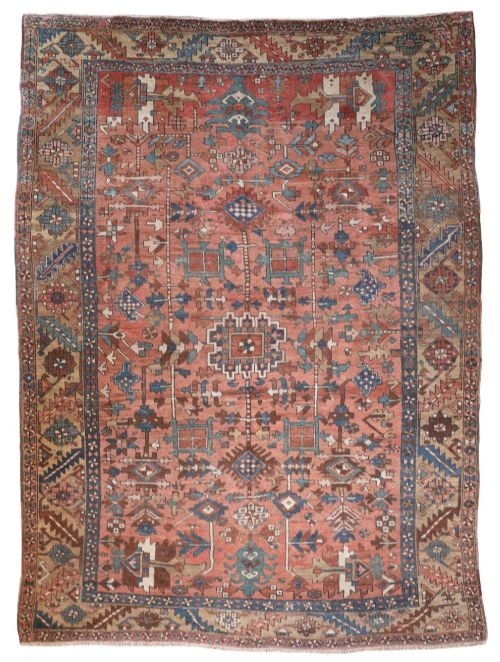
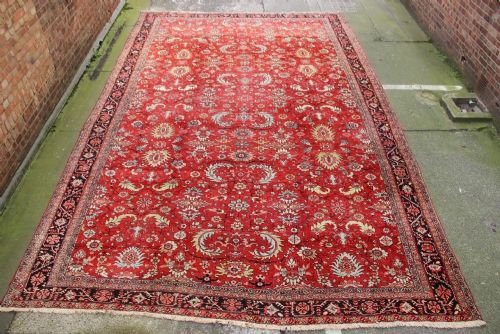
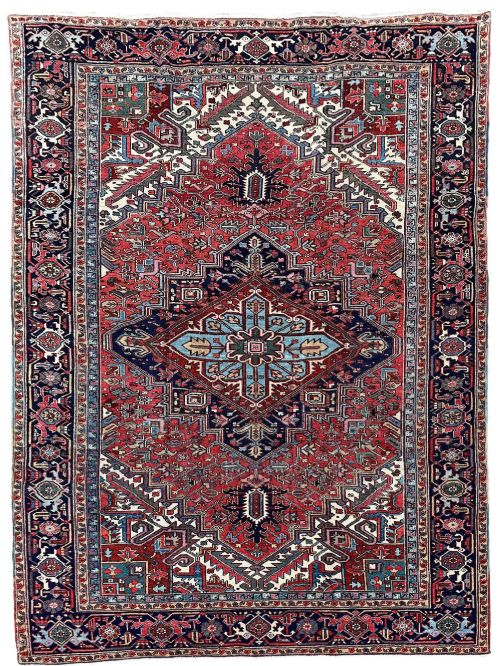


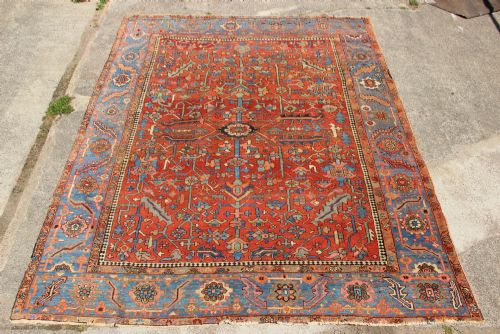
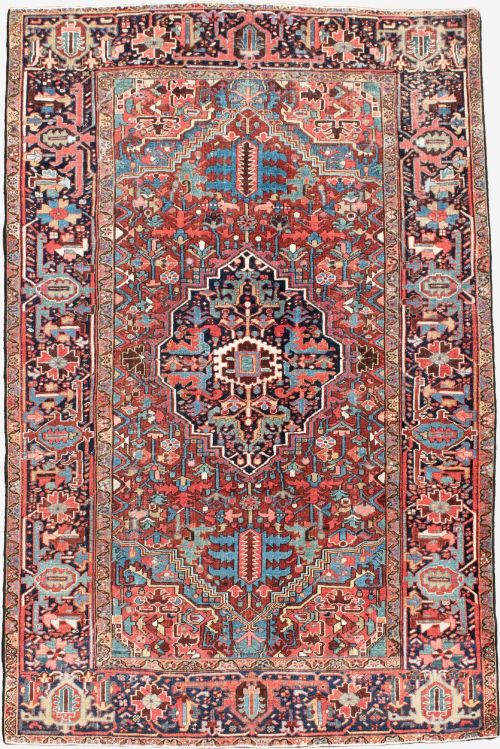

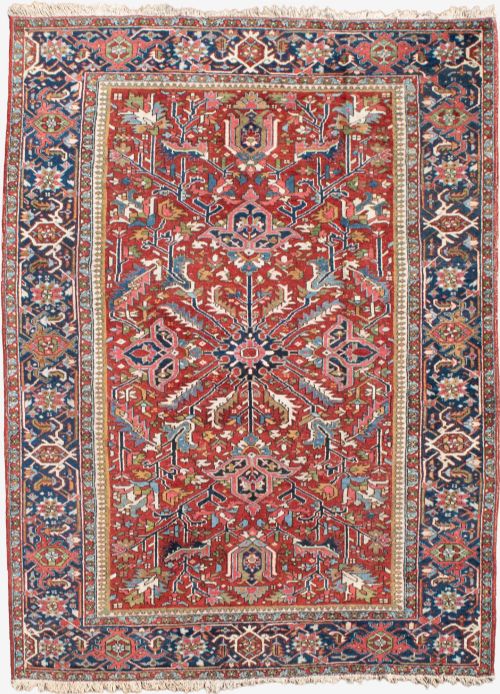
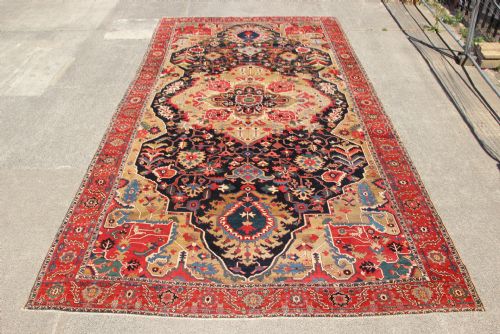

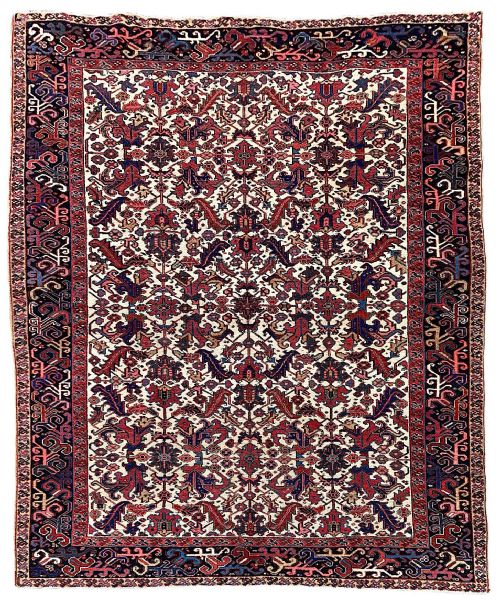
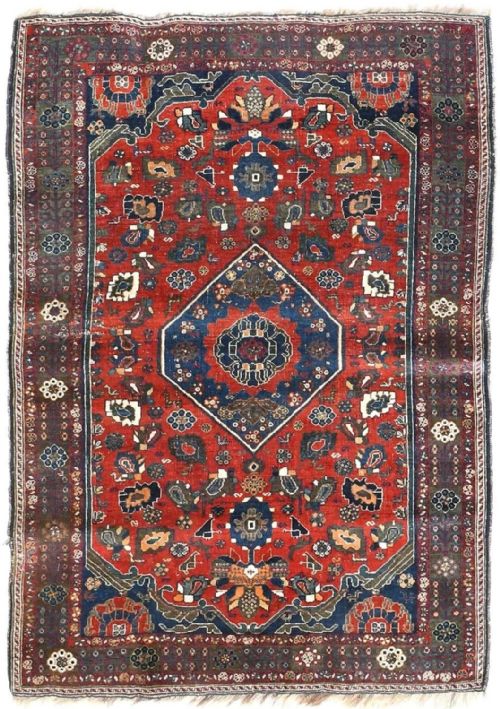
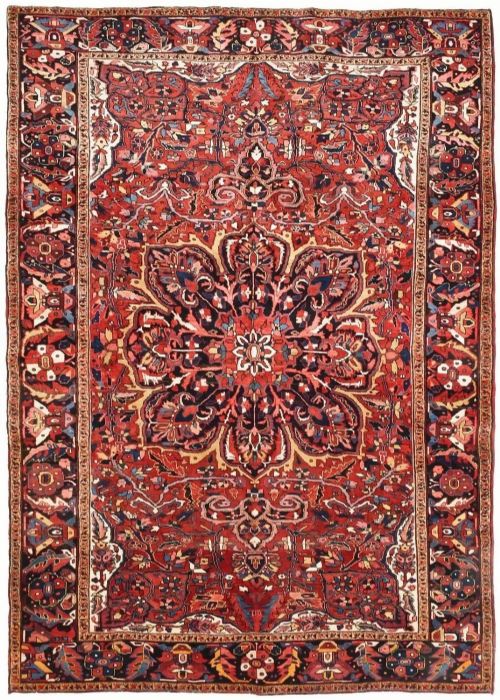
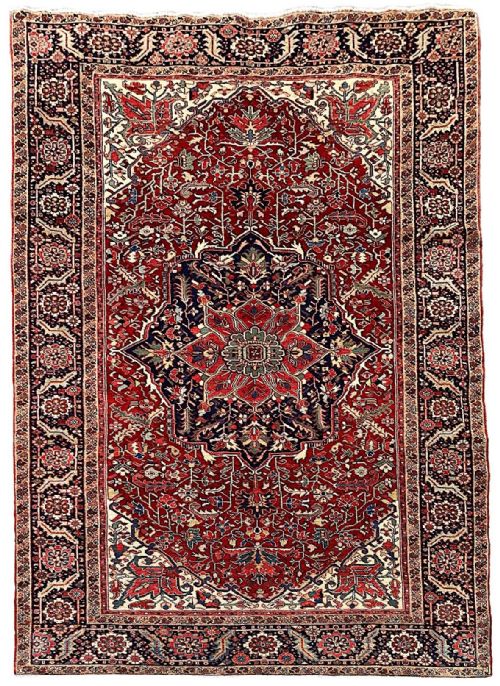

Large Persian Heriz Rug
A large persian heriz rug anchors a grand room with geometric strength, bringing enduring floor-level architecture from north-west Persia.
Large Persian Heriz Rug
A large persian heriz rug represents substantial floor coverings woven in the Heriz region of north-west Persia, often spanning room-sized formats. Buyers seeking this phrase encounter room-sized carpets and heavy area rugs dated from the mid-nineteenth century through the early twentieth century.
The format typically manifests as a room-size carpet or gallery runner, often designed to suit country houses and spacious reception rooms. Most pieces on this page originate from traditional weaving centres in Persian Azerbaijan, carrying centuries of regional design discipline.
How they were made
Weavers constructed these carpets using durable wool pile tied onto sturdy cotton foundations, creating dense, hard-wearing floor coverings built for generations of use. The heavy handle and robust structural integrity derive from this specific pairing of materials.
Dyers utilised natural botanical and mineral sources to achieve deep terracotta, sky blue, and ivory tones that soften gracefully over decades. Hand-knotted construction methods ensure each carpet maintains structural rigidity along the margins.
Large Persian Heriz Rug Retail Price Guide 2026
Typical asking prices for large persian heriz rug among the pieces listed under this phrase on Sellingantiques today, from the lower quarter to the upper quarter. They describe what is for sale here now, not the wider market.
Many village weavers worked from memory, letting geometric medallions expand or contract organically across the loom.
What varies in quality
The distinction between ordinary production and superior examples rests upon knot density, the precision of geometric drawing, and the depth of the dye palette. Finer pieces demonstrate sharper medallion outlines and more harmonious balance across the field.
Subtle shifts in wool quality and dye saturation alter the visual weight of a carpet, separating standard room-size rugs from exceptional collector-grade works. The clarity of secondary motifs and the crispness of corners reveal the weaver's ultimate control.
The Large Persian Heriz Rug Glossary
- Heriz
- A region in north-west Persia renowned for producing geometric carpets with prominent central medallions. These rugs draw upon village traditions rather than urban workshop designs.
- Serapi
- A sub-style of Heriz carpet often associated with nineteenth-century production, characterised by more spacious designs and softer colour palettes. Collectors prize these older, more relaxed geometric patterns.
- Bakshaish
- An adjacent weaving district producing rugs with looser, highly abstract geometric layouts and earthy tones. These pieces pre-date many standard Heriz productions.
- Medallion
- The central ornamental motif dominating the field of the carpet. In Heriz rugs, this element is typically large, angular, and anchored by bold pendants.
- Pile
- The upright yarn surface of the carpet formed by individual knots tied to the warp threads. Wool pile provides the tactile warmth and durability characteristic of these antiques.
Large Persian Heriz Rug: Frequently Asked Questions
How do I care for my rug?
Vacuum regularly with the suction attachment only, avoiding revolving brush heads that pull at the wool pile. Professional cleaning by specialists in antique textiles is essential every few years.
Protect the carpet from direct, prolonged sunlight to prevent uneven fading of natural dyes. Using a quality underlay prevents slipping and cushions the foundation against floor wear.
Where were these rugs woven?
These carpets originate from the town of Heriz and surrounding villages in the mountainous north-west region of Persia, historically known as Persian Azerbaijan. This area developed a distinct geometric design vocabulary independent of court workshops.
Local families and village cooperatives produced these heavy-duty floor coverings using locally sourced wool and traditional upright looms. The geography directly influenced the sturdy structure and bold aesthetic.
How do I date a Heriz rug?
Dating relies on stylistic evolution, dye analysis, and structural indicators such as the handle of the wool and the selvage finish. Nineteenth-century examples often exhibit softer palettes and more open, spacious medallion compositions.
Early twentieth-century pieces tend towards tighter geometric drawing and brighter, more saturated terracotta grounds. Comparing knot counts and structural stiffness against known archival benchmarks helps narrow the decade of production.
What is a Serapi?
Serapi is a trade term applied to older Heriz carpets, typically dating from the nineteenth century, featuring coarser knotting and more expansive, relaxed designs. These pieces often display a lighter overall palette with prominent ivory or soft blue fields.
Collectors distinguish Serapi carpets by their artistic freedom and subtle abrash within the wool. They represent an earlier phase of the region's weaving tradition before standardised commercial production took hold.