
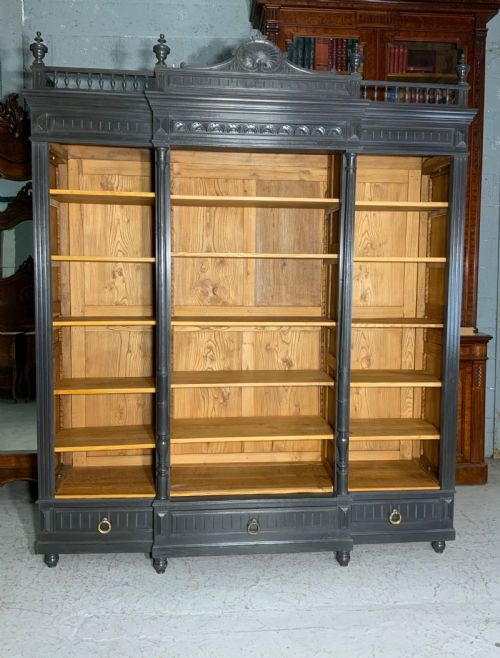
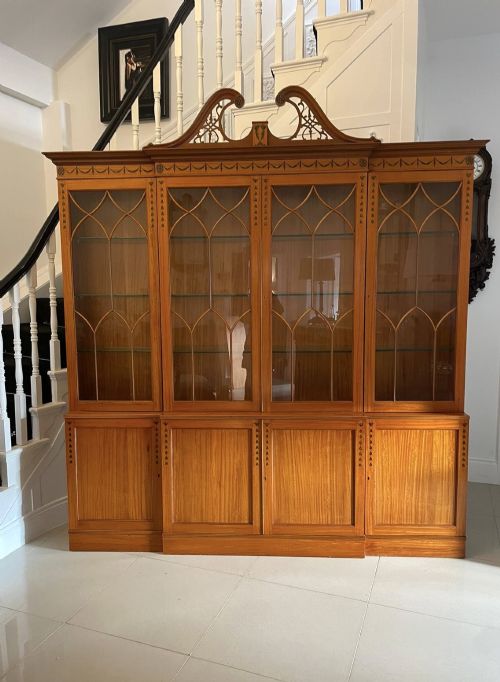
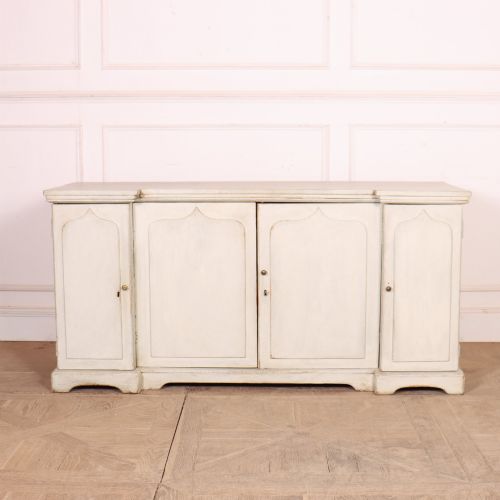
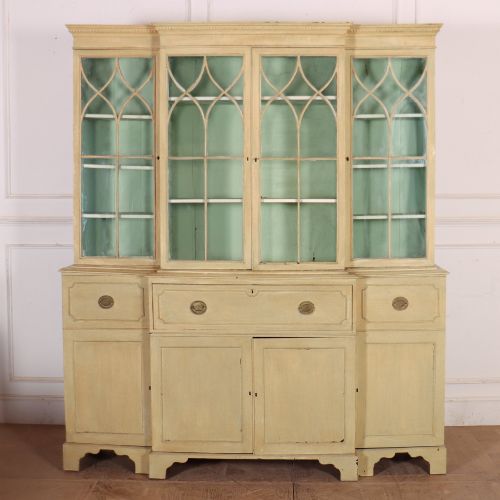


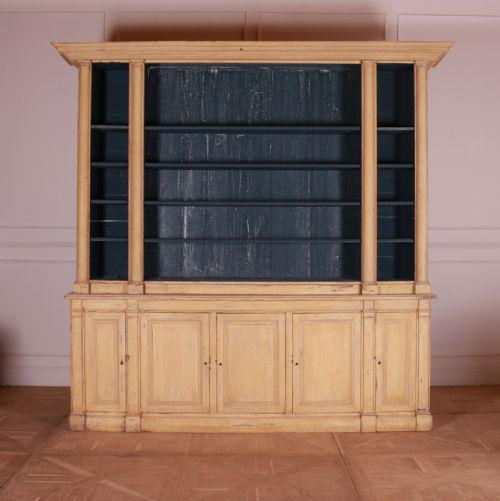
Large Painted Breakfront Cabinet
A large painted breakfront cabinet offers substantial storage and display presence, combining architectural proportion with painted surfaces for domestic utility and character.
Large Painted Breakfront Cabinet
A large painted breakfront cabinet brings together prominent architectural form and painted wood surfaces, serving primarily as a bookcase, display cabinet, or housekeepers cupboard. These substantial pieces project forward in the centre section, creating depth and visual interest across rooms.
The versions most commonly found here originate from the nineteenth century and the early twentieth century, spanning English, Irish, Scottish, and French provincial styles. Makers constructed them from pine, satinwood, and various painted woods, often incorporating glass, brass, and wire mesh.
Forms range from library bookcases and kitchen dressers to scullery cupboards and display cabinets. Each piece reflects the functional storage needs of large country houses, provincial homes, and libraries from the periods represented.
How they were made
Carpenters built these cabinets predominantly using solid pine, satinwood, and general wood substrates, applying surface paint directly to the timber. Glazing bars in astral patterns held glass panes within doors designed for library and display use.
Hardware such as brass fittings complemented the woodwork, whilst wire mesh occasionally replaced glass in utility cupboards like scullery and housekeepers pieces. Original painted decoration required skilled brushwork on prepared wooden surfaces.
Some scullery cupboards retain the faint aroma of old housekeepers' linen and dry provisions after more than a century.
What varies in quality
Distinction across these cabinets lies in the refinement of the satinwood or painted wood finish and the sophistication of the breakfront proportions. Pieces featuring original painted decoration retain greater historic integrity than later surface treatments.
The complexity of the glazing, such as astral glazed doors, and the inclusion of brass hardware distinguish finer library bookcases and display cabinets from utilitarian housekeepers cupboards and kitchen dressers.
The Large Painted Breakfront Cabinet Glossary
- Breakfront
- An architectural furniture form where the central section projects forward from the flanking wings. This layout adds visual depth and creates distinct zones across large cabinets and bookcases.
- Astral glazing
- A method of dividing glass panes within a door using thin wooden bars, often arranged in geometric or gothic patterns. It is frequently seen on display cabinets and library bookcases.
- Housekeepers cupboard
- A large utility storage piece traditionally used for linens, china, and provisions in large domestic establishments. These items often feature solid painted wooden doors rather than glass.
- Satinwood
- A dense, lustrous timber with a yellow hue, highly prized for fine cabinetmaking and decorative furniture. It provides a smooth base for painted decoration and high-status finishes.
Large Painted Breakfront Cabinet: Frequently Asked Questions
Where should I place a large painted breakfront cabinet?
These imposing cabinets suit principal reception rooms, libraries, or large dining spaces where their architectural scale can be properly accommodated. Ensure adequate wall space and clearance for doors that project into the room.
Position the cabinet away from direct heat sources and strong sunlight to protect the painted wood surfaces and any antique glass or satinwood elements over time.
How do I care for original painted decoration?
Maintain the painted wood surfaces by dusting gently with a dry, soft cloth on a regular basis. Avoid harsh chemical cleaners, abrasives, or excessive moisture that might compromise the historic paint layer.
Keep the room at a stable humidity level to prevent the underlying timber from expanding or contracting, which can cause paint and wood to crack.
What is the difference between a bookcase and a display cabinet?
Bookcases typically feature open shelving or wooden-framed doors designed for storing volumes, whilst display cabinets incorporate glass panels or astral glazing specifically to showcase contents.
Library bookcases often combine lower wooden cupboards with upper glazed sections, whereas display pieces prioritise visibility across multiple tiers.
How can I tell the period of these cabinets?
Dating relies on stylistic markers such as Victorian Gothic Revival details, Georgian proportions, Sheraton Revival refinements, or the simpler vernacular of English and French country pieces. Nineteenth-century examples often display heavier timber construction and traditional joinery.
Materials also offer clues, as satinwood finishes and specific painted decoration styles align with particular decades from the eighteenth century through to nineteen-thirty.