
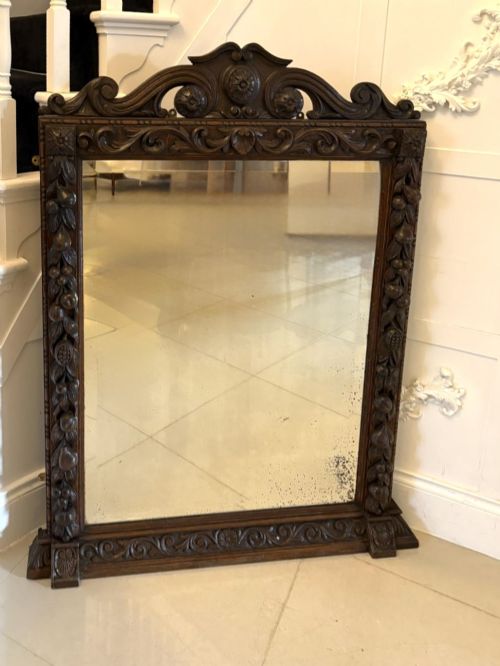

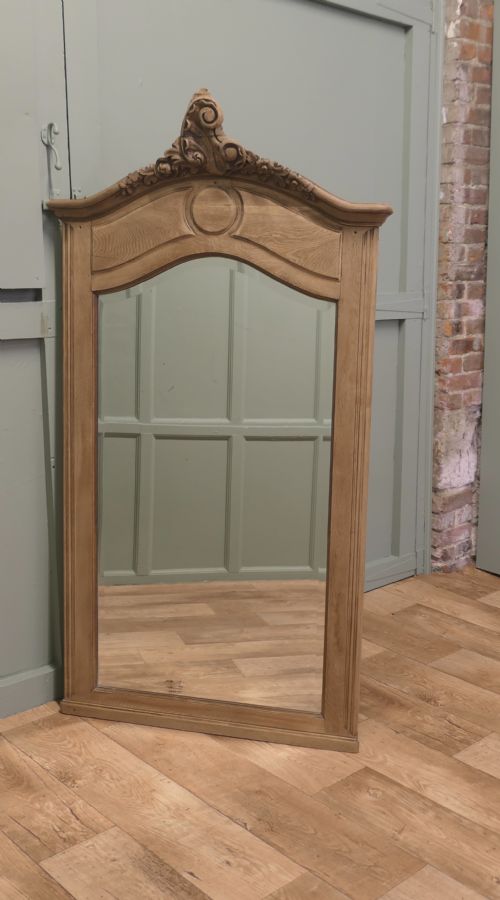
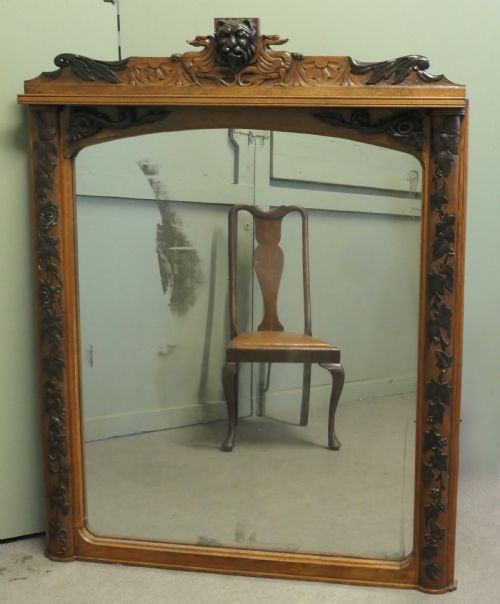
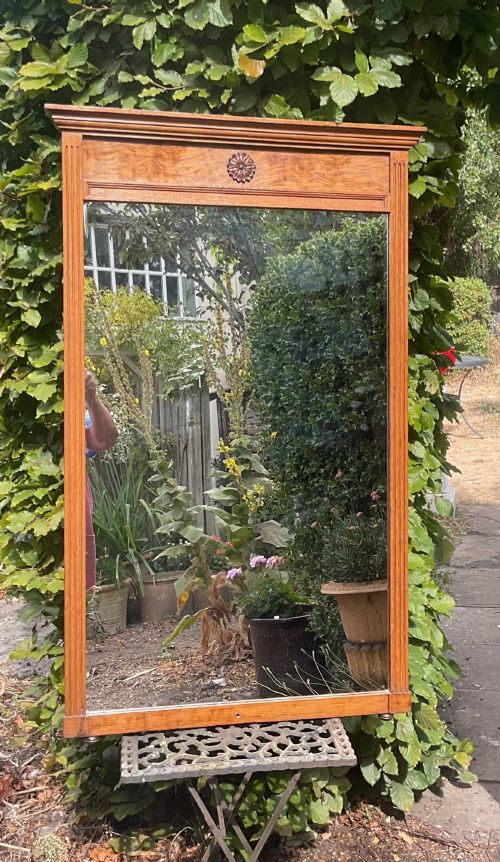


Large Overmantel Mirror Oak
A large overmantel mirror oak commands attention above a fireplace, bringing weight and historic character to a room through timber and glass.
Large Overmantel Mirror Oak
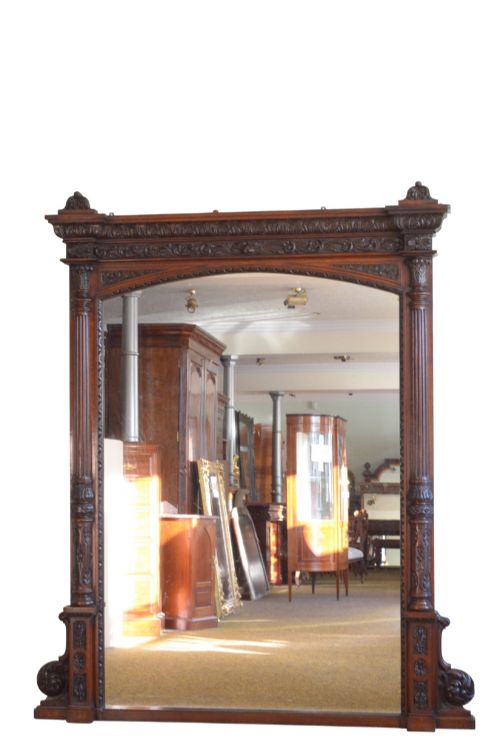
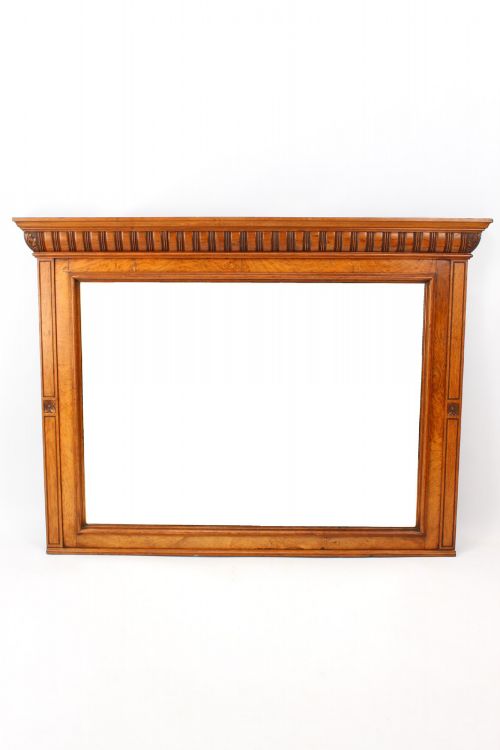
A large overmantel mirror oak combines substantial proportions with durable timber, designed to sit directly upon a mantelpiece or hang upon a chimney breast. These architectural pieces dominate a wall through their scale, acting as the focal point of a reception room.
The versions most frequently met on this page belong to the Victorian era and the broader nineteenth century, often displaying carved decoration, Gothic Revival influences, or French provincial styling. Many examples utilise solid oak frames, occasionally enhanced with parcel-gilt or walnut details.
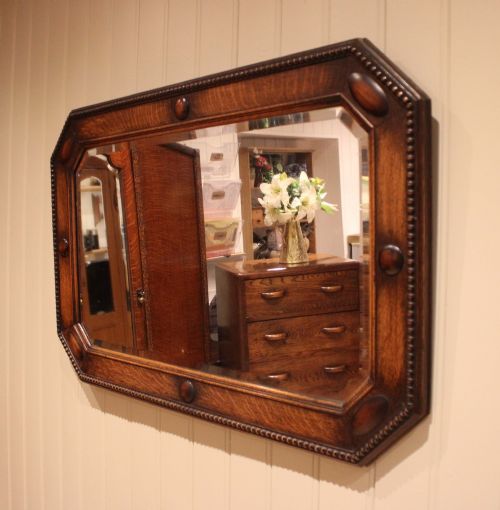
Makers ranged from English country house workshops to French ateliers, producing rectangular, arched, and cushion-framed variations. While some pieces are straightforward wall mirrors, the defining characteristic remains their generous dimensions and robust oak construction.
How they were made
Cabinetmakers constructed these heavy frames from solid oak, bleached oak, or scrubbed oak, often joining heavy timber mitres to support the downward thrust of the weight. Carved details such as foliage, side columns, or crests were worked directly into the grain by hand.
Glass panels were set into the timber rebate, sometimes accompanied by parcel-gilt highlights or secondary hardwoods like walnut. Many survive with original mirror glass, showing the slight imperfections and silvering characteristic of nineteenth-century manufacture.
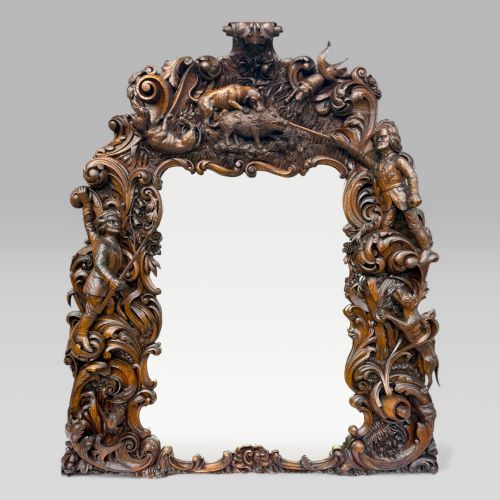
One exceptional hunting lodge mirror carries the legacy of the King of Bavaria into modern living rooms.
What varies in quality
The depth and crispness of the hand-carving distinguish finer frames from simpler production pieces, particularly where figures, foliage, or architectural columns are concerned. Superior examples maintain structural integrity across vast expanses of timber without warping or splitting the mitred corners.
The proportion of the frame to the glass plate dictates the visual balance, with high-quality pieces demonstrating careful thought in moulding profiles and crest design. The presence of original mirror glass and secondary woods like walnut also elevates a piece above standard domestic joinery.
The Large Overmantel Mirror Oak Glossary
- Overmantel
- A mirror specifically proportioned to hang or stand upon the mantelpiece above a fireplace. These pieces were traditionally designed to reflect firelight and brighten dark Victorian rooms.
- Gothic Revival
- An architectural and decorative style drawing inspiration from medieval design. Pieces often feature pointed arches, trefoils, and heavy carved tracery.
- Parcel-gilt
- Partially gilded timber where gold leaf is applied selectively to highlight specific carved details or mouldings. This technique adds subtle contrast against the dark oak grain.
- Cushion frame
- A convex, rounded frame profile that swells outwards towards the outer edge. This bold framing style gives substantial physical depth to the mirror.
- Bleached oak
- Timber treated to lighten its natural tone while retaining the prominent grain pattern. This finish appears frequently in French provincial furniture.
Large Overmantel Mirror Oak: Frequently Asked Questions
Are these mirrors suitable for damp rooms?
Oak is a durable hardwood, but historic timber and original mirror plates react poorly to persistent moisture and fluctuating temperatures. Placing them directly above an active, unsealed fireplace requires care to prevent warping.
Keep them in stable atmospheric conditions to preserve the frame and silvering.
How do I date a Victorian oak mirror?
Examine the construction methods visible on the reverse, the depth and style of the hand-carving, and the nature of the glass plate. Victorian Gothic and Rococo Revival influences point towards the middle and late nineteenth century.
Makers often left pencil inscriptions or paper labels on the backboards.
Can these mirrors stand on a mantelpiece unsupported?
Many overmantel mirrors were designed with sufficient weight and flat bases to rest securely on a mantelpiece. However, safety fixings or mirror anchor brackets are still recommended to prevent tipping.
Ensure the mantel itself can support the heavy timber load.