

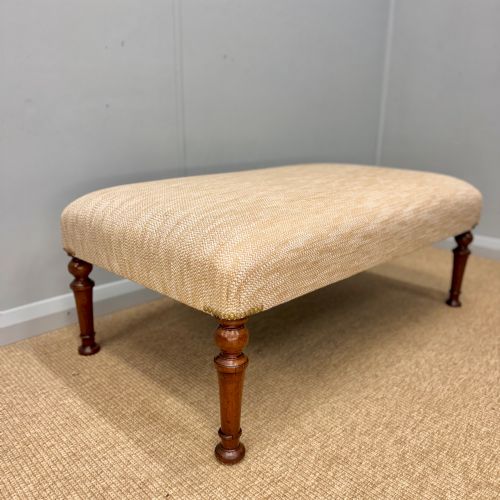
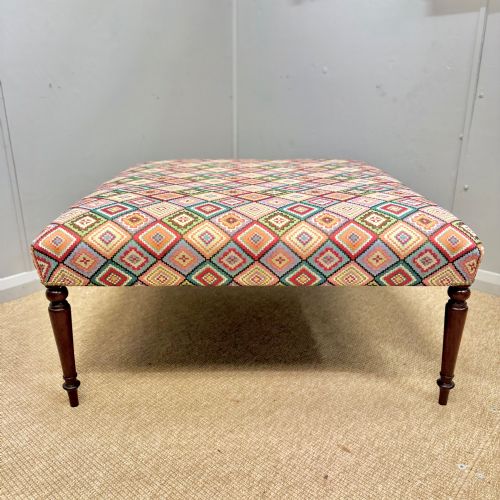
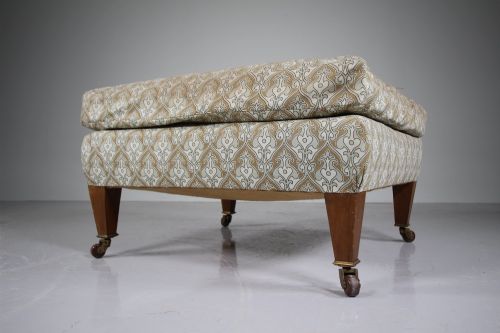
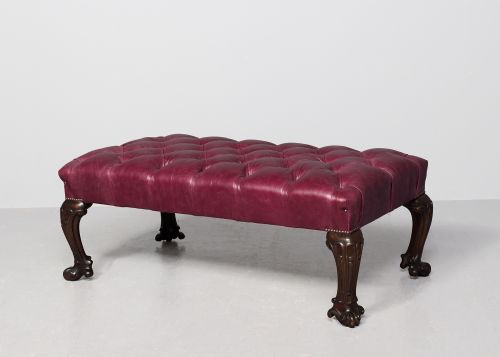
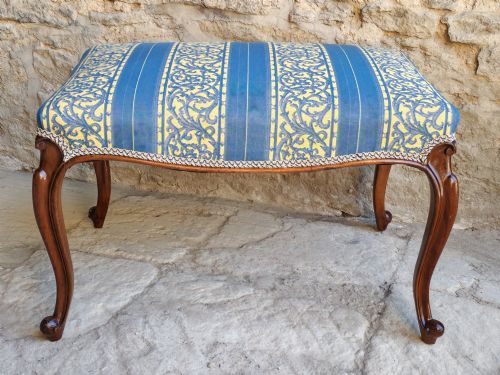
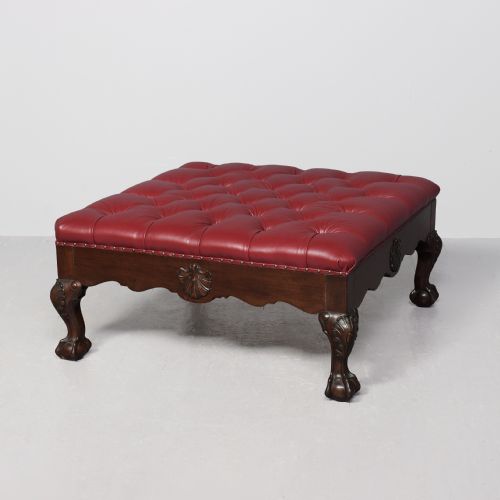
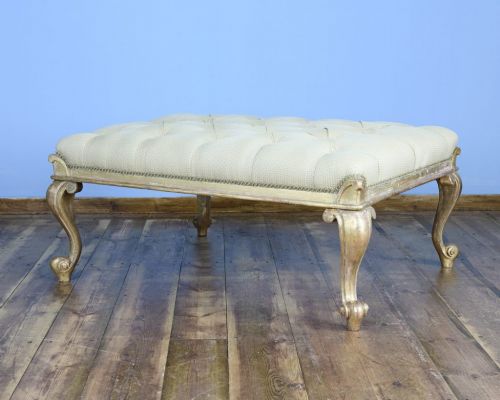
Large Ottoman Stool
A large ottoman stool anchors a room with presence, offering low seating or a generous surface for feet.
Large Ottoman Stool
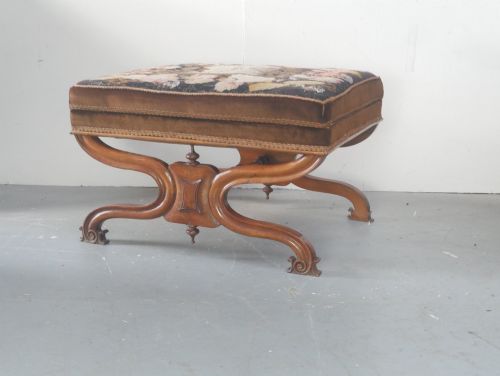
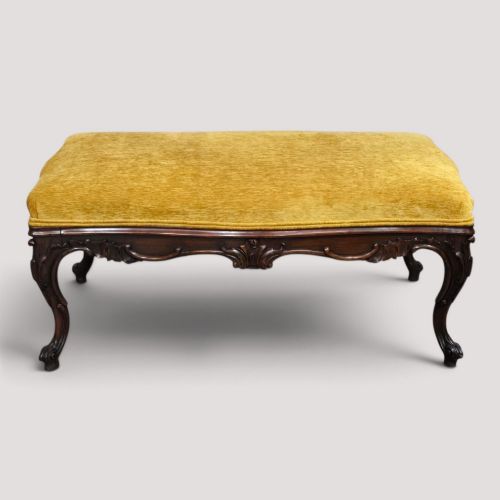
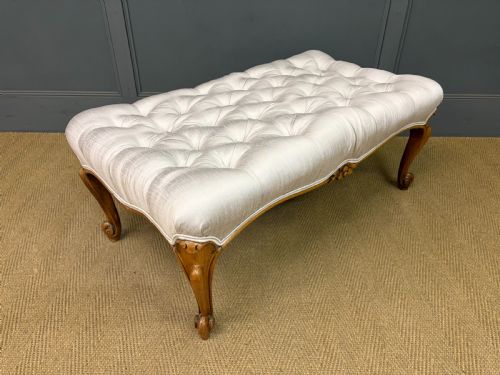
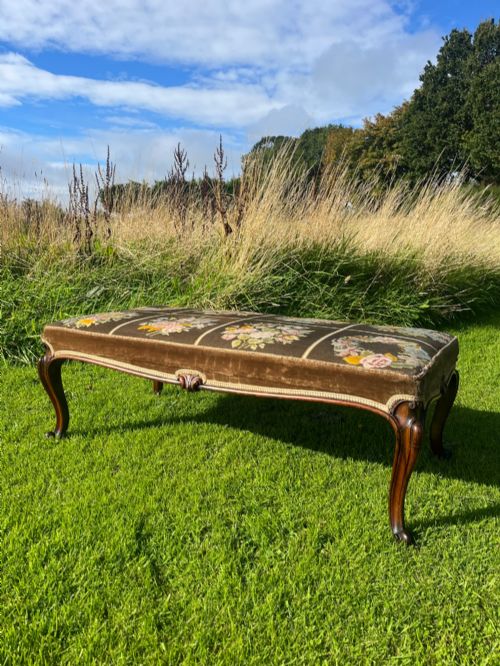
A large ottoman stool provides substantial seating or a resting place for feet, combining sturdy wooden framing with generous cushioning. When searching for a large ottoman stool, buyers encounter substantial seating pieces designed for prominent placement in reception rooms and libraries.
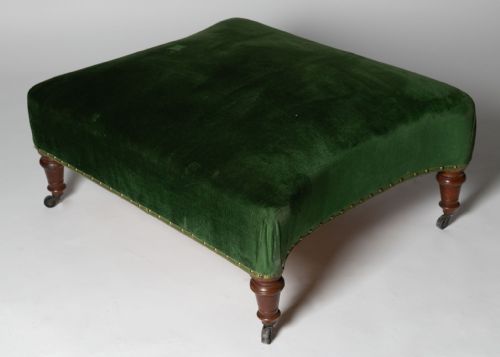
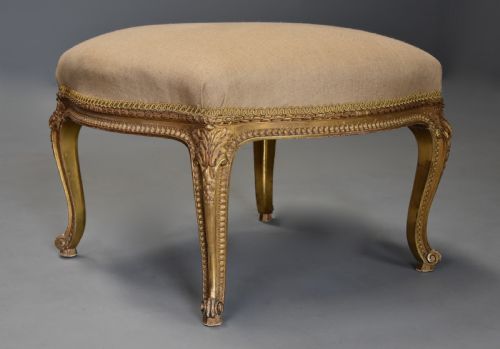
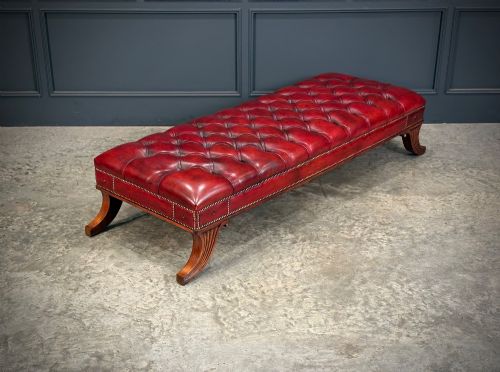
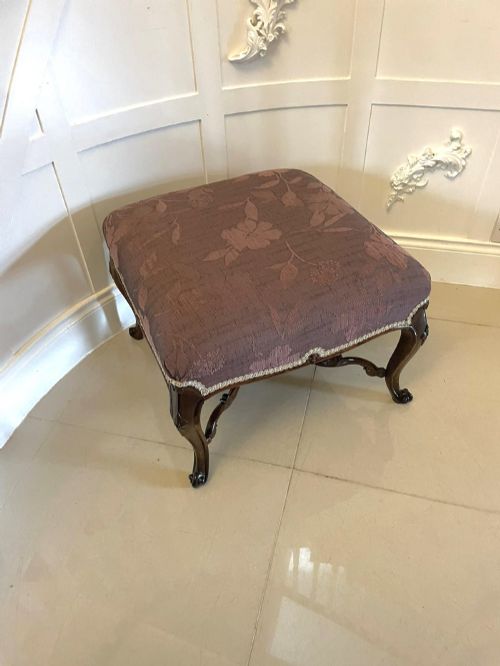
The pieces appearing on this page span the nineteenth century, the Regency era, and the Victorian period, alongside twentieth-century examples. Forms range from traditional buttoned leather footstools and centre stools to elaborate French revival and Anglo-Indian designs.
Makers and workshops utilised various timbers including mahogany, walnut, rosewood, and oak to construct the underlying frames. Upholstery choices vary from original buttoned hide and leather to rich velvet, chenille, and fabrics awaiting fresh covering.
How they were made
Carpenters and cabinetmakers shaped dense hardwoods such as mahogany, walnut, rosewood, and oak into robust frames supporting heavy daily use. Skilled carvers adorned rails and cabriole legs with gilding, parcel gilt, or detailed foliate motifs.
Upholstery involved deep buttoning, horsehair stuffing, and heavy brass castors fixed to the feet for mobility. Leather, hide, and heavy textiles were secured with brass tacking across large padded surfaces.
Large Ottoman Stool Retail Price Guide 2026
Typical asking prices for large ottoman stool among the pieces listed under this phrase on Sellingantiques today, from the lower quarter to the upper quarter. They describe what is for sale here now, not the wider market.
What varies in quality
The integrity of the underlying timber frame and the weight of the timber dictate the baseline standard of a large ottoman stool. Dense rosewood or finely figured mahogany frames demonstrate superior joinery compared to lighter secondary woods.
The precision of hand-carved details, such as cabriole legs or lion mask motifs, separates standard production from exceptional pieces. Original brass castors and sophisticated upholstery methods further elevate a piece above simpler variants.
LOIDRAULT FRERES PARIS·Liberty·Hallett & Sons
The Large Ottoman Stool Glossary
- Centre stool
- A large freestanding seating piece designed to sit in the middle of a room rather than against a wall. These substantial forms often match the grandeur of surrounding library or drawing room furniture.
- Buttoned leather
- An upholstery technique where leather or hide is pulled tight and secured with deep tufts or buttons in a geometric pattern. This method adds structural tension and visual texture to the top surface.
- Cabriole leg
- A furniture leg that curves outward in a convex arc and tapers inward in a concave arc, ending in a pad or scroll foot. This classical shape frequently appears on mid-nineteenth-century walnut and mahogany frames.
- Giltwood
- Timber treated with gold leaf or gold paint to create a brilliant metallic finish. French revival and Victorian pieces often employ this technique on carved frames.
- Castor
- A small wheel mounted on a swivel attached to the foot of a piece. These fittings allowed heavy nineteenth-century seating to move across thick carpets with ease.
Large Ottoman Stool: Frequently Asked Questions
How do I identify a Victorian piece?
Victorian examples frequently feature dense rosewood or walnut construction, deep buttoned leather upholstery, and carved cabriole legs. Look for robust proportions and turned wooden undercarriages that denote mid-nineteenth-century cabinetmaking.
Many of these pieces incorporate heavy brass castors beneath the legs to aid movement across heavy carpets.
Can I reupholster a centre stool?
Many listings specifically note that pieces are suitable for reupholstering, allowing buyers to select a fabric that matches their interior scheme. Traditional fillings can be replaced or secured while preserving the historic wooden frame.
Choosing a heavy velvet, chenille, or hide ensures the upholstery withstands the demands placed on a large surface.
How do Regency styles differ from Victorian ones?
Regency pieces often display neoclassical restraint, utilising dark rosewood and clean architectural lines inspired by ancient Roman and Greek forms. They emphasise rich wood grains and subtle brass inlay rather than heavy carving.
Victorian variations tend toward bolder ornamentation, embracing deep buttoning, elaborate wood carving, and heavier proportions.