


Large Ormolu Chandelier
These large ormolu chandelier pieces bring grand French illumination and golden warmth to high-ceilinged rooms.
Large Ormolu Chandelier
When you search for a large ormolu chandelier, you are looking at substantial ceiling lighting designed to dominate a formal interior. These pieces originate primarily from French traditions, spanning the Regency era, the nineteenth century, and into the early twentieth century.
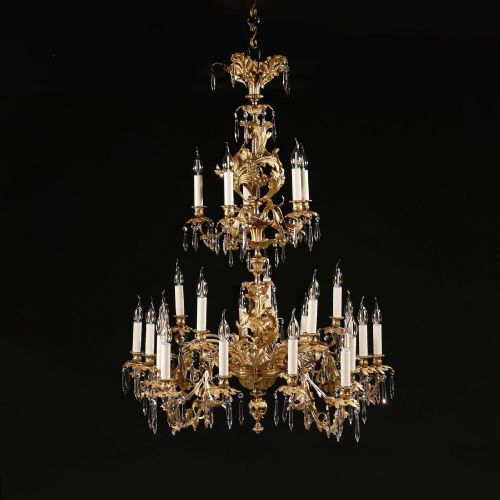
You are most likely to meet multi-tiered, multi-light structures on this page. Examples range from sixteen-light double-tiered designs to twenty-five light showpieces.
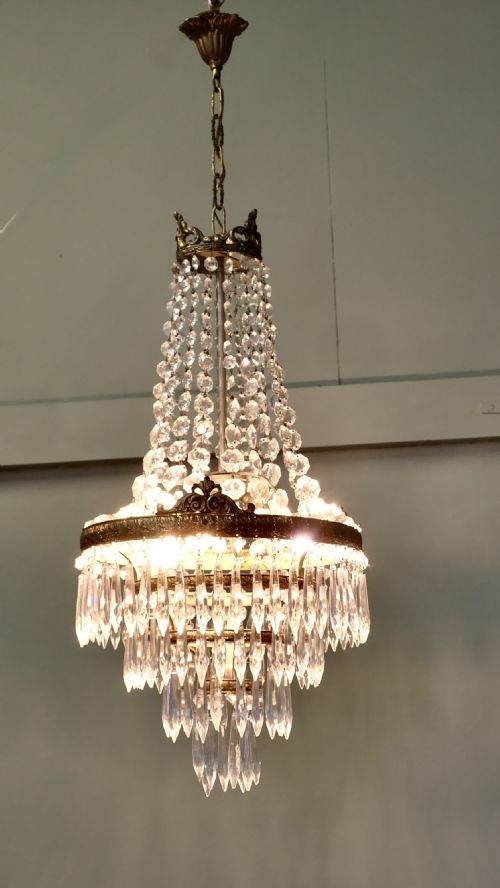
The forms incorporate tent frames, waterfall crystal configurations, and hall lanterns. Alongside standard ceiling fixtures, you will also encounter related candelabras and table lustres.
How they were made
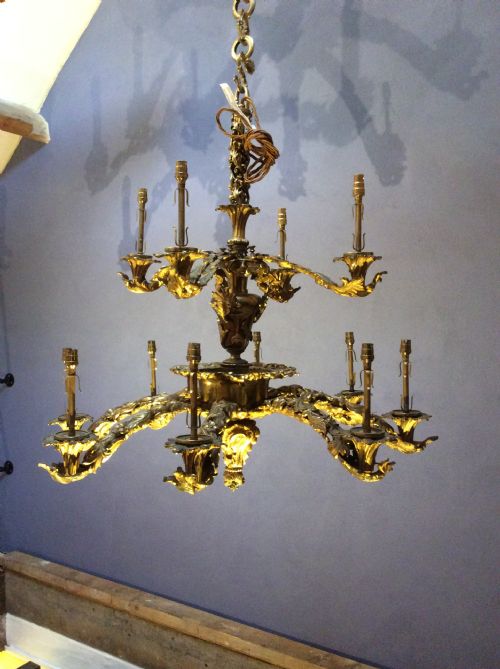
These fixtures rely on heavy metal casting using gilt bronze, ormolu, gilt brass, and standard brass. Artisans fire-gilded the bronze surfaces to create a rich, lasting metallic sheen.
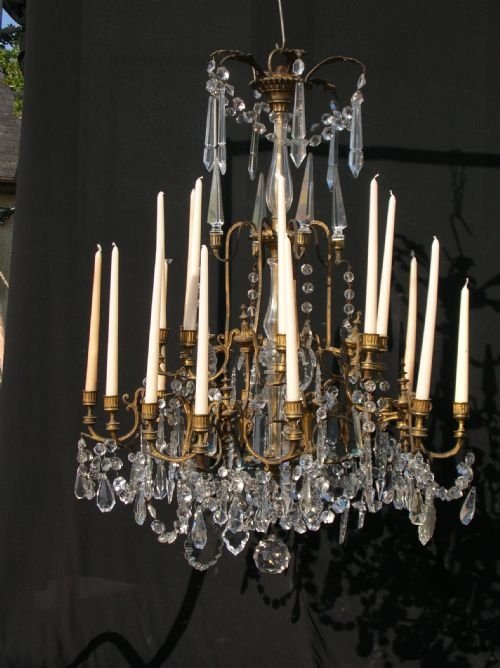
Glass and crystal elements are integrated heavily throughout the construction. Cut glass drops, prisms, and cascading crystals hang from the metal frames to refract light.
Structures are assembled in complex tiers, utilising tent-and-bag configurations or waterfall drops secured to robust metal armatures.
Listings feature French Empire, Rococo, and Neoclassical styles, demonstrating the dominance of nineteenth-century French metalwork.
What varies in quality
The refinement of the cast metalwork separates standard production from exceptional pieces. Crisp chasing on the ormolu surfaces indicates superior artisan skill during manufacture.
The depth and clarity of the hanging crystal drops dictate visual brilliance. Hand-cut glass elements with sharp facets project light far more effectively than simpler pressed glass.
The architectural scale and structural ambition of the frame define the tier. Multi-tiered arrangements with numerous branching lights demand sophisticated engineering to maintain balance and proportion.
The Large Ormolu Chandelier Glossary
- Ormolu
- Gilded bronze produced by applying a mercury-gold amalgam to a bronze base and firing it. This historic technique creates a dull gold finish that resists tarnishing.
- Crystal
- High-lead glass valued for its clarity and refractive index. It is cut into drops and pendants to scatter light across a room.
- Tent and bag
- A lighting design where strings of crystals form a conical tent shape above a gathered bag of crystal drops beneath. This creates a dense, shimmering profile.
- Candelabra
- A branched candlestick or lighting fixture designed to hold multiple candles or electric equivalents. Many examples on this page share stylistic details with chandeliers.
- Regency
- An English and European design period spanning the early nineteenth century. Pieces from this era feature classical motifs and precise geometric proportions.
Large Ormolu Chandelier: Frequently Asked Questions
How do I clean a crystal chandelier?
Maintenance requires gentle hand-washing of each glass drop in place using warm water and a mild solution. Technicians avoid harsh chemicals that might strip the underlying gilt bronze finish.
Heavier components remain secured to the main metal frame during cleaning. Care prevents damage to the delicate wire fixings holding the crystal drops.
What rooms suit a large chandelier?
These grand fixtures demand high ceilings and generous floor space to look balanced. Dining rooms, entrance halls, and formal drawing rooms provide the necessary volume.
Lower ceilings crowd multi-tiered designs and obstruct movement underneath. Placement centres the piece over major architectural focal points.
How do I identify French Empire style?
French Empire pieces rely on strict symmetry, military motifs, and classical antiquity. Ormolu mounts depict laurel wreaths, urns, and Napoleonic symbols.
The overall silhouette remains architectural and disciplined compared to earlier Rococo curves. Metals display a heavy, authoritative presence.
What is the difference between ormolu and brass?
Ormolu is a surface finish applied to a bronze base, created through mercury gilding. It yields a deep, buttery golden hue that ages with subtle variation.
Brass is an alloy of copper and zinc throughout the entire metal mass. Gilt brass uses a gold wash over this base, producing a brighter, yellower tone.
How are nineteenth-century chandeliers wired?
Original pieces were built strictly for candles and underwent later conversion for electricity. Modern wiring runs discretely through the central hollow channels of the bronze frame.
Conversions allow these historic forms to function safely in contemporary settings. Installers use low-wattage candle bulbs to replicate period illumination.