






Large Oriental Table Lamps
Large oriental table lamps bring distinct scale and global history into a room, spanning nineteenth century porcelain vases and Japanese bronze lanterns.
Large Oriental Table Lamps
Large oriental table lamps dominate a room through considerable height and substantial volume, frequently reaching proportions well beyond standard lighting. These pieces take the form of converted vases, lidded jars, and hanging lanterns mounted for interior illumination.
Buyers encounter numerous examples originating from nineteenth-century China and Japan, alongside European interpretations working within Chinoiserie and Regency aesthetics. Converted vessels form the core of this selection, bringing traditional ceramics and metalwork into domestic lighting roles.
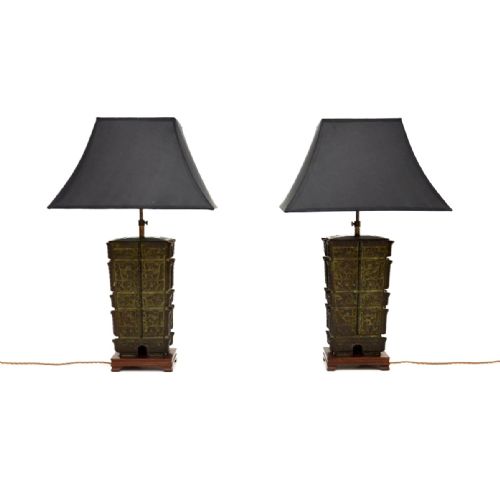
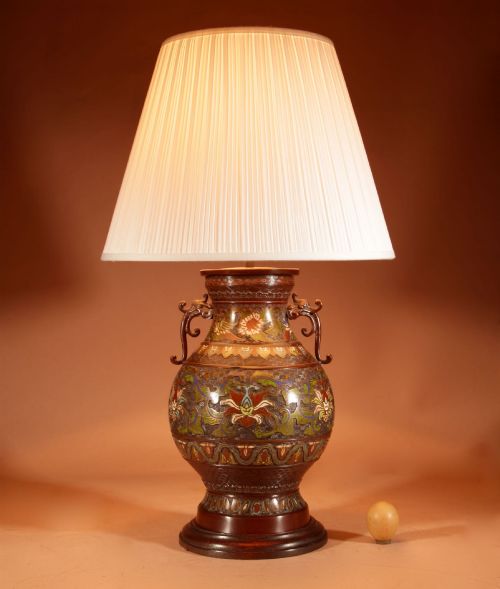
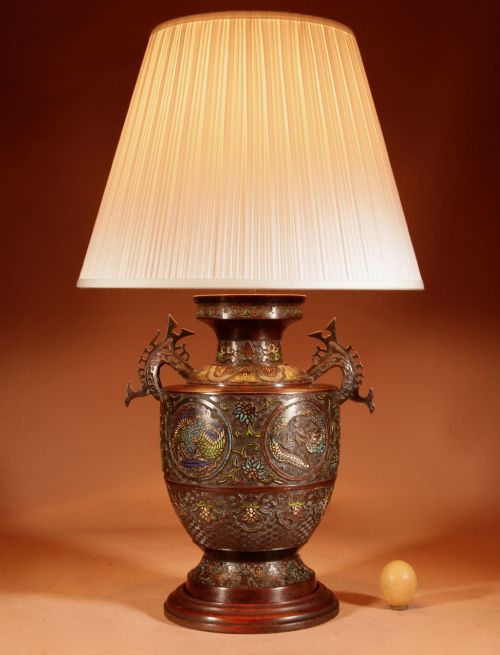
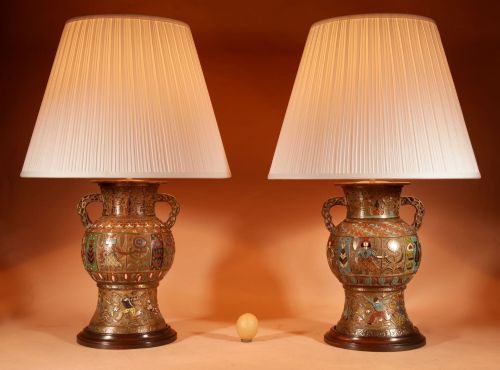
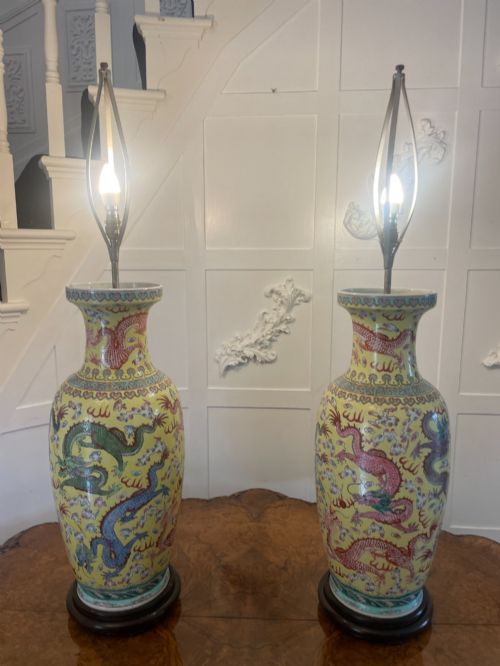
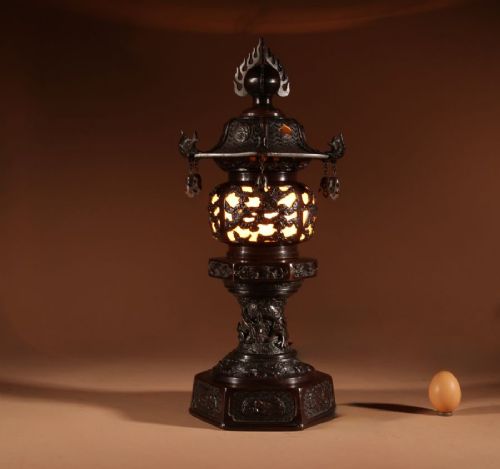
Many listings show pairs of vases, such as Satsuma, Imari, and Canton wares, transformed into matching lamps. Alongside ceramics, heavy bronze and champlevé enamel lanterns provide alternative sculptural forms for larger spaces.
Materials and Construction
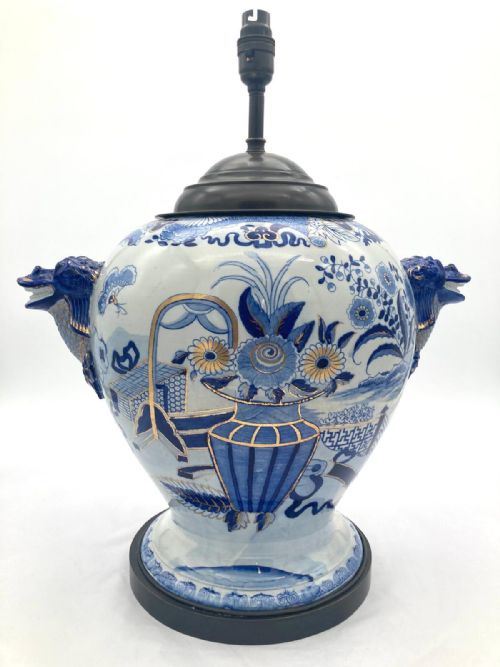
Ceramic bodies dominate the selection, utilising hard-paste porcelain, ironstone, and earthenware painted with cobalt blue, celadon glazes, or polychrome enamel palettes. Potters shaped these substantial vessels by hand or on wheels before applying detailed floral, figural, and geometric motifs.
Metal components involve cast bronze, brass, and gilt bronze, often assembled with champlevé enamel or toleware finishes in black and gold lacquer. Workshops mounted these metal and ceramic bodies onto secure bases, frequently incorporating drilled wiring channels or external mounts to hold electrical fittings.
Organic elements appear through carved rootwood figures and specialised fabric shades paired with the main bodies. Artisans combined these diverse media to support heavy vessels, ensuring stability despite significant height and weight.
Large Oriental Table Lamps Retail Price Guide 2026
Typical asking prices for large oriental table lamps among the pieces listed under this phrase on Sellingantiques today, from the lower quarter to the upper quarter. They describe what is for sale here now, not the wider market.
Several heavy bronze and enamel lanterns double as hanging fixtures, offering an alternative path from tabletop to ceiling display.
Evaluating Quality and Execution
Quality rests upon the crispness of hand-painted ceramic decoration and the integrity of the original vessel before conversion. Finer examples display precise brushwork, rich glaze depth, and well-preserved gilt highlights that have survived the mounting process intact.
The sophistication of the bronze mounts and metal fittings dictates the upper tier of the range. Exceptional items integrate the electrical conversion cleanly into the antique structure without compromising the balance or historical fabric of the base.
The Large Oriental Table Lamps Glossary
- Chinoiserie
- European decorative style imitating Chinese artistic traditions. This aesthetic appears frequently in Regency and later nineteenth-century adaptations.
- Satsuma
- Japanese pottery style featuring a crackled warm ivory glaze decorated with intricate enamel and gilt patterns. These wares are common among converted lamp bases.
- Champlevé
- Enamelling technique where troughs are dug into metal and filled with vitreous paste before firing. This method creates vibrant decorative surfaces on bronze lamp bodies.
- Imari
- Japanese export porcelain decorated in underglaze blue, iron red, and gold. Pieces from this tradition often feature dense panel designs.
- Celadon
- Pale green translucent glaze applied to high-fired ceramics. The technique originated in China and appears on monumental nineteenth-century vases.
Large Oriental Table Lamps: Frequently Asked Questions
How do I choose the right size?
Consider the proportion of the room and the height of surrounding furniture before placing a substantial floor or table lamp. Large vessels require robust side tables and adequate clearance to avoid crowding adjacent decor.
Measure the combined height of the ceramic or bronze base alongside the fitting and shade to ensure the light source sits at a balanced level.
Can antique vases be safely rewired?
Most antique lamps are converted using methods that accommodate modern electrical standards, though professional inspection of older wiring is essential. Qualified electricians can update components while preserving the structural integrity of the ceramic or metal body.
Ensure that any drilling or mounting hardware applied to the original vessel remains secure and stable during the rewiring process.
How do I distinguish Satsuma from Imari ware?
Satsuma ware is characterised by a distinctive cream-coloured, crackle-glazed earthenware body painted with detailed figures and heavy gold leaf. This style provides a softer, matte appearance compared to porcelain alternatives.
Imari ware relies on a hard porcelain body decorated with a strict palette of deep cobalt blue, rusty iron red, and gilt highlights arranged in geometric and floral panels.
What is the best way to clean these lamps?
Dust ceramic and bronze surfaces gently with a soft, dry cloth to prevent abrasive particles from scratching delicate glazes or lacquer. Avoid harsh chemical cleaners that can damage antique patinas, enamel work, or gilt mounts.
Inspect fabric shades separately and clean them according to their specific textile composition, keeping moisture away from the electrical fittings.