



Large Oak Server Table
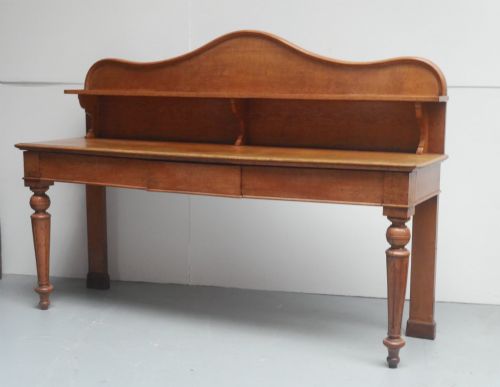
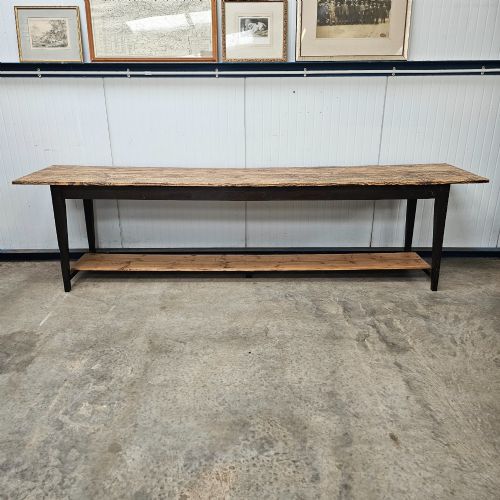
A large oak server table brings substantial timber and historic utility to a room, offering a commanding surface built for heavy service.
Large Oak Server Table
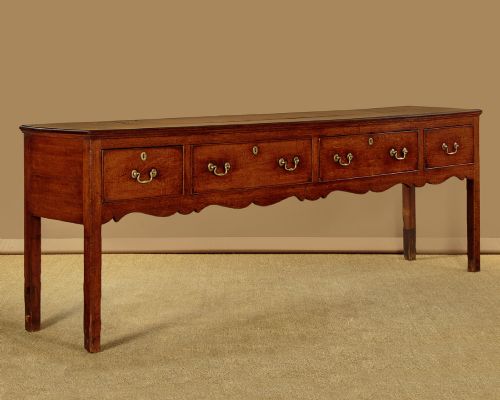
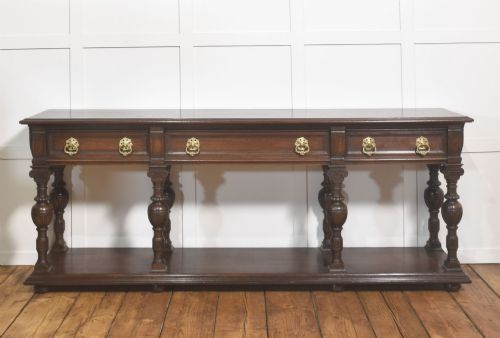
A large oak server table provides a robust surface designed for preparation and serving, drawing on forms from the eighteenth and nineteenth centuries. These pieces encompass serving tables, sideboards, buffets, and drapers tables originating from English, French, and Scottish workshops.
The selections encountered here span Victorian pieces, Jacobean revival examples, and rustic farmhouse tables. Buyers find long formats suited to dining rooms and hallways, constructed with deep timber tops and supportive underframes.
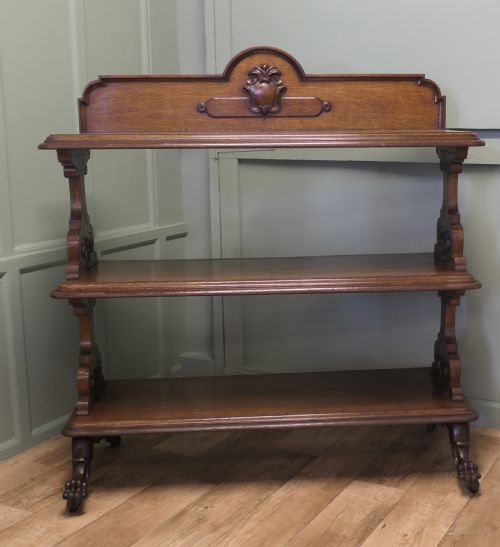
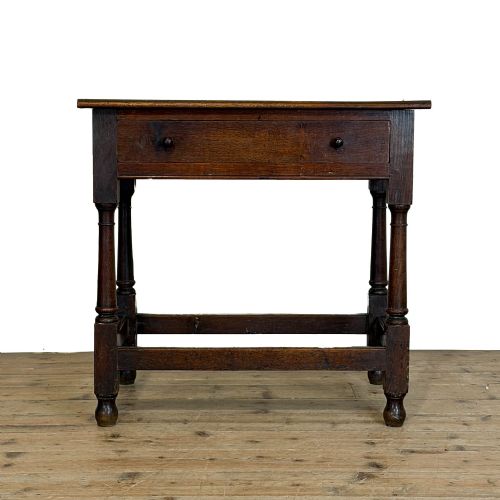
The forms range from carved Victorian buffets to bleached oak drapers tables and fruitwood farmhouse designs. Each item reflects the utilitarian requirements of domestic and commercial spaces from past centuries.
How they were made
Construction relies primarily on solid oak, supplemented by pine, fruitwood, and hardwood for secondary framing or tabletops. Joinery techniques from the period utilise pegged mortise and tenon joints to bear substantial weight.
Surface treatments vary from polished finishes to bleached timber and carved detailing in styles reflecting Victorian and Jacobean revivals. Hardware incorporates brass fittings where handles and keyplates are present.
Large Oak Server Table Retail Price Guide 2026
Typical asking prices for large oak server table among the pieces listed under this phrase on Sellingantiques today, from the lower quarter to the upper quarter. They describe what is for sale here now, not the wider market.
Materials recorded across the inventory include oak, bleached oak, pollard oak, pine, fruitwood, brass, and glass.
What varies in quality
Quality rests upon the selection of timber and the integrity of the original construction. Dense oak boards with consistent grain and minimal replacement timber distinguish the better examples.
Carving depth and the crispness of detail separate standard production from superior craftsmanship. The proportion of the base to the top surface dictates the visual balance of the piece.
The Large Oak Server Table Glossary
- Drapers table
- A long utility table traditionally used in textile shops for folding cloth. These pieces feature expansive wooden tops and open lower shelves.
- Server
- A low sideboard or table utilised for holding food and dishes during dining. The form prioritises surface area and accessible storage.
- Dresser base
- The lower section of a kitchen or dining dresser equipped with drawers and cupboards. These items served as primary work surfaces in large households.
- Pollard oak
- Timber taken from trees that have been pollarded, producing wood with a dense, clustered grain pattern. This figure appears on select Victorian furniture.
- Bleached oak
- Timber treated to lighten its natural colour while retaining the grain structure. This finish alters the heavy dark appearance typical of older furniture.
Large Oak Server Table: Frequently Asked Questions
Where did large oak server tables originate?
These tables emerge from diverse domestic and institutional contexts across Britain and France. Workshops built them for substantial dining rooms, country houses, and commercial establishments.
Cabinetmakers utilised regional hardwoods suited to daily demands, resulting in distinct forms ranging from Scottish serving pieces to French drapers tables.
How do I care for a historic oak surface?
Maintenance requires avoiding excessive moisture and direct heat sources that cause timber to split. Regular dusting with a dry cloth preserves the finish without chemical buildup.
Applying natural wax occasionally feeds the wood and maintains the sheen on polished or bleached surfaces.
What is the difference between a sideboard and a server?
A sideboard often includes enclosed cupboards and drawers designed for storing tableware and linens. A server typically presents an open base or lighter structure focused on surface utility.
Both forms served similar dining functions in nineteenth-century homes but varied according to room proportions and service requirements.
How can I date a nineteenth-century oak table?
Dating relies on examining tool marks, construction methods, and hardware styles associated with Victorian or earlier periods. Machine-sawn timber indicates later nineteenth-century manufacture.
Wear patterns around the edges and feet provide evidence of prolonged domestic or commercial use over generations.
Can these tables be used in modern kitchens?
Their solid timber construction and generous proportions make them suitable for contemporary kitchen islands or preparation spaces. The durable surfaces withstand daily domestic tasks.
Buyers often place them in open-plan areas to anchor the room with historic character and practical workspace.