





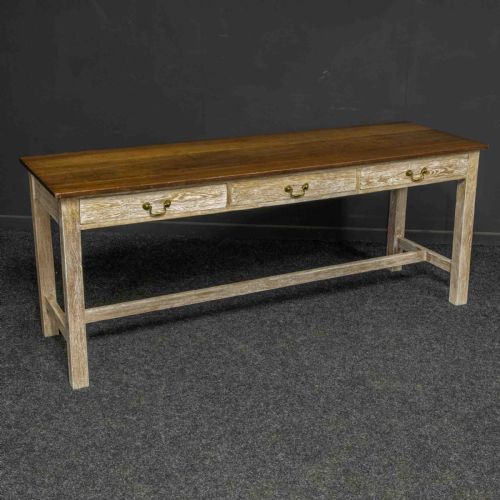
Long Oak Server
These long oak server pieces provide generous surface area and sturdy utility, prized by collectors for their honest timber and historic presence.
Long Oak Server
A long oak server sits squarely in the tradition of large domestic timber furniture, taking the form of serving tables, refectory tables, and drapers tables. Buyers seeking this phrase usually encounter substantial pieces spanning the eighteenth, nineteenth, and early twentieth centuries.
The examples available here lean heavily towards English and French country house aesthetics, alongside rustic farmhouse and Gothic revival styles. One frequently meets long proportions intended for practical hospitality or large-scale display.
How they were made
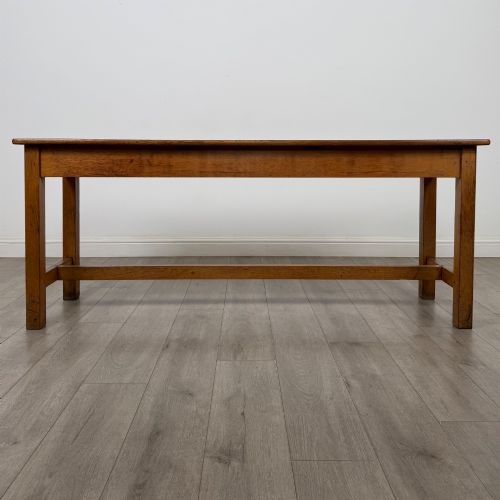
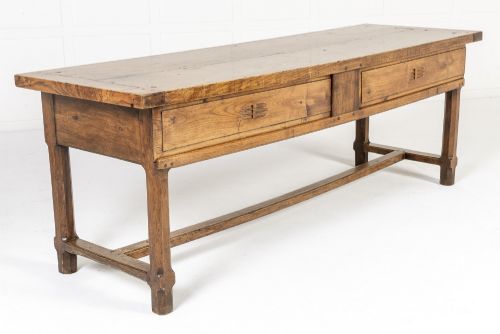
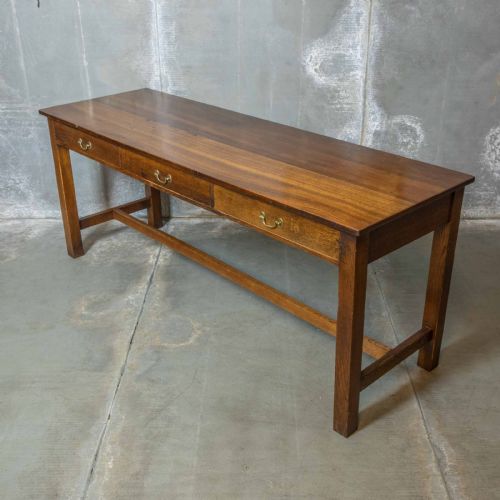
Construction relies primarily on solid oak and pine timber, frequently paired with brass hardware and sometimes finished with a bleached surface treatment. Makers utilised traditional joinery to span considerable lengths, as seen in harvest and refectory formats.
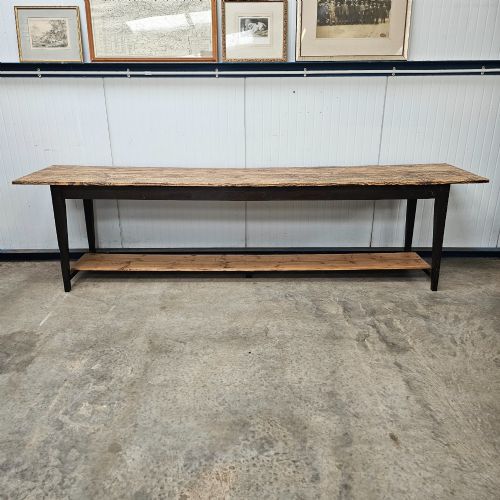
Underframes and supports range from simple rustic legs to elaborate Gothic underframes and two-tier configurations, reflecting the structural demands of monumental proportions.
The listings here span from the eighteenth century through to 1920, predominantly constructed from oak and pine with occasional brass elements.
What varies in quality
Quality rests upon the selection of timber and the integrity of the original construction rather than mere surface decoration. Heavier planks, harmonious proportions, and untouched historic patina distinguish the finer examples from standard utility items.
The sophistication of the underframe and the retention of original surface finishes, such as early bleaching or natural dark oak grain, separate everyday workshop output from pieces of superior architectural character.
The Long Oak Server Glossary
- Drapers table
- A wide, elongated table historically utilised in cloth merchants' shops for measuring and displaying textiles. They are prized today for their expansive timber tops.
- Bleached oak
- Oak timber treated to lighten its natural dark tone, a finish often associated with nineteenth-century French provincial and country furniture. It offers a softer, more neutral visual weight.
- Gothic underframe
- A structural support system incorporating arches, tracery, or pointed motifs derived from Gothic architecture. This feature adds distinct vertical interest beneath the tabletop.
Long Oak Server: Frequently Asked Questions
Where were long oak servers used?
These large tables originally served busy country houses, monasteries, and commercial drapers shops where expansive surface area was essential for daily work or hospitality.
Today, buyers place them in large dining rooms, kitchens, or open-plan living spaces to function as serving stations, sideboards, or central gathering tables.
How do I care for historic oak?
Historic oak timber benefits from regular dusting with a dry cloth and occasional treatment with suitable natural waxes to nourish the grain without building up heavy residues.
Keep these pieces away from direct heat sources and drastic humidity changes to prevent the solid timber planks from splitting or warping over time.
Are bleached oak tables original?
Bleaching techniques have been applied to oak furniture for generations, particularly within French provincial traditions, to achieve a lighter aesthetic suited to domestic interiors.
Examining the depth of the grain and the consistency of the patina helps determine whether a bleached surface reflects period taste or later intervention.
How do I identify a refectory table?
A refectory table is defined by its considerable length relative to its width, supported by sturdy legs linked near the base by horizontal stretchers for added stability.
This robust construction allowed large numbers of people to sit along the sides without the legs obstructing knee room.