

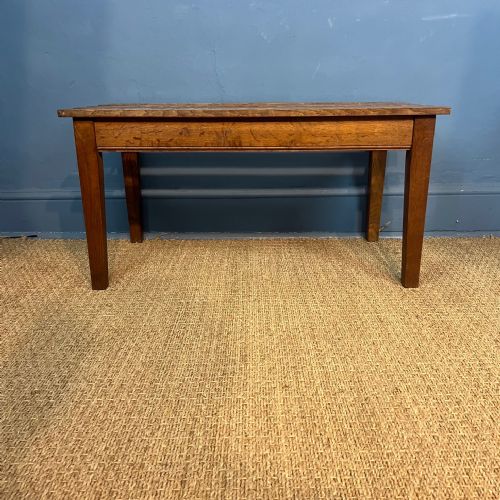
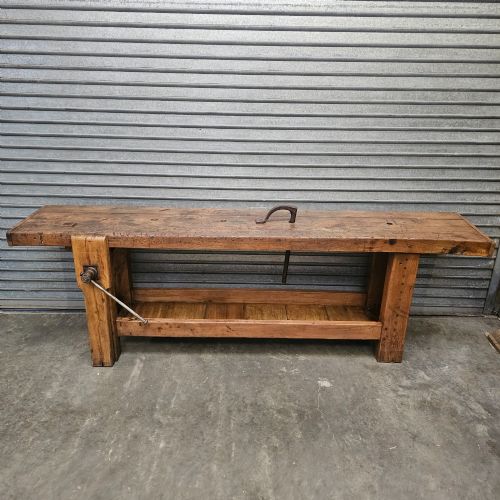
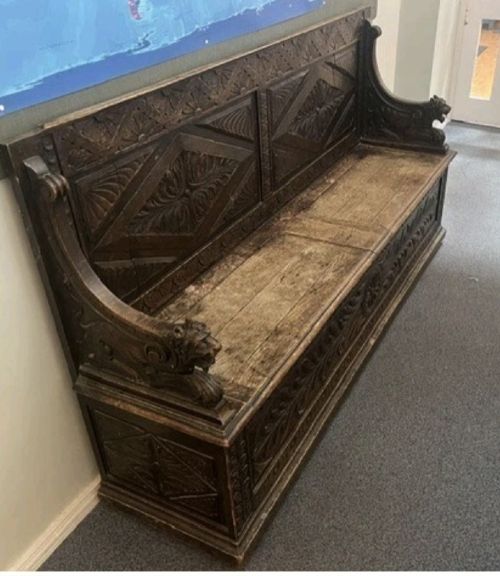

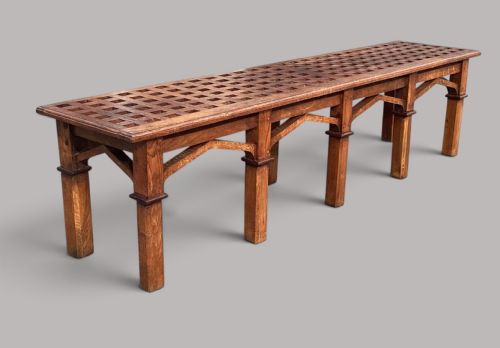




Large Oak Bench
When you search for a large oak bench, you are looking at substantial timber seating carrying centuries of domestic or institutional history.
Large Oak Bench
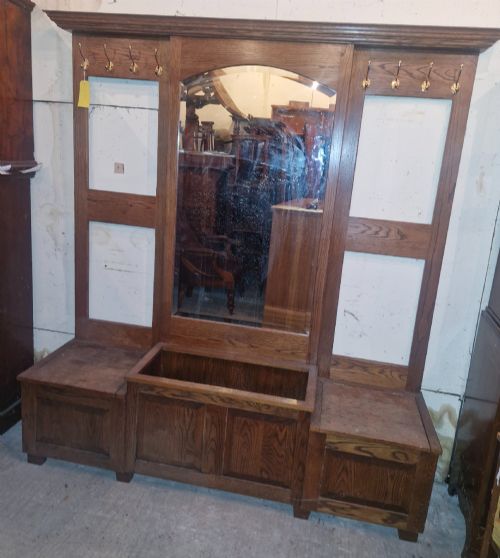
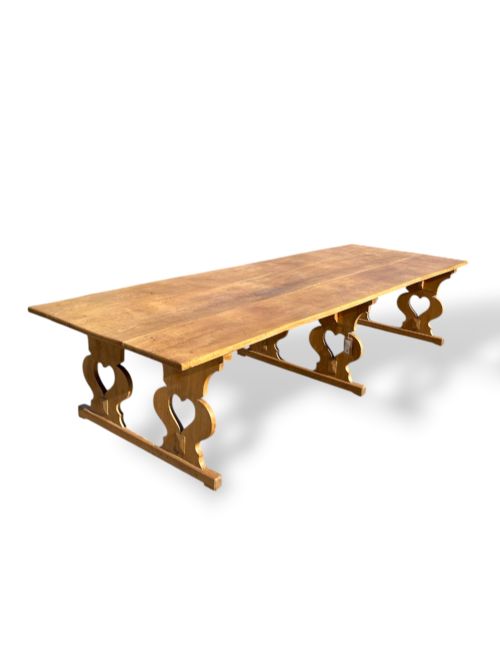
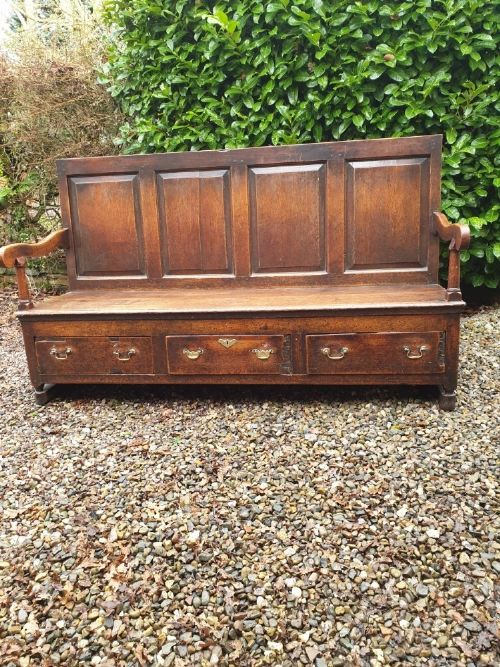
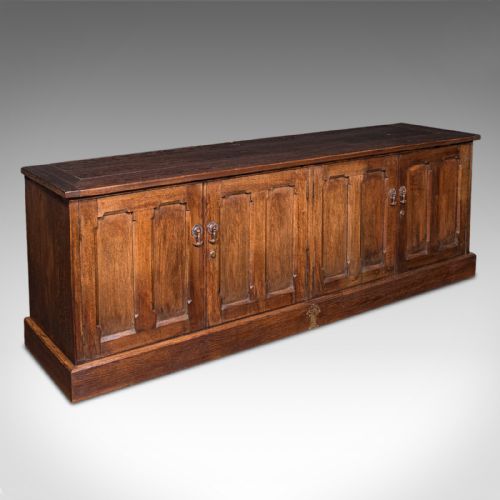
A large oak bench encompasses robust forms designed for communal seating, ranging from panelled hall benches and box settles to refectory accompaniments and ecclesiastic pews. Pieces span the eighteenth, nineteenth and early twentieth centuries, drawing on stylistic revivals like Jacobean, Gothic and Arts and Crafts alongside rustic country traditions.
You are most likely to encounter nineteenth-century English and Victorian hall benches, alongside eighteenth-century settle benches and refectory formats. These items originate from country houses, churches, and civic spaces, utilising dense timber built to withstand heavy daily use.
The category extends beyond simple seating to include hybrid furniture types such as monk seats, box settles with storage compartments, and repurposed work tables or cheese presses functioning as benches. Their presence anchors a hallway, dining space or large room with architectural gravity.
How They Were Made
Construction relies heavily on solid oak, frequently joined using traditional mortise and tenon techniques secured with wooden pegs. Secondary timbers like pine or elm occasionally appear in structural interiors or related variants.
Surface ornamentation on these pieces combines hand carving, panel framing, and turning, executed with iron or brass fixings where hinges and hardware are required. Structural integrity depends on thick timber slabs and substantial framework rather than applied veneers.
Large Oak Bench Retail Price Guide 2026
Typical asking prices for large oak bench among the pieces listed under this phrase on Sellingantiques today, from the lower quarter to the upper quarter. They describe what is for sale here now, not the wider market.
Some nineteenth-century examples incorporate carved Green Man motifs, glaring out from the woodwork to ward off unwanted spirits.
What Varies in Quality
Quality rests upon the proportion and density of the timber, the depth and crispness of hand-carved detailing, and the integrity of the original construction. Superior examples retain their original patination and uncompromised structural joins without excessive modern timber replacement.
The distinction between utilitarian workshop output and finer pieces lies in the sophistication of the panel work, the balance of the proportions, and whether elements like box seats or backrests remain complete and unaltered from their period of origin.
The Large Oak Bench Glossary
- Settle bench
- A high-backed wooden bench with solid arms and often a closed box base designed to block draughts in older halls. This form provides enclosed storage beneath the seat.
- Refectory bench
- A long, linear seating form traditionally paired with a refectory dining table for communal dining. These pieces often feature trestle ends or heavy columnar legs.
- Monks bench
- A convertible piece of furniture featuring a pivoting backrest that folds down over the arms to transform the seat into a table. This dual-purpose design is typical of later revival periods.
- Box settle
- A heavy seat featuring a hinged lid on the base compartment for storing household items. The high panelled back protects occupants from cold air.
- Box coffer
- A rigid chest structure integrated with a seat, combining deep storage capacity with a sturdy bench top. Panel construction allows the timber to expand and contract naturally.
Large Oak Bench: Frequently Asked Questions
Where should I place a large oak bench?
These substantial seats suit wide hallways, boot rooms, or large dining spaces where their length and weight anchor the room.
They also function effectively against blank walls in living areas, providing both seating and a strong architectural focal point.
How do I care for historic oak seating?
Maintain the wood by applying a quality beeswax periodically to nourish the dry timber and preserve the natural surface sheen.
Keep the furniture away from direct heat sources and drastic temperature shifts to prevent the solid oak panels from splitting.
How can I tell an eighteenth-century bench from a Victorian revival piece?
Eighteenth-century examples display hand-cut joinery, pegged tenons, and deep patination earned through generations of heavy use and wear.
Victorian revival pieces often utilise machine-sawn components, crisper machinery-assisted carving, and stylistic nods to earlier Jacobean or Gothic eras.