
Dark Timber Seating
Dark timber seating encompasses robust wooden chairs, benches, and stools spanning from the eighteenth century to the twentieth.
Dark Timber Seating
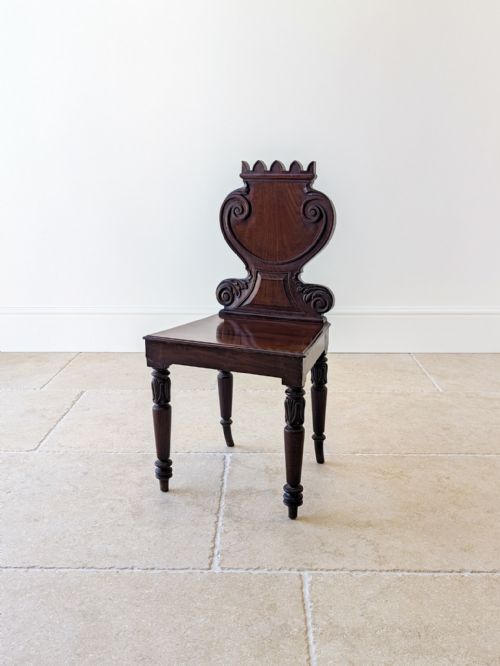
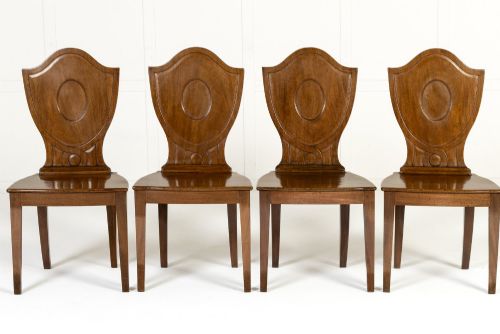
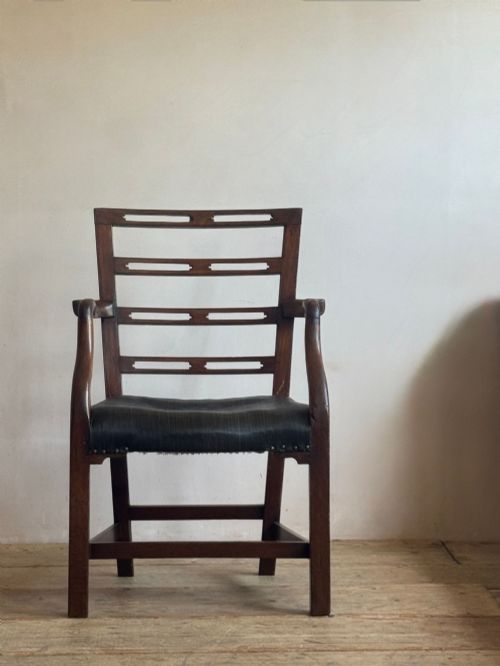
The pieces on this page are dominated by eighteenth-century and nineteenth-century examples, ranging from vernacular stools and box settles to refined Victorian and Georgian hall chairs. Oak, mahogany, and elm form the backbone of these listings, appearing across dining chairs, benches, and armchairs.
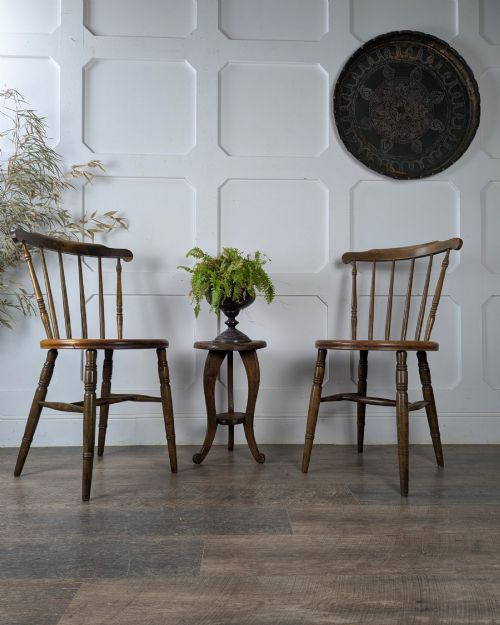
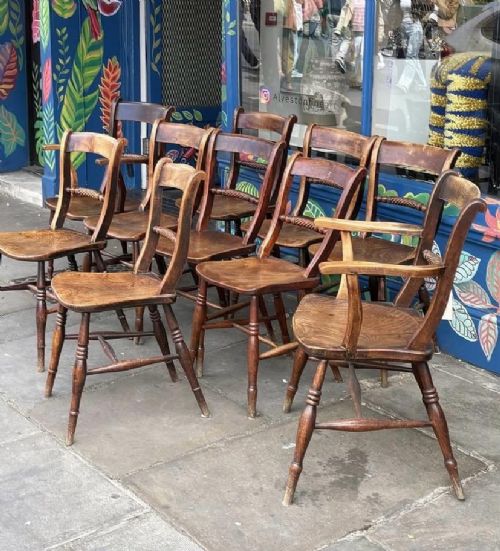
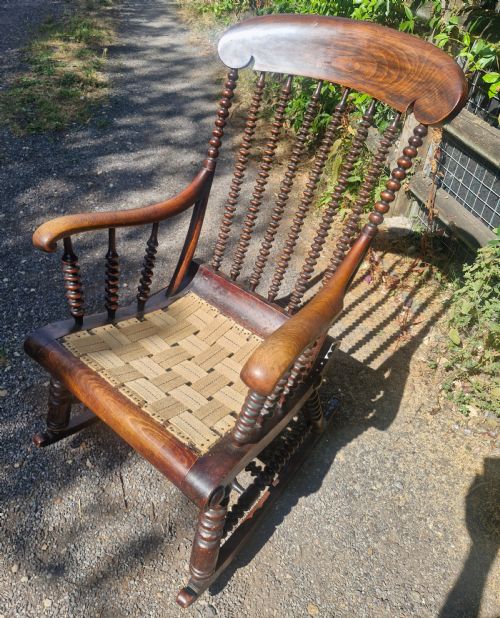
Vernacular pieces such as comb-back Windsor chairs and rustic benches share space with stylish Regency and Gothic Revival models. This mix reflects how domestic and public spaces utilised sturdy wooden chairs for generations.
Materials and construction methods
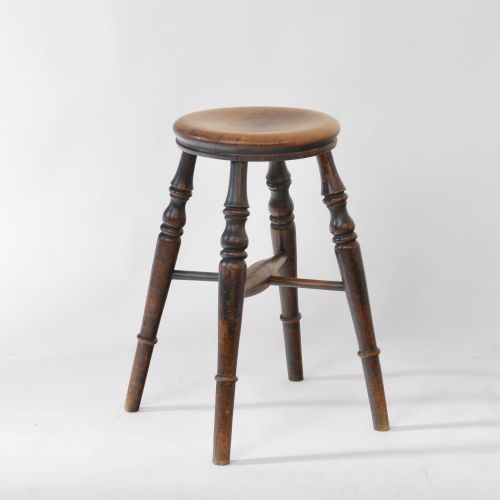
Makers relied on durable hardwoods including oak, mahogany, elm, and ash to build seating that would withstand heavy daily use. Joinery techniques such as mortise and tenon framing secured the structural integrity of settles and benches, while turned components formed the legs and backs of chairs and stools.
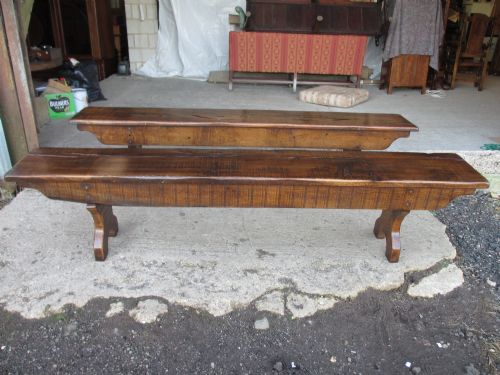
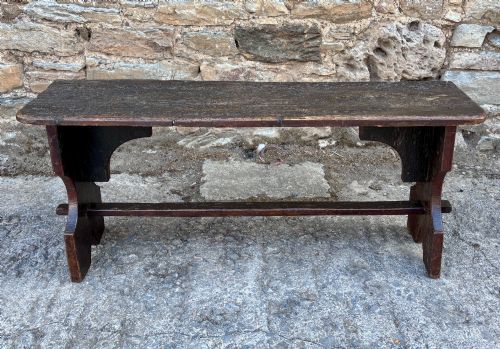
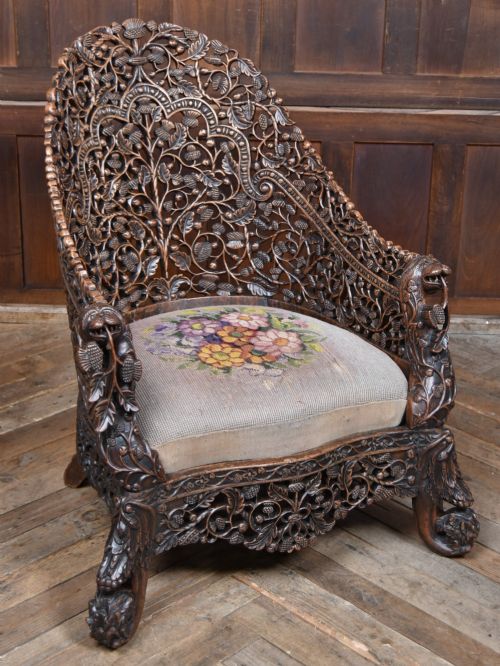
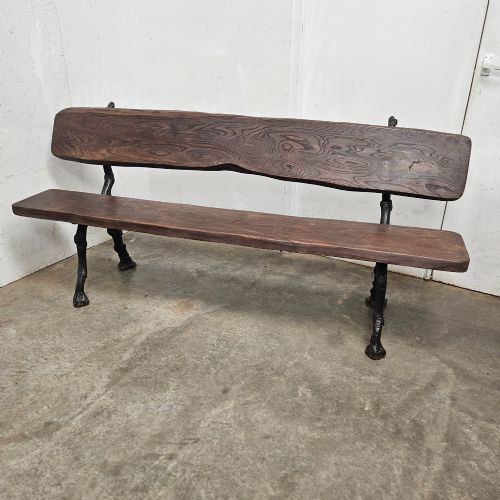
Surface details often included hand-carving, panelled construction, and shaped trestle ends. Iron brackets or fixings occasionally reinforced garden benches and industrial stools, blending metal strength with wooden frames.
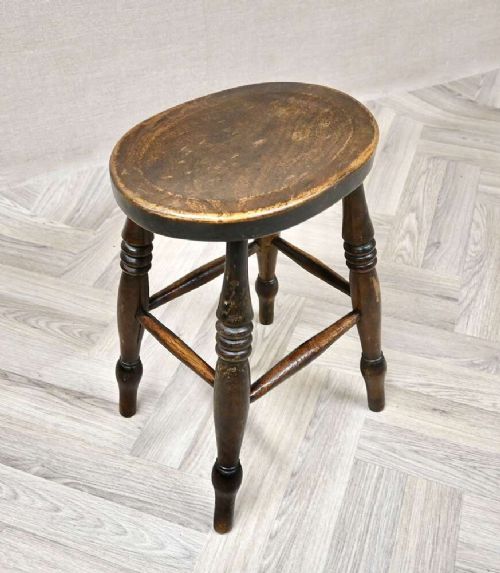
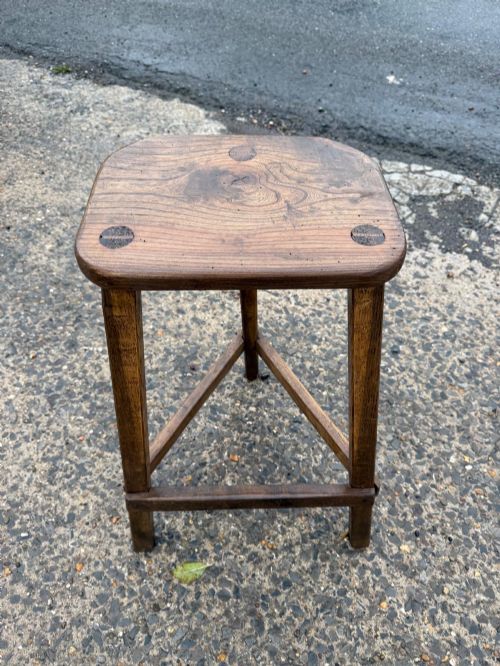
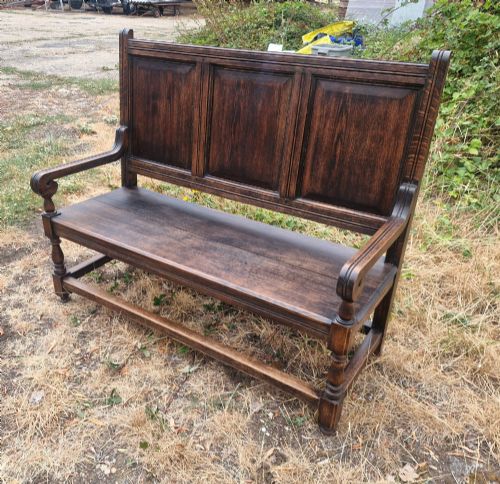
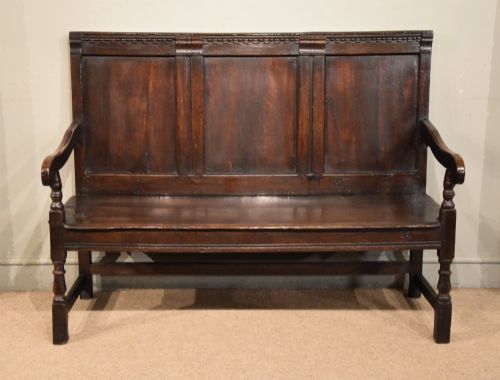
Form variations range from heavy box settles and hall chairs to industrial machinist stools and garden benches.
Assessing quality in antique wooden seats
Quality rests in the integrity of the timber selection and the precision of the original joinery. Pieces fashioned from dense, figured mahogany or well-seasoned oak exhibit a stability and depth of tone that lesser woods lack.
Proportion and execution distinguish standard utility items from exceptional commissions. A finely carved armorial crest on a hall chair or a carefully sculpted solid elm seat demonstrates the maker's mastery over the material.
The Dark Timber Seating Glossary
- Box settle
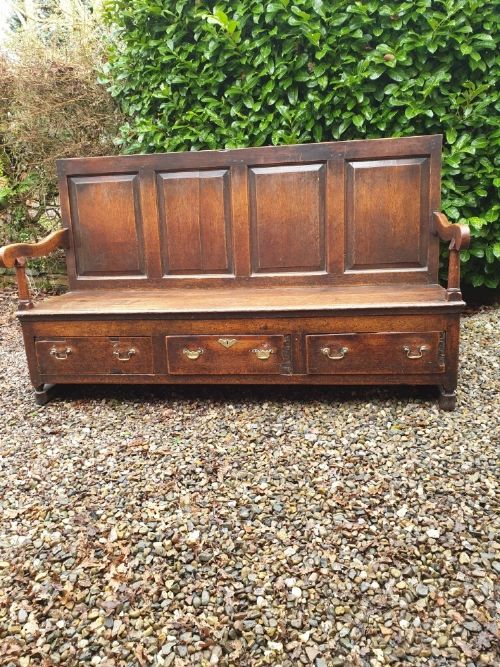
- A high-backed wooden bench featuring a storage compartment beneath the seat. This design kept draughts away from the sitter while providing useful domestic storage.
- Hall chair
- A rigid wooden chair, often made of mahogany or oak, traditionally placed in an entrance hall. These pieces frequently display carved family crests or shields.
- Vernacular
- Furniture built by local tradesmen using regional traditions rather than high-style metropolitan designs. These items prioritise utility and local materials over academic fashion.
- Windsor chair
- A chair built with a solid wooden seat into which the legs and back spindles are driven directly. Traditional versions utilise bentwood bows and comb-backs.
- Trestle ends
- Supporting uprights joined by a horizontal stretcher, commonly found on heavy benches and long tables. This construction method offers robust weight distribution.
Dark Timber Seating: Frequently Asked Questions
How do I care for antique wooden chairs?
Keep wooden seats away from direct heat sources and sudden temperature shifts to prevent the timber from splitting. Apply a suitable wax polish occasionally to nourish the grain and maintain the surface sheen.
Avoid using harsh chemical sprays or excess water during cleaning. A soft, dry cloth is usually sufficient for dusting carved details and polished surfaces.
Where were hall chairs placed?
Hall chairs stood in the entrance halls and corridors of large country houses and town residences. They served visitors waiting briefly before entering the main reception rooms.
Because these chairs were intended for transitory use rather than long sitting sessions, many featured solid wooden seats and upright backs without upholstery.
What is a box settle used for?
A box settle functioned as both a seating bench and a storage chest in domestic interiors. The high back shielded inhabitants from cold draughts near open hearths.
Lifting the seat lid allowed families to store blankets, dry goods, or household items securely out of sight.
How can I tell the period of an oak bench?
Examine the construction marks, tool traces, and timber characteristics visible on the underside and joints. Hand-cut peg joints and dense, oxidised oak often point towards eighteenth-century craftsmanship.
Revival pieces from the later Victorian era frequently display machine-sawn components and different styling influences while mimicking earlier forms.