




Large Mantelpiece Mirror
A large mantelpiece mirror anchors a room, drawing the eye upwards and reflecting light across period interiors through grand proportions.
Large Mantelpiece Mirror
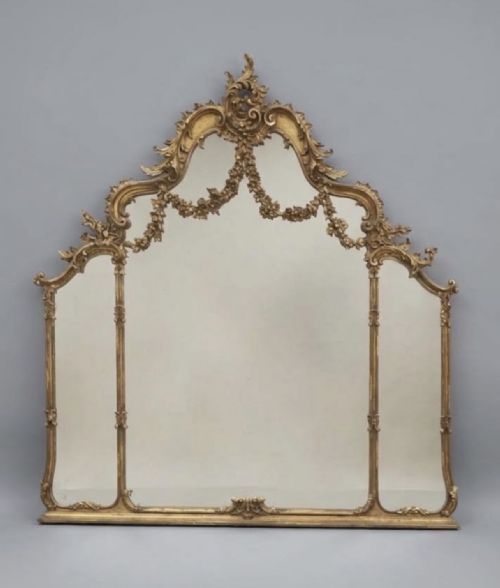
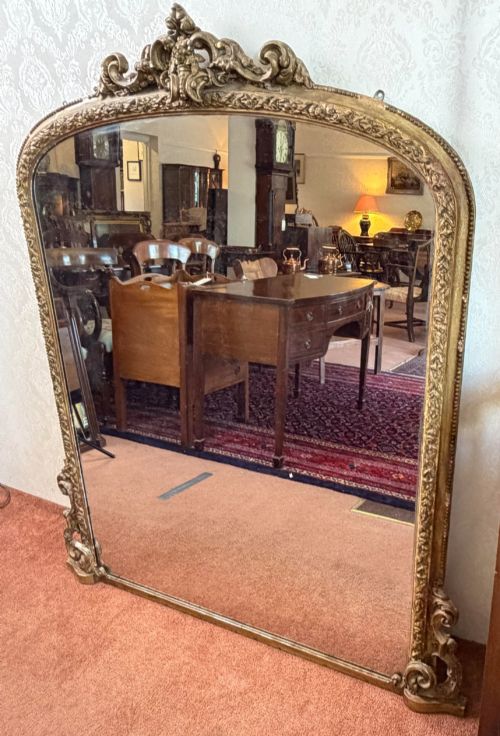
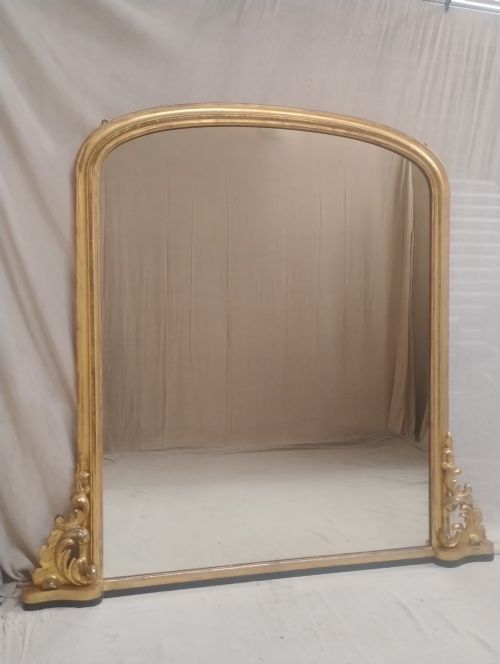
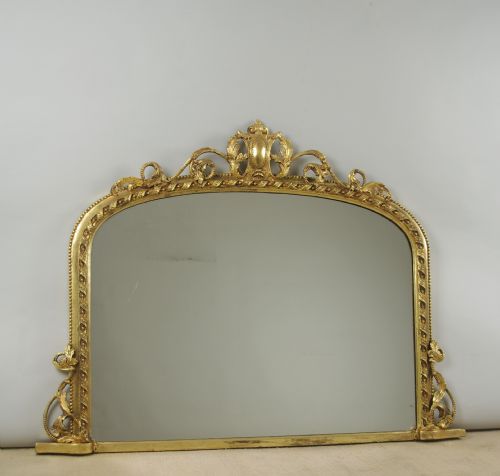
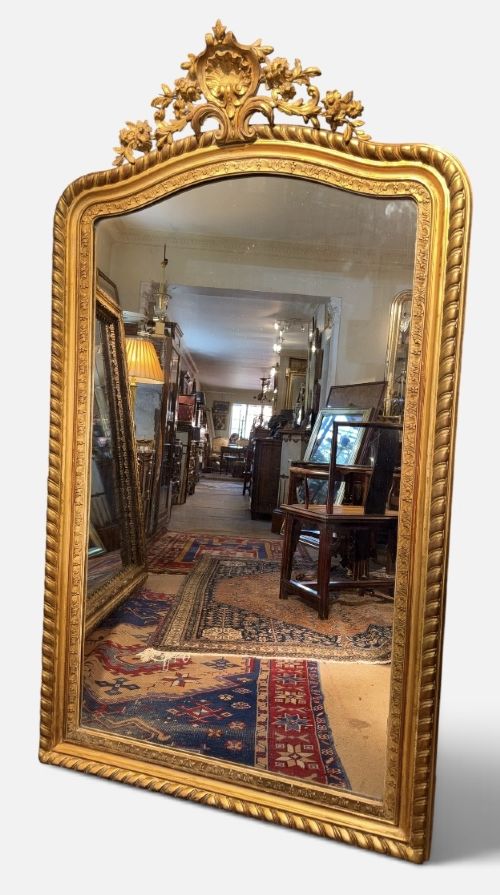
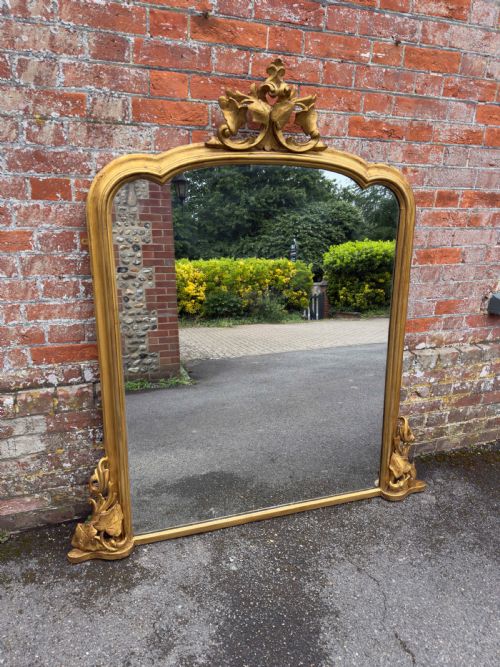
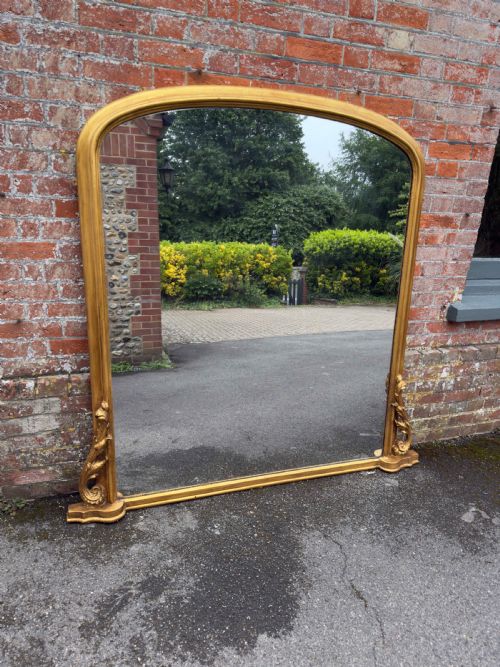
A large mantelpiece mirror serves as a dominant architectural focal point designed to sit above a fireplace hearth. These substantial looking-glasses appear primarily as overmantel mirrors originating from the nineteenth century, including Victorian, Regency, and French provincial designs.
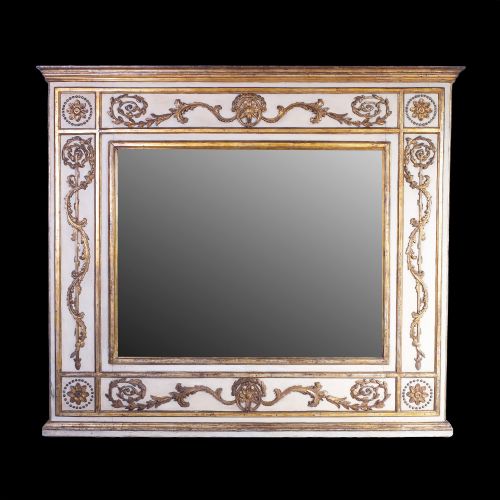
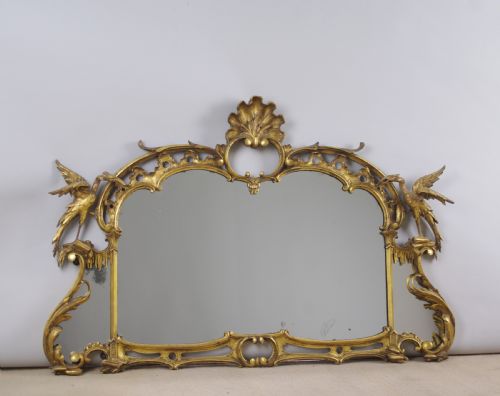
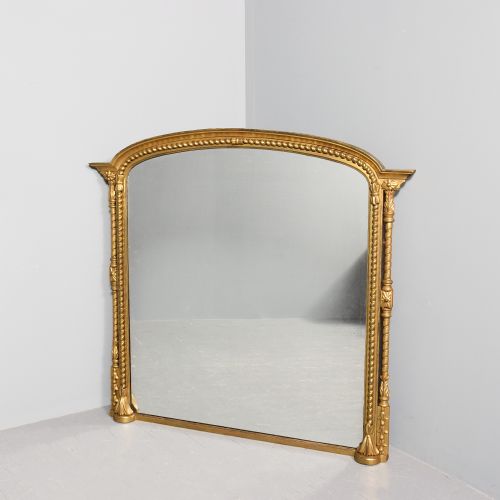
The prevailing format on this page is the large giltwood or gesso-framed mirror, often featuring arched, shaped, or waisted tops that echo nineteenth-century interior aesthetics. Makers scaled these heavy plates to occupy the vast wall space above period mantelpieces, shaping them with arched tops or tripartite divisions.
Examples range from restrained, elegantly simple painted frames to heavily ornamented pieces adorned with carved wood, lions' heads, and distinct revival styles. Buyers encounter both English and continental pieces that bring period character and expansive glass plates into domestic settings.
What Varies in Quality
The sophistication of the carved wood and gesso ornamentation dictates visual success, separating sharply moulded production pieces from deeply carved, finely detailed examples. Crispness in the application of gold leaf and the preservation of the original painted or gilded surfaces determine the integrity of the piece.
The clarity and age of the mirror plate itself contribute heavily to the character of the object, alongside the structural soundness of the heavy pine or oak frames supporting them. Proportion and balance in shaped, arched, or waisted silhouettes also distinguish finer aesthetic achievements from standard workshop output.
Large Mantelpiece Mirror Retail Price Guide 2026
Typical asking prices for large mantelpiece mirror among the pieces listed under this phrase on Sellingantiques today, from the lower quarter to the upper quarter. They describe what is for sale here now, not the wider market.
Look closely for antique glass containing tiny trapped air bubbles that gently warp reflections of your afternoon tea.
The Large Mantelpiece Mirror Glossary
- Overmantel mirror
- A looking-glass specifically proportioned to hang on the wall directly above a fireplace mantelpiece. These pieces often feature wide horizontal or tall arched formats to complement hearth architecture.
- Gesso
- A plaster-like mixture applied to wood frames to create a smooth surface for subsequent gilding or painting. Artisans could mould and carve this material before it set completely.
- Giltwood
- Timber that has been coated with gold leaf or gold paint. This finish defines the reflective, luminous appearance characteristic of nineteenth-century reception rooms.
- Composition
- A moulded material made from whiting, resin, glue, and linseed oil pressed into decorative ornaments. It was widely used in Victorian and Regency frames as a faster alternative to hand-carving solid wood.
- Tryptic
- A mirror divided into three distinct vertical sections within a single frame. This format gained favour during the Regency period to break up wide expanses of reflection.
Large Mantelpiece Mirror: Frequently Asked Questions
Where should a large mantelpiece mirror go?
These mirrors belong mounted securely to the wall directly above a fireplace mantel, where their proportions balance the hearth below.
They also function effectively on large expanse walls in principal reception rooms to amplify natural daylight.
How do I hang a heavy overmantel mirror?
Due to substantial wood and gesso frames combined with thick glass plates, professional installation into solid masonry or secured studwork is essential.
Weight distribution brackets must anchor directly into the structural building fabric rather than standard plasterboard.
What is the difference between Victorian and Regency mirrors?
Regency mirrors frequently exhibit classical restraint, architectural symmetry, and specialised formats like tryptic divisions.
Victorian examples lean toward exuberant ornamentation, including Rococo Revival curves, arched tops, and elaborate crestings.
Can these mirrors be cleaned safely?
Dust frames gently with a soft dry brush to protect fragile gesso and gold leaf surfaces from moisture damage.
Clean the glass plate sparingly using a cloth slightly dampened with water or mild glass cleaner, avoiding the edges where silvering meets the frame.