






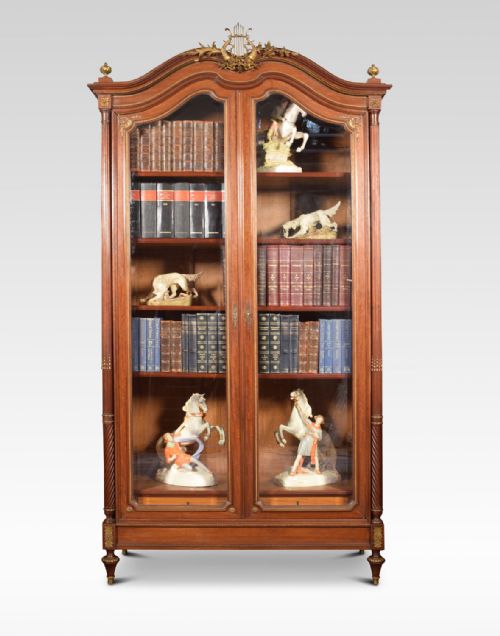

Large Mahogany Display Case
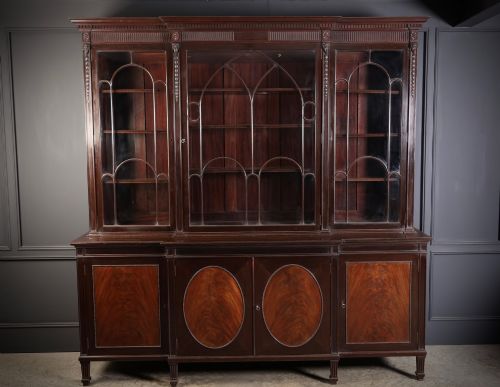
These large mahogany display case pieces bring architectural timber and generous glass together to show books or collections with formal presence.
Large Mahogany Display Case
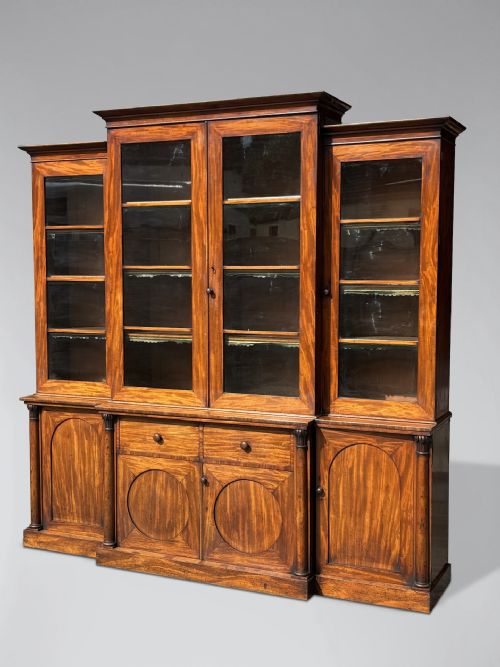
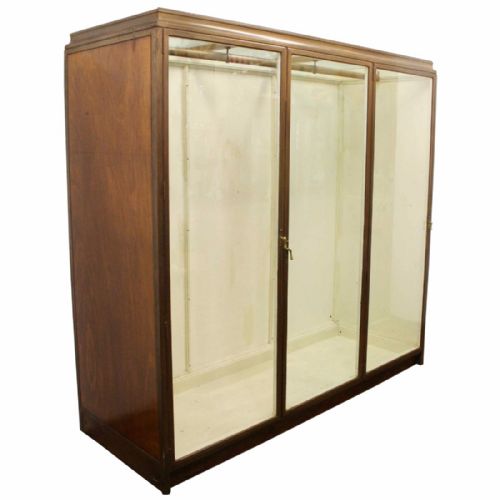
When you search for a large mahogany display case, you encounter substantial furniture built to hold books, curiosities and retail items across centuries of design. These pieces range from towering breakfront bookcases with astral glazing to shop display counters and wall-standing cabinets.
The versions most frequently met on this page belong to the Victorian and Edwardian eras, alongside George III and Regency interpretations. Their forms encompass breakfront shelving, cabinet on stand structures, and glazed shop vitrines.
Makers utilised dense timber alongside brass mounts, satinwood inlay, and fabric linings. The fundamental purpose remains clear: offering secure visibility for significant collections within domestic or commercial settings.
How they were made
Cabinetmakers selected seasoned mahogany for its stability and rich grain, often pairing solid sections with flame mahogany veneers on primary surfaces. Frames were joined using traditional methods to support the substantial weight of glass doors and heavy timber cornices.
Glazing involved lead or wooden bars dividing panes into geometric patterns, while brass hardware served both structural and decorative roles. Interior shelving frequently rested on adjustable rack systems, and bases occasionally incorporated drawers or cupboards.
Large Mahogany Display Case Retail Price Guide 2026
Typical asking prices for large mahogany display case among the pieces listed under this phrase on Sellingantiques today, from the lower quarter to the upper quarter. They describe what is for sale here now, not the wider market.
Some tall Victorian display cases double as mysterious wardrobes, hiding secret compartments behind their grand mahogany facades.
What varies in quality
The standard of timber selection and the precision of cabinet joinery dictate the distinction between standard utilitarian storage and exceptional craftsmanship. Superior pieces exhibit continuous grain matching across large facades and finely executed mouldings.
Glazing quality depends on the clarity and age of the glass panes, alongside the delicacy of the astragals holding them. Original hardware, intact velvet or fabric linings, and well-executed inlay work further elevate the standing of a piece.
E. Pollard & Co. Ltd.·Jenners of Edinburgh·Maison Jansen
The Large Mahogany Display Case Glossary
- Breakfront
- A piece of furniture where the central section projects forward from the flanking wings. This architectural layout creates depth and visual rhythm across large cabinet facades.
- Astral glazing
- The arrangement of slender wooden bars that divide a glass door into smaller panes. It defines the period aesthetic of many Georgian and Victorian bookcases.
- Satinwood
- A lustrous, pale yellow timber native to India and Sri Lanka used for contrasting stringing and inlay. Cabinetmakers employed it to highlight drawers and cornices.
- Vitrine
- A glass-sided cabinet designed specifically for displaying objects of curiosity. These enclosures protect contents while offering all-round visibility.
- Cornice
- The decorative moulded projection that crowns the top of a bookcase or cabinet. It provides a formal architectural termination to large case furniture.
Large Mahogany Display Case: Frequently Asked Questions
How do I date a large mahogany display case?
Dating relies on architectural proportions, moulding profiles, and glazing bar construction. Georgian pieces often display greater hand-craft detail, whereas Victorian examples favour heavier cornices and darker finishes.
Secondary woods inside drawers and the style of hinges provide further clues. Comparing construction methods to known period pieces confirms the manufacturing era.
Were these cases used in homes or shops?
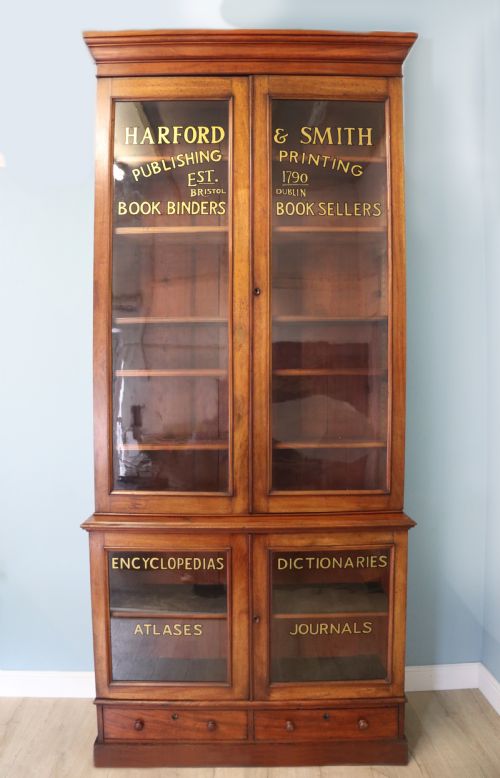
These large pieces served both domestic and commercial environments. Domestic examples functioned as library bookcases and display cabinets, while shop variants accommodated retail merchandise.
Commercial pieces frequently featured low bases and expansive glass areas designed for customer inspection. Both contexts utilised robust mahogany frames to support extensive shelving.
How do I accommodate a large cabinet in a room?
Placing a tall case requires measuring ceiling height and wall space to account for overhanging cornices. Because these pieces are heavy, positioning them against a secure load-bearing wall is essential.
Good natural light enhances the glazed display sections without placing the timber in direct sunlight. Adequate clearance in front ensures doors can open fully for shelving access.