


Large Leather Ottoman
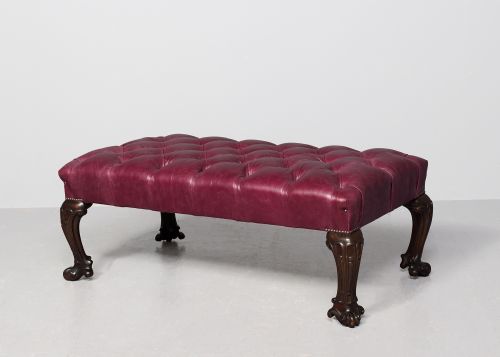
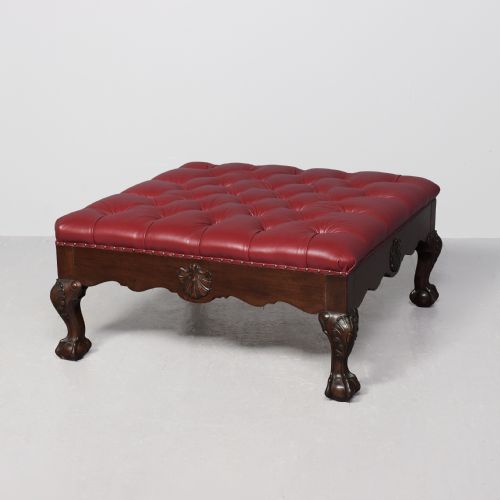
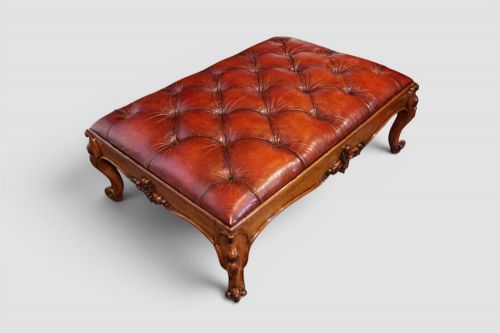
These large leather ottoman examples bring enduring presence to a room, combining substantial timber frames with hand-dyed hides.
Large Leather Ottoman
A large leather ottoman serves as a versatile anchor in traditional interiors, functioning comfortably as both a deep seat and a low coffee table. When you search for a large leather ottoman, you encounter pieces that range from buttoned Victorian centre stools to finely carved Edwardian and Georgian-style frames.
The dominant forms on this page include mahogany, walnut, and oak frames upholstered in red or burgundy hide. These substantial pieces carry the weight and presence characteristic of nineteenth-century English country house seating.
How they were made
Frames are constructed from solid timbers including mahogany, walnut, oak, and other woods, often shaped in revival styles such as Chippendale and Carolean. Joinery and carving reflect the craftsmanship of the Victorian, Edwardian, and Regency periods.
Upholstery relies on traditional leather hides, frequently buttoned and paired with brass detailing. Hand-dyed finishes give the hide its distinct depth and texture across the footstools and ottomans.
Primary timber choices across the collection include mahogany, walnut, and oak, paired with red and burgundy leather.
What varies in quality
Quality rests in the sculptural authority of the timber frame and the depth of the hide. Pieces featuring finely carved details, such as lions heads or precise mahogany framing, sit at the upper end of the scale.
The character of the leather itself dictates distinction. Richly patinated, hand-dyed hide with careful buttoning elevates a simple footstool into a commanding centrepiece.
The Large Leather Ottoman Glossary
- Buttoned
- Upholstery secured with deep tufting and buttons, creating a cushioned, geometric texture across the leather surface.
- Hide
- Natural animal skin used for upholstery, valued for its durability and capacity to develop a rich patina over time.
- Centre stool
- A large freestanding seat designed to sit in the middle of a room rather than against a wall.
- Chippendale Revival
- A later stylistic movement reproducing the ornate, carved mahogany aesthetics of the eighteenth-century designer Thomas Chippendale.
Large Leather Ottoman: Frequently Asked Questions
How do I use a large leather ottoman?
These pieces function brilliantly as central coffee tables when topped with a sturdy tray, or as substantial footstools positioned before large sofas.
Their robust timber frames and upholstered tops also provide extra seating when hosting guests in a drawing room or hall.
How do I care for antique leather?
Keep leather furniture away from direct sunlight and heat sources to prevent the hide from drying out or cracking over time.
Apply a suitable leather conditioner periodically to nourish the material and preserve its natural suppleness.
How do I date a leather ottoman?
Dating relies on examining the timber species, framing style, and turning techniques used in the base structure.
Victorian and Edwardian pieces often display heavier proportions and specific revival motifs that distinguish them from earlier Regency or Georgian examples.
What is a country house style ottoman?
This descriptor refers to large, comfortable seating designed for historic English residences where durability and scale were paramount.
These ottomans typically feature generous dimensions and well-worn leather that reflects decades of domestic use.