
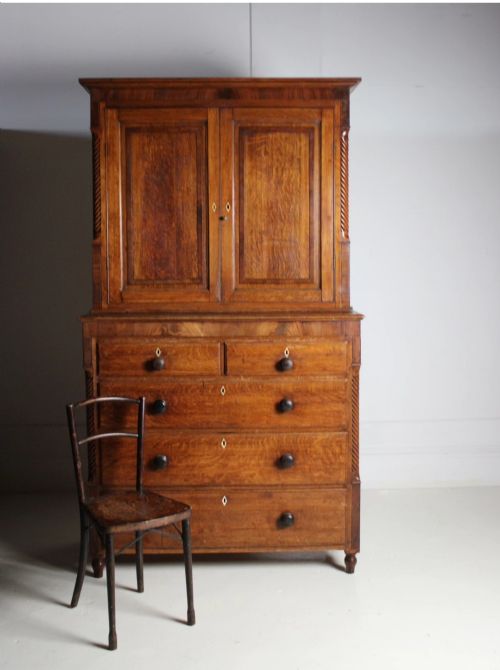
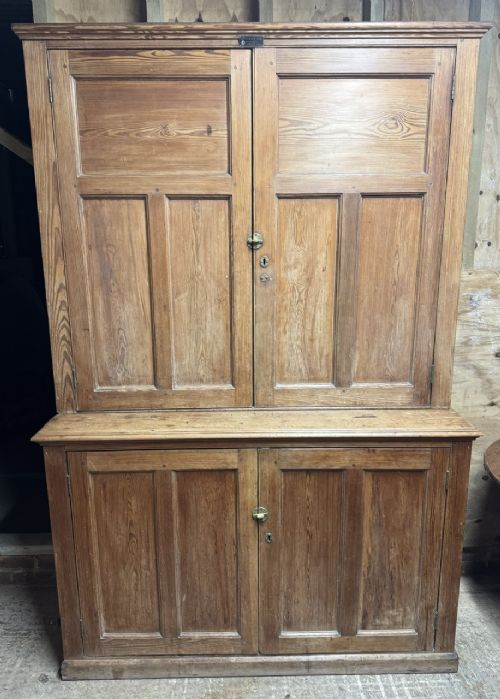
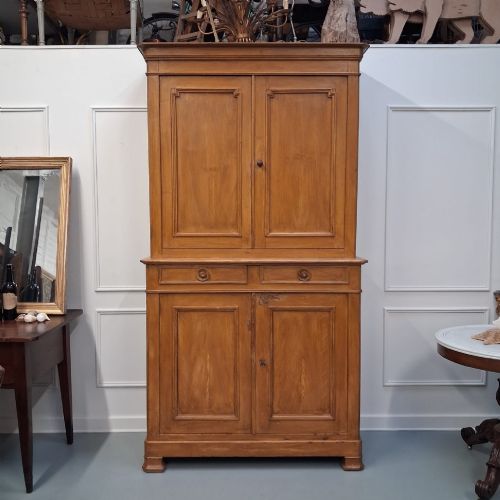

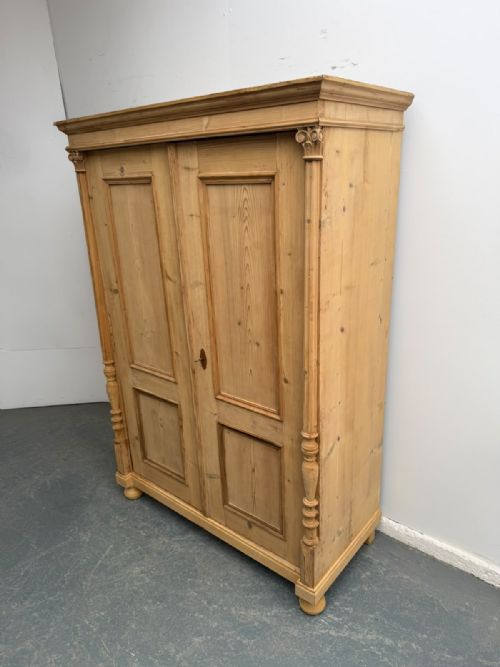
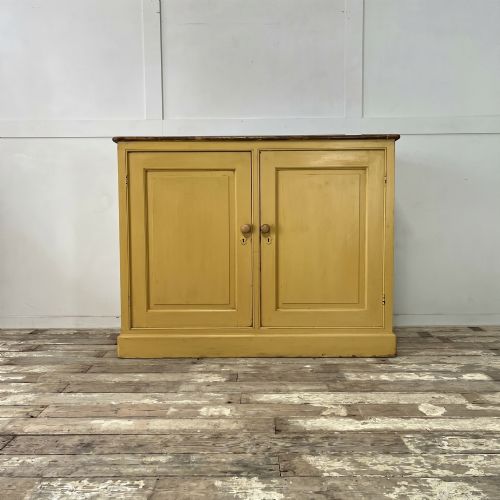


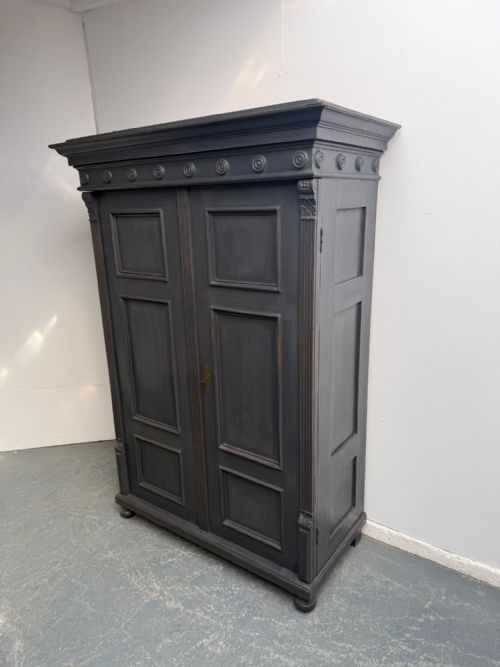


Large Larder Cupboard
When you need a large larder cupboard, you are looking for substantial storage that brings working country utility and presence into a room.
Large Larder Cupboard
A large larder cupboard serves as a major storage piece, often appearing as a housekeeper cupboard, kitchen cupboard, or tall cabinet designed for domestic provisioning. These pieces originate across the eighteenth, nineteenth, and early twentieth centuries, spanning periods from Georgian and Victorian times through to regional European workshops.
On this page, the form most commonly encountered is the large antique pine larder cupboard or housekeeper cupboard, frequently built with multiple doors, adjustable shelving, or internal drawers. They emerge from diverse traditions including English, French Provincial, Danish, and Hungarian country workshops, reflecting regional domestic needs for bulk storage.
The scaling is substantial, often featuring tall proportions designed to hold provisions, linens, or general household stores. Buyers find variations ranging from simple school and scullery cabinets to grand estate cupboards built in oak or pine.
How they were made
Construction relies heavily on solid timber, with pine and oak forming the primary structural materials for these large storage cabinets. Joinery is straightforward and robust, utilising pegged frames, panelled doors, and solid backs suited to heavy domestic use.
Surface finishes vary between natural waxed timber and historic painted schemes, including original paintwork or later green and grey applications. Hardware such as brass and iron hinges, latches, and pulls provide functional security for doors and internal drawers.
Regional styles on the site encompass English, French Provincial, Danish, and Hungarian country vernacular forms.
What varies in quality
Quality rests in the integrity of the timber selection and the retention of original structural elements like internal shelving, drawers, and backboards. Pieces retain greater character when their original proportions, beadwork, and door configurations remain unaltered by later alterations.
The distinction between standard utility pieces and finer examples often lies in the survival of original painted surfaces or undisturbed patination on pine and oak. Structural scale and the clever integration of internal storage divisions, such as multiple drawers within a single-door frame, elevate the sophistication of the piece.
The Large Larder Cupboard Glossary
- Housekeepers Cupboard
- A large storage cabinet traditionally used in country houses for linen, dry goods, and domestic provisions. These pieces often feature multiple doors and internal drawers.
- Larder Cupboard
- A tall storage unit designed originally for keeping food cool and ventilated. In antique terms, it overlaps closely with large utility and school cabinets.
- Pine
- A soft timber widely utilised in country furniture for its accessibility and straight grain. It takes both traditional wax finishes and painted surfaces readily.
- Oak
- A dense, durable hardwood favoured for earlier estate and Georgian furniture. It provides exceptional structural strength and deep historic patination.
- Patina
- The surface sheen and colour developed by wood and paint over decades of handling and exposure. It signals age and authenticity in antique furniture.
Large Larder Cupboard: Frequently Asked Questions
What is a large larder cupboard used for today?
These tall cupboards work exceptionally well in modern kitchens and dining spaces to store dry goods, crockery, and glassware out of sight.
Their deep shelves and generous internal capacity make them practical for organising household items while adding historical character to a room.
How do I identify a Victorian pine cupboard?
Victorian pine pieces typically display dense grain patterns, heavier proportions, and functional iron or brass hardware fitted to robust panelled doors.
They frequently feature beadwork detailing around the doors and internal adjustable shelving designed for flexible domestic storage.
Are these cupboards finished in original paint?
Some listings preserve original painted surfaces, while others show later coats or bare waxed pine prepared for custom finishing.
Examining the underlying layers and wear around handles helps determine whether a painted finish dates to the period of manufacture.
How do Georgian cupboards differ from later ones?
Georgian examples are more frequently constructed from solid oak or fine pine, reflecting the cabinet-making standards of the eighteenth century.
They often display understated classical proportions and estate provenance compared to the more utilitarian Victorian school and scullery cabinets.