




Large Japanese Platters
Large Japanese platters demand space on a wall or table, bringing dense colour and intricate pattern from the nineteenth century into a room.
Large Japanese Platters
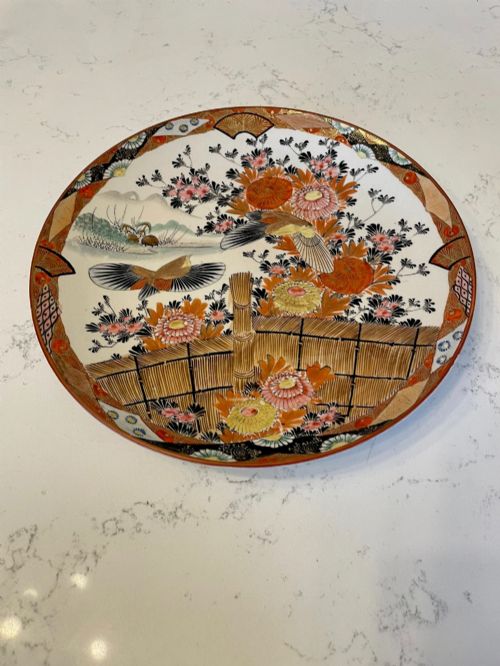
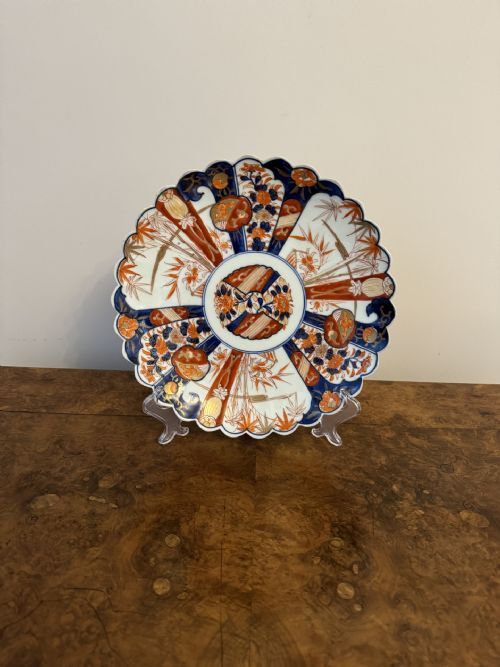
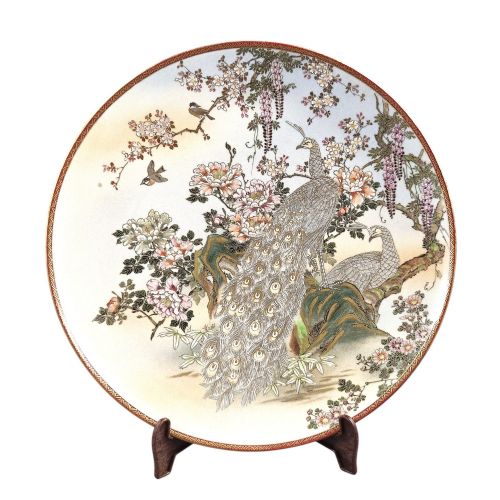
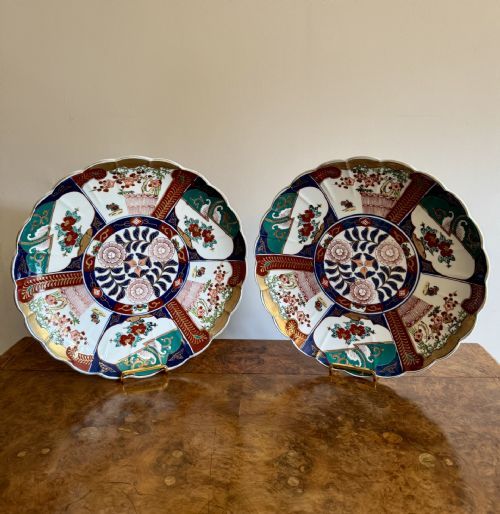
Large Japanese platters encompass heavy chargers, wide decorative plates and octagonal trays designed primarily for display rather than dining. The examples found here span the Meiji and Edo periods, stretching from the mid-nineteenth century into the early twentieth century.
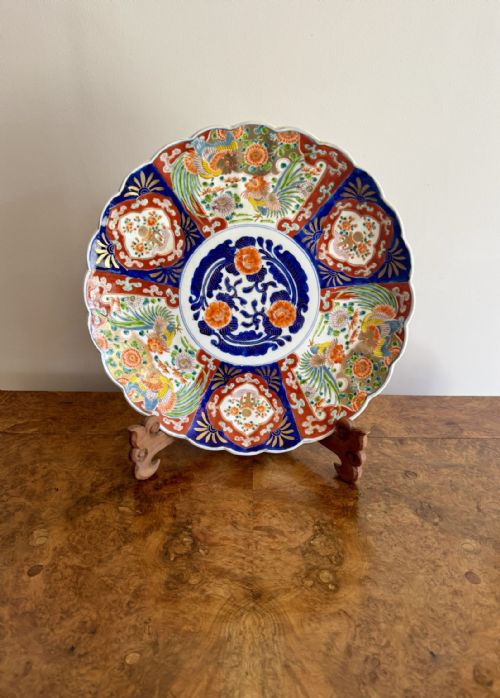
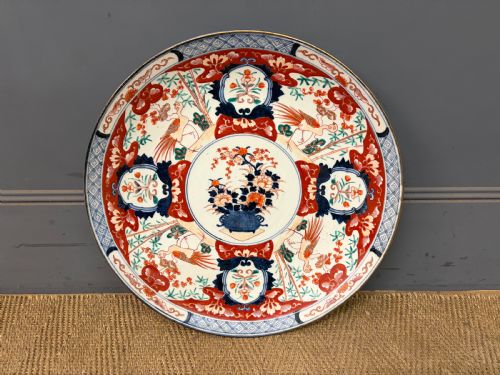
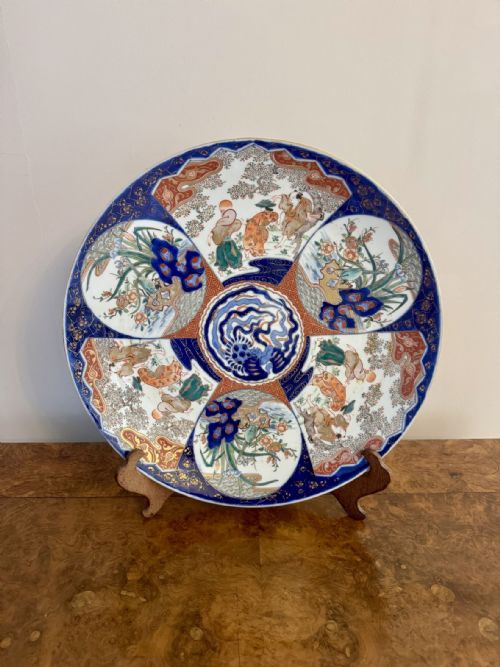
Imari porcelain pieces dominate the selection, often featuring deep blue and iron red ironwork depicting creatures such as koi carp, cranes and the Seven Lucky Gods. Alongside these sit Satsuma moriage wares and copper-bodied cloisonne enamel trays depicting birds, dragons and Mount Fuji.
How they were made
Potters shaped high-firing porcelain and ceramic bodies before applying cobalt blue underglazes, iron red enamels and occasional gold leaf detailing. Kiln-fired surfaces received complex patterns of flora and fauna, sometimes shaped into scalloped edges or square plate formats.
Cloisonne enamel pieces relied on thin brass or copper wire soldered to metal bases to form individual cells. Artisans packed these compartments with coloured enamel pastes before firing and polishing the surface to a smooth finish.
Several dragon chargers hide a single pearl beneath their claws, a traditional motif believed to grant infinite wisdom.
What varies in quality
The distinction between standard decorative items and finer collector pieces lies in the precision of the hand-painted brushwork and the complexity of the enamel cells. Greater depth of colour, balanced composition and signed maker details separate ambitious works from simpler production wares.
Weight and metalwork integrity also dictate the calibre of cloisonne chargers, where thicker wirework and crisper depictions of dragons or deities indicate superior workshop skill.
The Large Japanese Platters Glossary
- Imari
- A traditional style of Japanese porcelain featuring a distinctive palette of underglaze blue and iron red, frequently accented with gold. These wares were widely exported to Europe during the nineteenth century.
- Cloisonne
- A decorative metalwork technique where fine wire is soldered to a copper or brass base to create compartments filled with enamel paste. These pieces are then fired and polished flat.
- Moriage
- A decorative ceramic technique using piped clay slip to build up raised patterns and textures on the surface. This method creates a tactile, three-dimensional effect on plates and chargers.
- Charger
- A large ornamental plate intended for display on a sideboard or wall rather than for serving food. They measure considerably wider than standard dining plates.
- Totai Shippo
- A specialised form of cloisonne where the metal base is etched away or omitted to create a translucent effect resembling porcelain. This technique allowed light to pass through portions of the vessel wall.
Large Japanese Platters: Frequently Asked Questions
How were large Japanese platters displayed?
These large vessels were traditionally placed on wooden stands or hung directly on walls to showcase their intricate hand-painted designs and colourful enamel work.
Today, they function well as central decorative accents on large dining tables, sideboards or displayed securely on walls.
What is the difference between Imari and Satsuma wares?
Imari pieces consist of hard porcelain decorated with cobalt blue, iron red and often gold leaf in geometric and floral patterns. Satsuma wares utilise a creamy, crackle-glaze earthenware body decorated with elaborate pictorial scenes and raised moriage details.
Both styles date heavily to the nineteenth century but offer entirely different visual textures and material weights.
How do I care for antique cloisonne chargers?
Maintain these metal and enamel pieces by dusting them gently with a soft, dry cloth. Avoid using water, liquid cleaners or abrasive polishes that might damage the exposed copper or brass wire.
Keep them away from direct sunlight and damp environments to protect the integrity of the enamel work.
Are these platters safe for food use?
Antique Japanese platters and chargers are intended exclusively for decorative display and collection. Many nineteenth-century glazes and enamels were not manufactured to modern food-safety standards.
Using them for serving food risks damaging the historic surfaces and exposing the body to wear.