
Large Glazed Cupboard
A large glazed cupboard provides generous display and storage, bringing architectural presence and practical utility to any room.
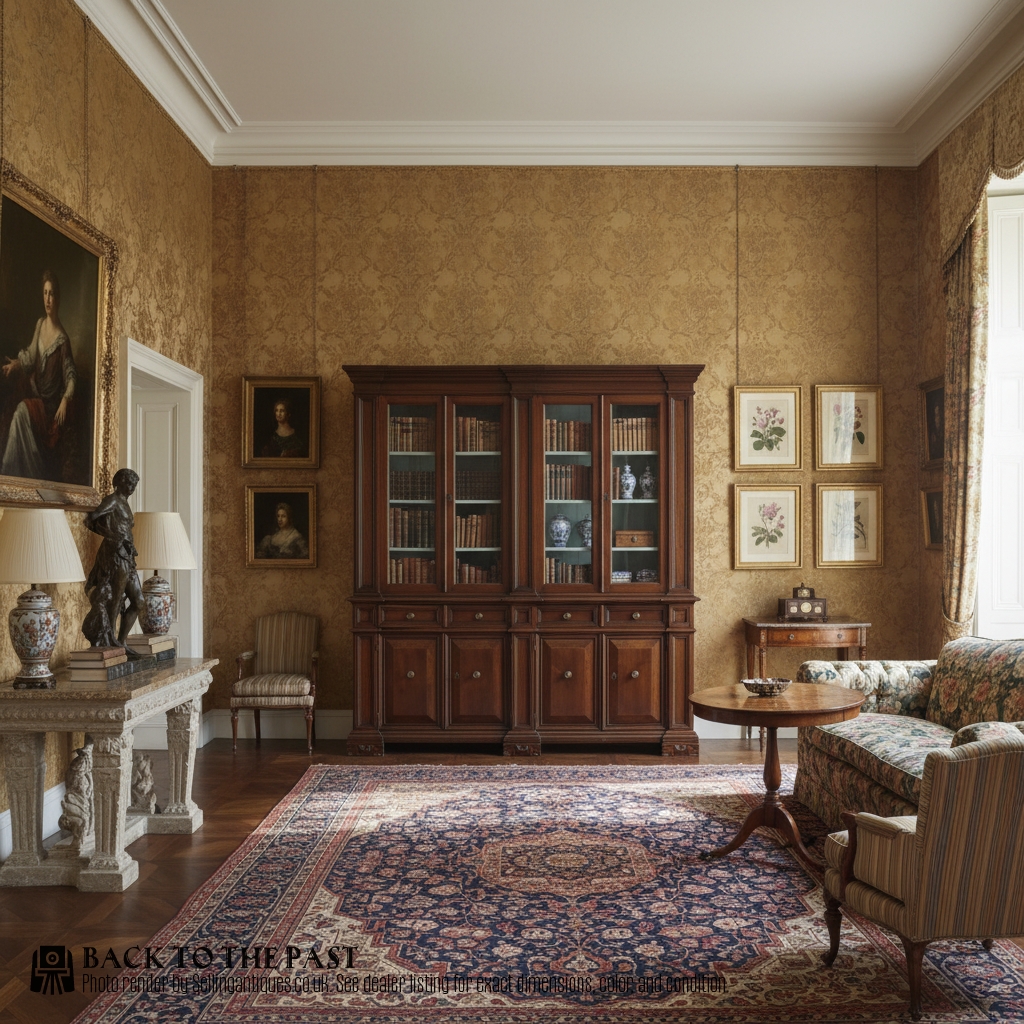
Large Glazed Cupboard
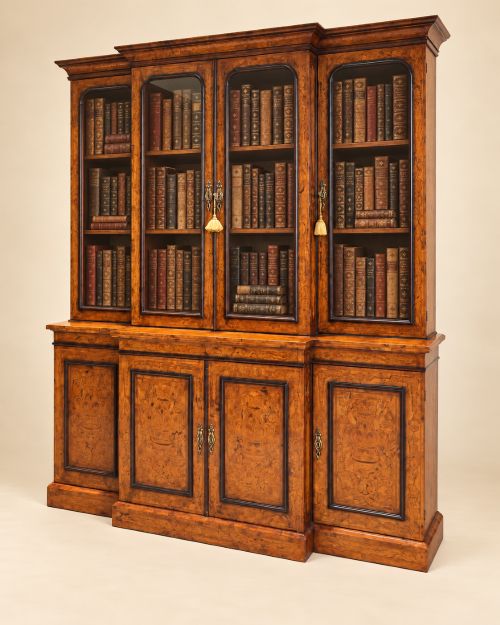
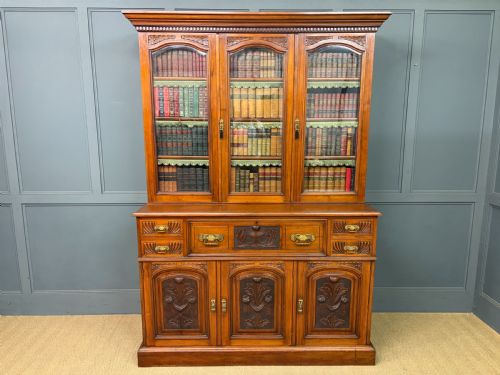
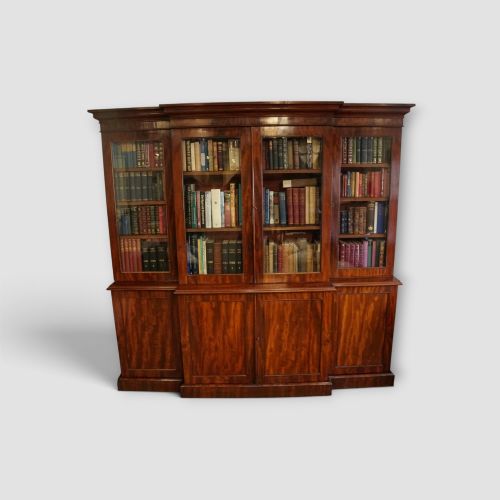
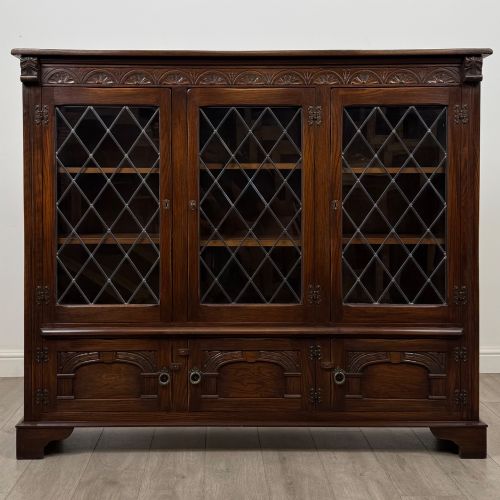
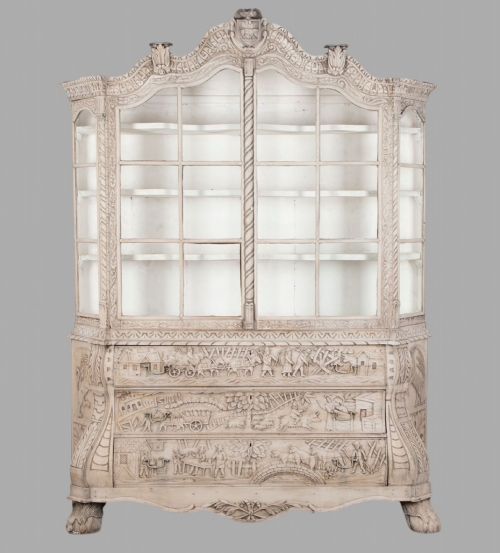
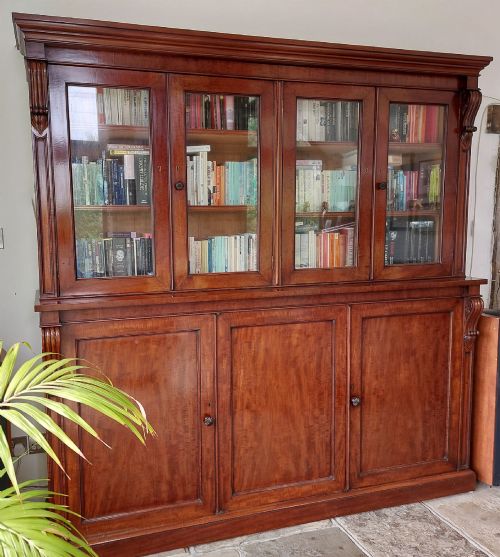
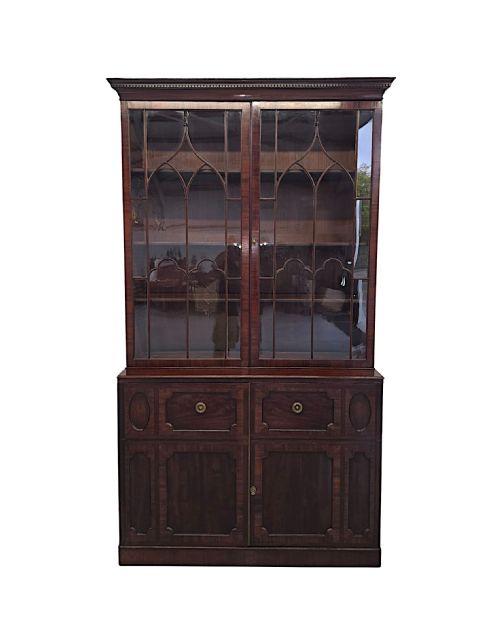
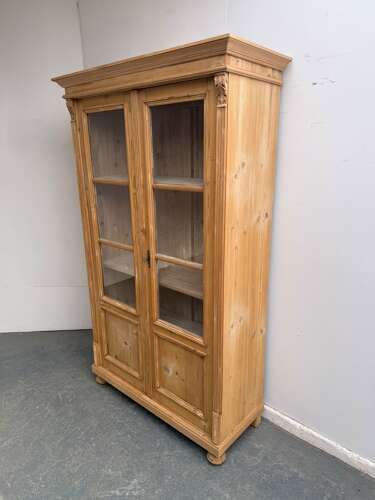
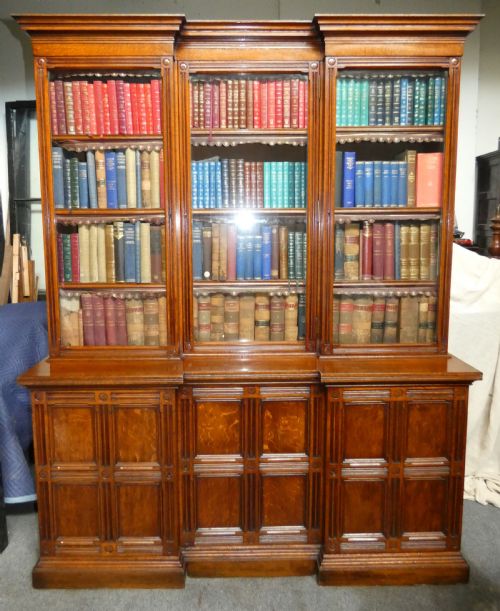
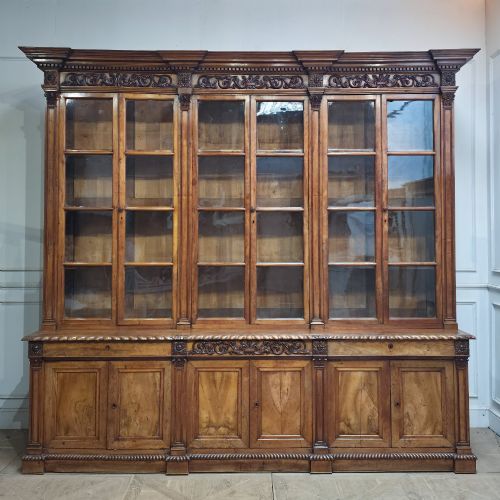
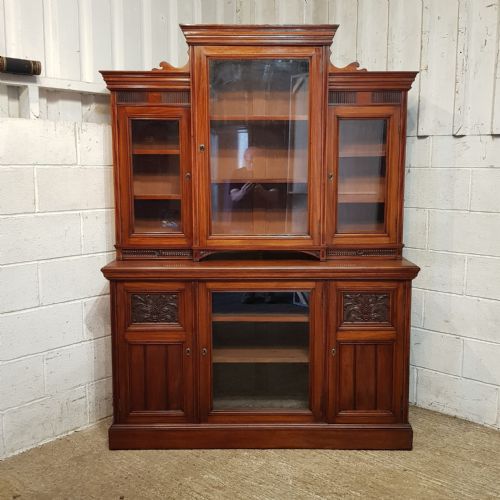
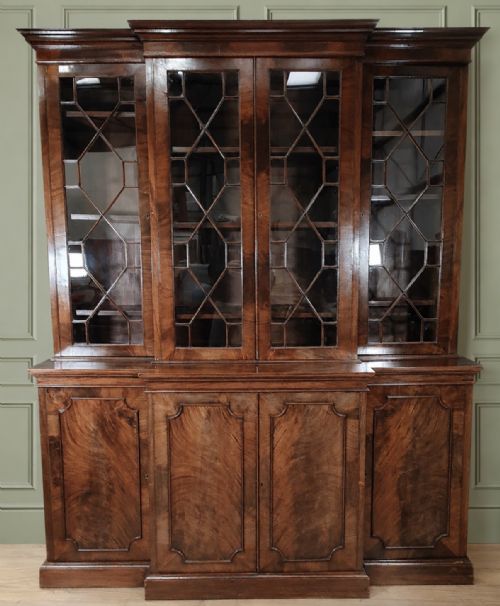
A large glazed cupboard unites display space with enclosed storage, serving primarily as a bookcase, breakfront library cabinet, or kitchen dresser. These substantial pieces stand tall against a wall, dominating a room with glass panelling above and solid wooden doors or drawers below.
The pieces appearing most frequently span the nineteenth century, with strong representation from the Victorian and Georgian eras alongside Edwardian and later examples. Mahogany and oak dominate the selection, often taking form as breakfront bookcases or glazed cupboards on cabinet bases.
How They Were Made
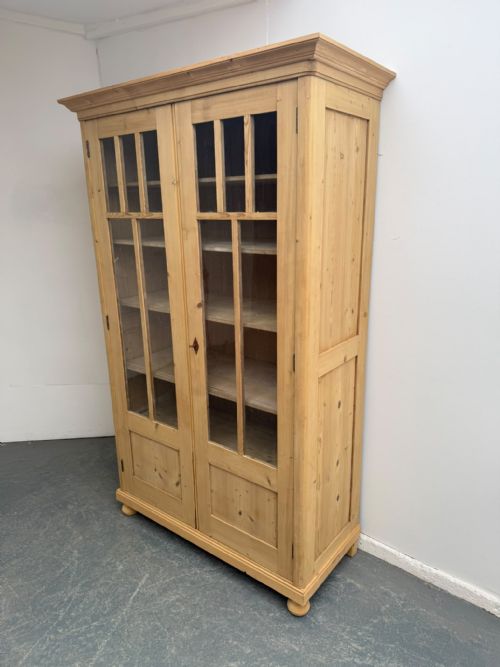
Cabinet makers utilised dense hardwoods such as mahogany, oak, walnut, and satinwood alongside softer pine for vernacular kitchen dressers. Timber selection dictated the structural integrity, with figured veneers applied to breakfront facades for visual depth.
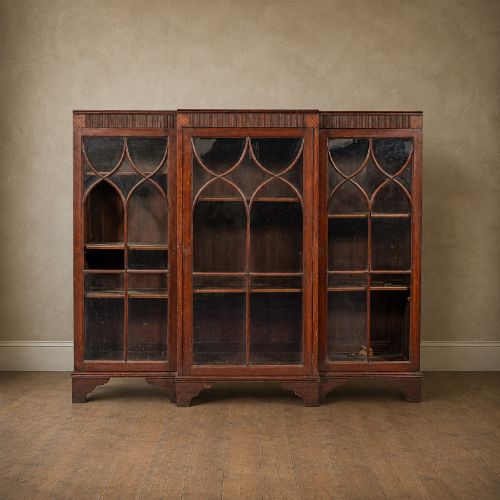
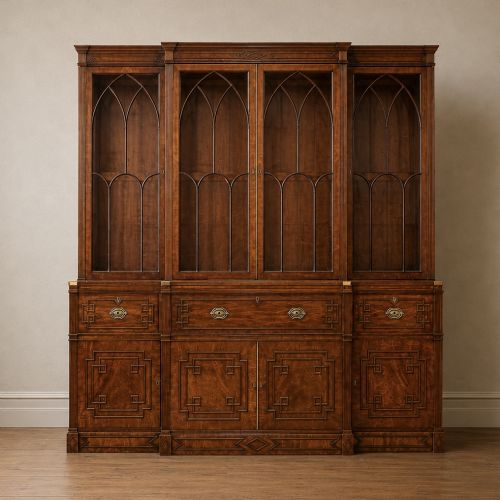
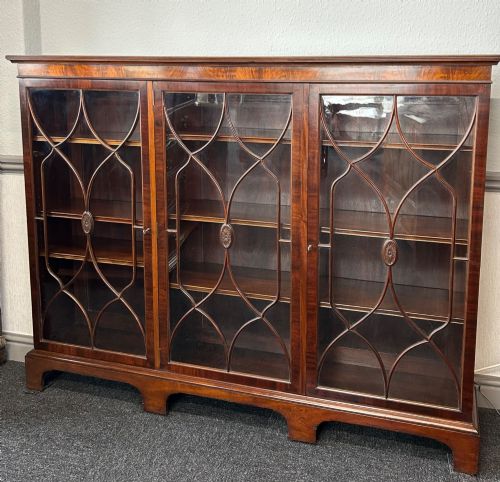
Glazing bars divided the glass doors into geometric panes, while brass hardware secured doors and drawers. Carved ornamentation, marquetry inlay, and panelled cupboard bases completed the construction of these substantial items.
Styles range from George III and Regency to Victorian Gothic Revival and Jacobean Revival.
What Varies in Quality
Quality rests in the architectural proportions and the selection of timber, where finely figured mahogany or burr walnut elevates a piece far above standard utilitarian storage. The precision of the glazing bars and the crispness of any carved details demonstrate the cabinet maker's skill.
Internal fittings such as adjustable shelving and secondary timbers used in drawer construction reveal the original cost and ambition of the piece. Well-balanced breakfront designs maintain visual harmony across their considerable width.
Wylie and Lochhead·Howard and Sons·Goodhall Lamb and Heighway
The Large Glazed Cupboard Glossary
- Breakfront
- A cabinet design where the central section projects forward from the flanking wings. This configuration creates pronounced architectural depth in large bookcases.
- Glazing bar
- A wooden strip holding panes of glass within a sash. These bars form intricate geometric patterns across cabinet doors.
- Marquetry
- Decorative veneer work arranged in pictorial or floral patterns. Craftsmen use contrasting woods to create detailed designs.
- Satinwood
- A durable, yellowish timber prized for its lustrous grain. Cabinet makers utilise it for contrasting inlay work on dark woods.
Large Glazed Cupboard: Frequently Asked Questions
How do I style a large glazed cupboard?
Position the piece against a principal wall in a dining room, library, or large living space where it can anchor the room. Ensure adequate clearance for opening doors fully.
Balance books and decorative objects on the shelves behind the glass to maintain an orderly appearance without cluttering the display.
How do I date a mahogany bookcase?
Examine the secondary timbers inside drawers and the construction methods used for the shelving supports. Earlier pieces often feature hand-cut dovetails and solid backboards.
Stylistic cues such as Gothic Revival tracery or Regency brass inlay provide further clues to the manufacturing period.
Are shelves adjustable in antique cupboards?
Many Victorian and later bookcases feature adjustable shelving systems utilising wooden ratchets or metal pins. This adaptability accommodates books of varying heights.
Earlier Georgian pieces sometimes retain fixed wooden shelves set into housings within the carcass.