




Large Glass Goblet
A large glass goblet commands attention on any dining table, offering generous proportions and substantial weight that suit serious toasts or display.
Large Glass Goblet
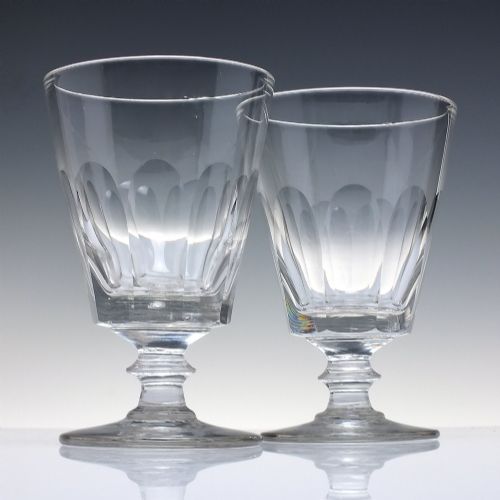
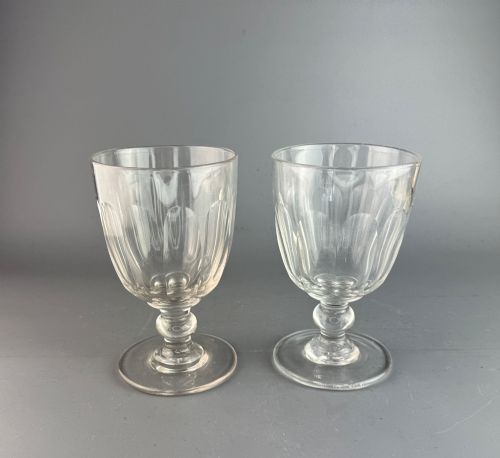
A large glass goblet spans several centuries of British and European craftsmanship, with forms ranging from early Georgian balusters to robust Victorian rummers. Buyers seeking a large glass goblet will find vessels designed for heavy social drinking, formal dining, or ceremonial toasts.
The selection encompasses tall ale glasses, wide-bowled rummers, and engraved wine vessels shaped from clear, lead, and coloured metal. These pieces reflect shifting domestic habits, moving from heavy tavern use to refined nineteenth-century display cabinets.
How they were made
Maker's hands shaped lead glass, flint glass, and clear metal while hot, often pulling stems from the gather or applying solid feet for stability. Lead crystal provided the heft and clarity necessary for deep wheel-engraving or intricate facet cutting.
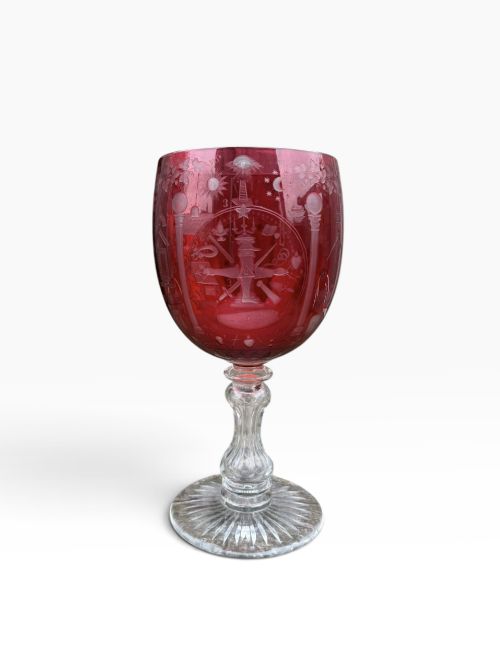
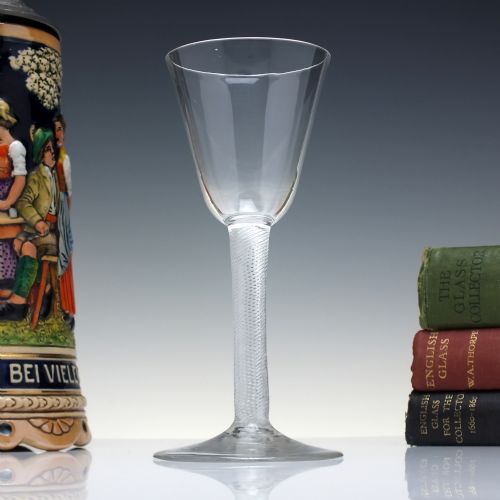
Enamelled decoration required careful firing of polychrome pigments onto green, cranberry, or ruby glass surfaces. Air twist and opaque twist stems demanded immense skill from the glassblower, who trapped tiny air channels inside drawn rods before forming the bowl.
Golfers and coronation crowds both found immortality frozen in glass, alongside hops, barley, and secret Jacobite toasts.
What varies in quality
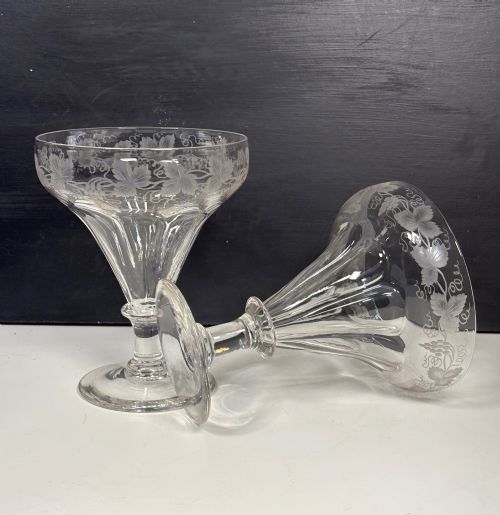
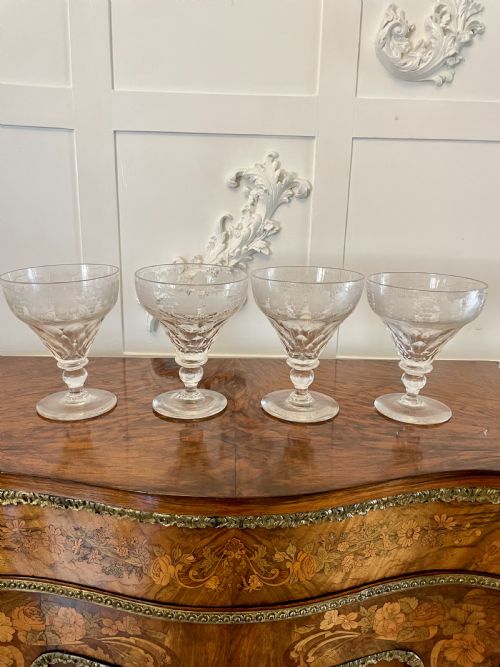
Quality rests in the purity of the metal and the crispness of the wheel-work, where deep, clean cuts catch the light without blurring. Heavy lead content gives a resonant ring and substantial heft that lesser soda glass simply cannot match.
Proportion dictates the elegance of the silhouette, separating master-blown examples from utilitarian tavern wares. The delicacy of an air twist or the precision of an engraved monogram reveals the maker's discipline at the bench.
Frits Hechert·Thomas Webb and Corbett Ltd·Moser·Lobmeyer
The Large Glass Goblet Glossary
- Rummer
- A large, heavy drinking glass popular in the eighteenth and nineteenth centuries, often featuring a short stem and ovoid or pan-top bowl.
- Air twist
- A stem containing spiral threads of tiny air bubbles created by drawing and twisting heated glass canes.
- Baluster
- A heavy, swelling stem form reminiscent of architectural pillars, common in early eighteenth-century drinking vessels.
- Roemer
- A continental European drinking vessel, typically made of green glass with a prunt-decorated stem and a wide, rounded bowl.
- Facet cut
- Geometric planes ground and polished onto the bowl or stem of glassware to refract light and enhance brilliance.
Large Glass Goblet: Frequently Asked Questions
What were large glass goblets used for?
These vessels served communal toasts, ale consumption at taverns, and formal wine drinking during grand dinners. Their generous capacity made them central pieces for celebrations and ceremonial occasions.
Over time, many shifted from active table service to decorative display within cabinets, valued for their imposing size and fine surface engraving.
How do I date a glass goblet?
Dating relies on identifying the vessel's form, the weight and colour of the metal, and the manufacturing technique of the stem and foot. Early pieces show heavy baluster profiles and pontil marks, while Victorian examples often feature bright lead crystal and deep machine or wheel cutting.
Comparing decorative motifs such as hop and barley engravings or Jacobite symbols against known period styles helps narrow the decade of production.
Are these goblets safe for daily use?
While structurally sound, antique glass requires careful hand washing in warm water without harsh detergents to protect the surface polish. Sudden temperature changes can crack old metal, so they are best kept away from boiling liquids and modern dishwashers.
Many collectors prefer to use them strictly for special toasts or display rather than routine modern dining.