


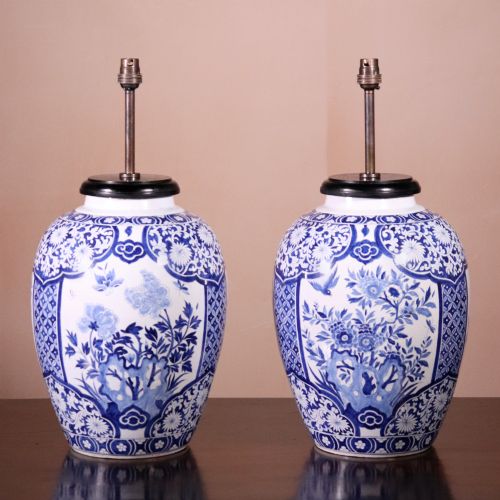


Large Ginger Jars
Large ginger jars offer monumental scale and striking hand-painted decoration, making them bold focal points for interior styling.
Large Ginger Jars
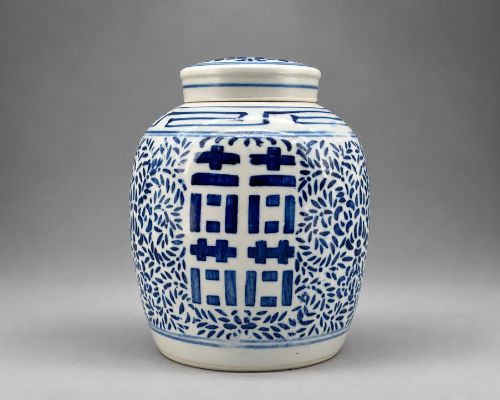
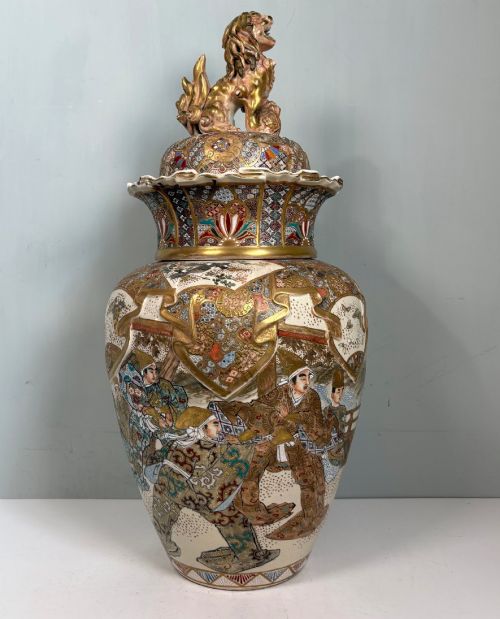
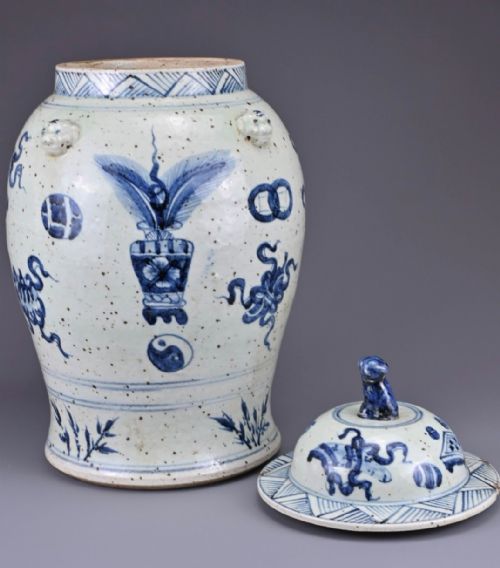
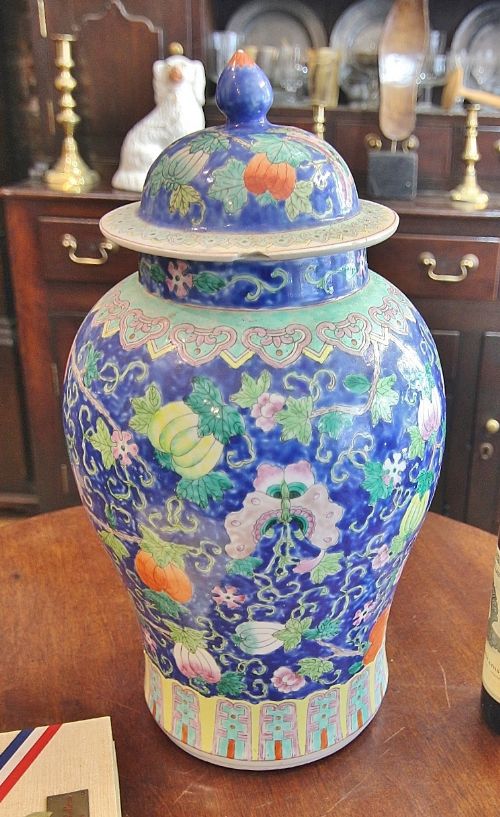
Large ginger jars are substantial ceramic vessels traditionally utilised for the storage and transport of spices, later becoming purely decorative display pieces. When searching for large ginger jars, collectors encounter vessels spanning from the eighteenth century to the mid-twentieth century, originating from Chinese, Japanese, and European workshops.
The selections on this page are dominated by nineteenth-century porcelain and earthenware pieces. Forms include lidded vases, table lamps converted from jars, and paired decorative urns featuring traditional cobalt pigment, Imari palettes, and Chinoiserie styles.
How they were made
Potters shaped these large vessels from porcelain and earthenware bodies, often applying detailed cobalt pigment underglaze or rich enamel colours. Many pieces incorporate gilt, gold leaf, and brass mounts to accentuate the rims and covers.
Surface decoration frequently combines hand-painted floral, figurative, and geometric motifs with clear glazes fired at high temperatures. Certain European and Continental examples utilise maiolica techniques and Paris porcelain bodies to emulate Eastern designs.
Large Ginger Jars Retail Price Guide 2026
Typical asking prices for large ginger jars among the pieces listed under this phrase on Sellingantiques today, from the lower quarter to the upper quarter. They describe what is for sale here now, not the wider market.
Listings feature porcelain and earthenware bodies decorated with gold leaf, enamel, and cobalt pigment.
What varies in quality
Quality rests upon the crispness of the hand-painted brushwork and the depth of the glaze colours. Finer examples display precise control over cobalt pigment or vibrant enamel layering without muddy outlines or blurred transitions.
The presence of a matching original cover significantly elevates a piece, as many surviving jars lost their lids over centuries of use. The weight of the porcelain and the precision of the potting further separate standard production pieces from exceptional studio or factory outputs.
Samson
The Large Ginger Jars Glossary
- Imari palette
- A Japanese decorative scheme utilising cobalt blue, iron red, and gold on a white porcelain ground. This distinctive combination creates a rich, highly patterned surface.
- Cobalt pigment
- A metallic oxide used under the glaze to produce deep blue painting on ceramics. It remains stable at very high kiln temperatures.
- Maiolica
- Tin-glazed earthenware produced in Europe, particularly Italy and the Continent. It provides an opaque white surface suitable for painted decoration.
- Chinoiserie
- European artistic interpretations of Chinese and East Asian artistic traditions. This style influenced ceramics, furniture, and interior decoration across centuries.
- Satsuma
- Japanese earthenware pottery typically characterised by a crackle-glaze ivory body decorated with polychrome enamels and gold. It gained immense popularity during the Meiji period.
Large Ginger Jars: Frequently Asked Questions
What were ginger jars originally used for?
These vessels originally served as bulk storage containers for spices, salt, and oils shipped from East Asia to Western markets.
Over time, merchants and households repurposed the empty jars as decorative ornaments in parlours and drawing rooms.
How do I identify a true antique jar?
Examine the foot rim for signs of age, such as kiln grit adhesion, wear, and appropriate ceramic body ageing.
Hand-painted brushstrokes show subtle irregularities under close inspection, unlike transfer-printed patterns found on later reproductions.
Are lids usually original to the jar?
Many ginger jars lost their original covers through generations of handling, leading to matched replacements in later decades.
Matching glaze tones and potting styles between the body and cover help determine if they belong together.
How should I display large jars at home?
Their substantial scale makes them ideal as floor-standing statements or prominent anchors on heavy wooden cabinetry.
Pairing matching jars creates symmetrical balance on mantelpieces or sideboards.