




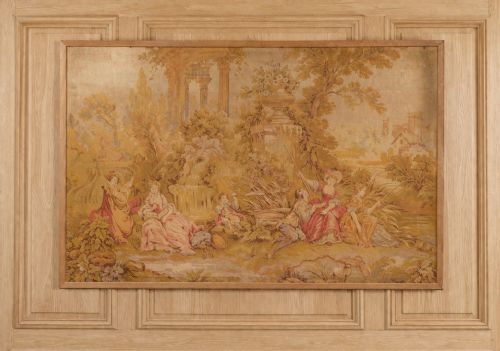


Large French Wall Tapestry
A large french wall tapestry brings considerable presence to an interior through monumental scale and historic textile artistry.
Large French Wall Tapestry
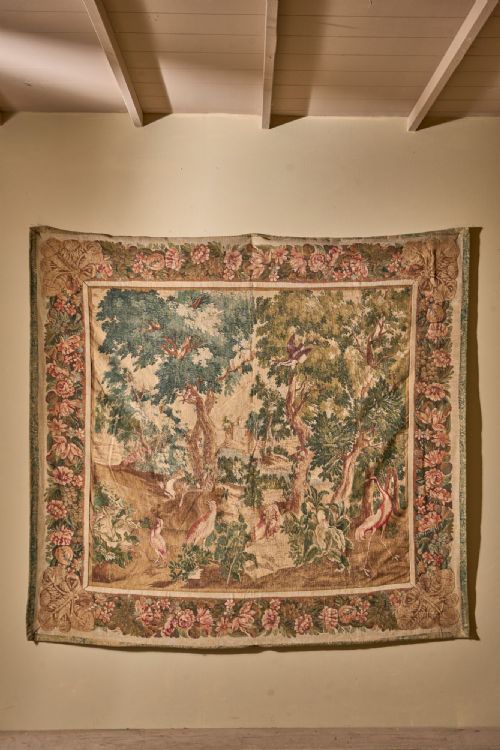
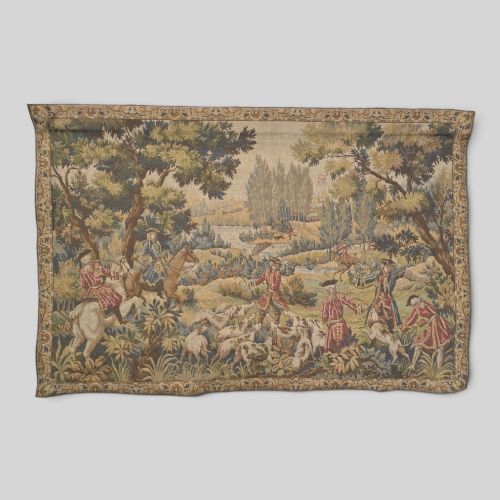
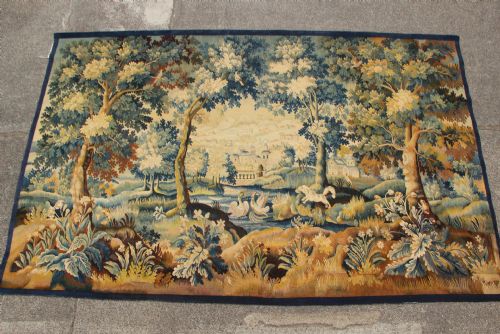
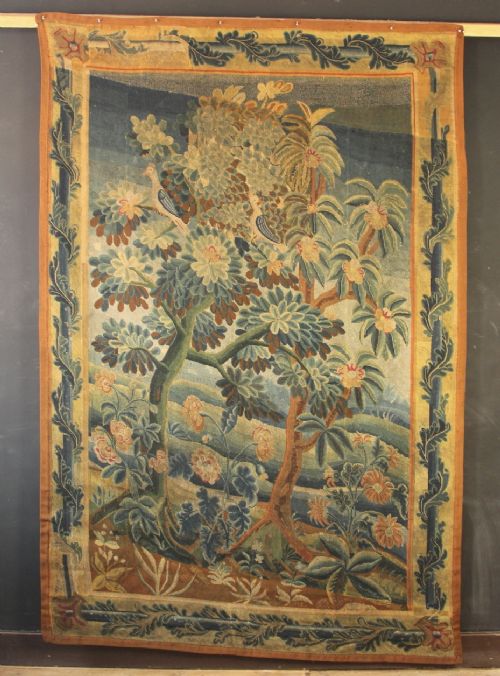
A large french wall tapestry represents significant historic textile weaving, designed to cover expansive interior surfaces with pictorial scenes, pastoral landscapes, and rich foliage. When searching this phrase, buyers encounter substantial wall hangings and needlework panels originating from centuries of French production, ranging from early hand-woven examples to later decorative interpretations.
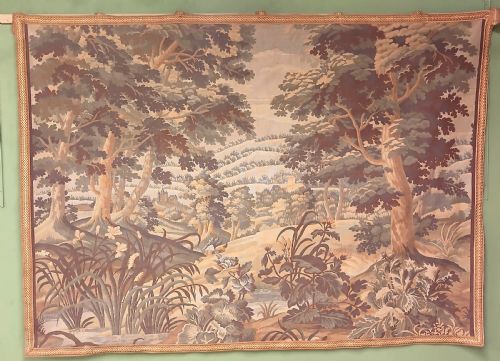
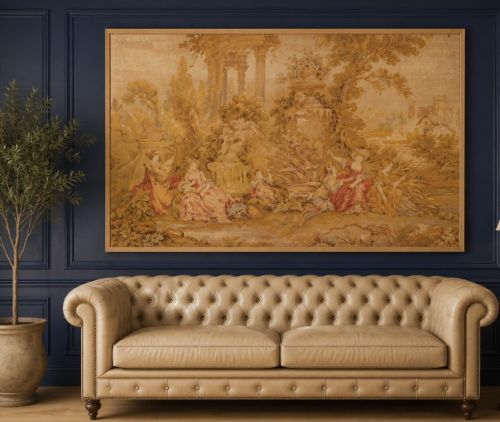
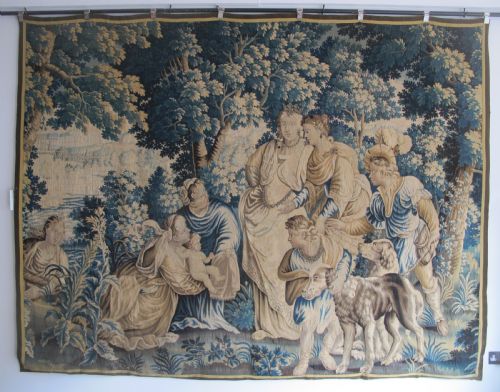
The selections span distinct historical periods, featuring 17th-century verdure scenes, 18th-century pastoral compositions, and 19th-century Aubusson style works. Common formats include unframed textile hangings intended for suspension from brass or timber supports, alongside pieces presented within large wooden frames.
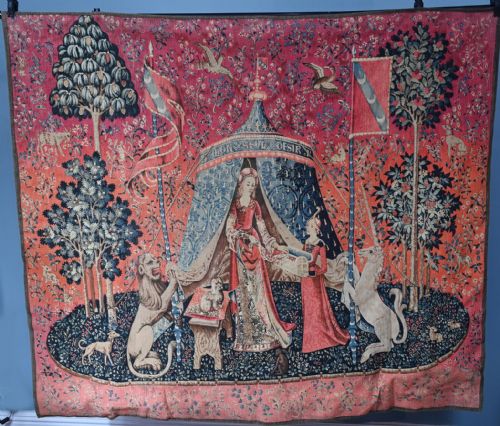
Most pieces encountered on this page originate from French workshops, incorporating traditional motifs such as foliage, floral arrangements, architectural elements, and figurative subjects like the lady and unicorn. These textiles function primarily as architectural wall art and monumental wall coverings.
Materials and construction methods
These textiles were constructed primarily using natural fibres such as wool, silk, cotton, and linen, woven meticulously on looms or worked by hand as needlework panels. The interplay of wool and silk yarns allowed weavers to achieve nuanced tonal gradations and textural depth in foliage and figures.
Many historical examples incorporate sturdy linen or cotton backings and foundations to support the considerable weight of large wool and silk compositions. Some pieces are mounted directly onto board or retained within timber frames and secured with brass elements.
Listings feature works spanning from the 16th century to the mid 20th century, utilising wool, silk, cotton, linen, brass, and timber frames.
Distinctions in quality
Quality in these textiles rests upon the complexity of the woven design, the fineness of the needlework, and the richness of the fibre palette utilised by the weaver. Finer examples display intricate verdure detailing, sophisticated perspective, and harmonious colour retention across wool and silk yarns.
The integrity of the textile structure and the preservation of the original fibres dictate the standing of a piece within the range. Execution by renowned weaving traditions, such as Aubusson workshops, distinguishes superior examples from standard decorative wall hangings.
The Large French Wall Tapestry Glossary
- Verdure tapestry
- A wall hanging dominated by lush botanical and landscape motifs, typically featuring stylized trees, foliage, and sometimes animals or distant chateaux. These scenes formed a staple output of French weaving centres.
- Aubusson
- A style of tapestry originating from the town of Aubusson in France, known for pastoral scenes and floral designs woven on low-warp looms. Authentic pieces carry the heritage of this specific regional production.
- Needlework tapestry
- A textile created by stitching yarn onto an existing canvas or mesh ground by hand, producing a dense needlepoint panel rather than a loom-woven cloth. These require patient hand labour over extended periods.
- Mille-fleurs
- A background style composed of countless small, detailed flowers and plants strewn across a uniform field. This medieval and renaissance design vocabulary appears in specific classical French wall coverings.
- Wall hanging
- A textile intended to be suspended vertically from a wall surface, often utilising a timber frame, rod pockets, or brass hardware. They served practical insulating purposes in historic stone buildings alongside decorative functions.
Large French Wall Tapestry: Frequently Asked Questions
How do I hang a heavy tapestry safely?
Large textiles require even weight distribution across the upper edge to prevent distortion of the weave and fibres. Many collectors utilise a concealed wooden baton or a lined sleeve attached to the reverse, supported by sturdy brass brackets fixed directly into wall studs.
Alternatively, pieces mounted on timber frames or boards can be hung using heavy-duty mirror and picture hanging hardware rated for significant weight. Avoid suspending tapestries by isolated corner points, as the tension damages the historic wool and linen structure.
How do I clean an antique tapestry?
Historic textiles demand minimal intervention and gentle care to preserve fragile wool, silk, and cotton fibres. Regular, careful surface dusting using a soft brush attachment through a mesh screen helps remove loose particulate matter without stressing the weave.
Water washing or chemical cleaning should be avoided unless performed by a professional textile conservator. Aggressive cleaning methods strip natural oils from the wool and risk irreversible damage to the structure.
How do I tell an Aubusson tapestry apart?
Aubusson tapestries are distinguished by their specific stylistic association with the French town of Aubusson, typically showcasing refined floral motifs, pastoral landscapes, and classical architectural elements. The weaving technique relies on specific traditional loom methods that produce a distinct flat texture compared to heavy needlepoint panels.
Many examples feature muted, harmonious colourways derived from natural wool and silk dyes. Signatures or woven workshop marks occasionally appear near the outer borders of these pieces.
Were these tapestries always framed?
Historic wall tapestries were originally designed to hang freely from walls as unframed textiles, serving both decorative display and thermal insulation in stone-built rooms. Framing became more common for smaller panels or specific decorative treatments in later centuries.
Today, you will encounter both unframed textile hangings intended for rod suspension and panels preserved inside large wooden frames or mounted on board.