


Large French Console Table
A large French console table anchors a hallway or reception room with substantial presence and enduring utility.
Large French Console Table
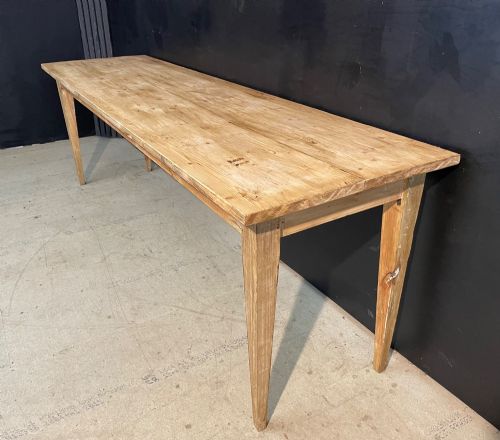
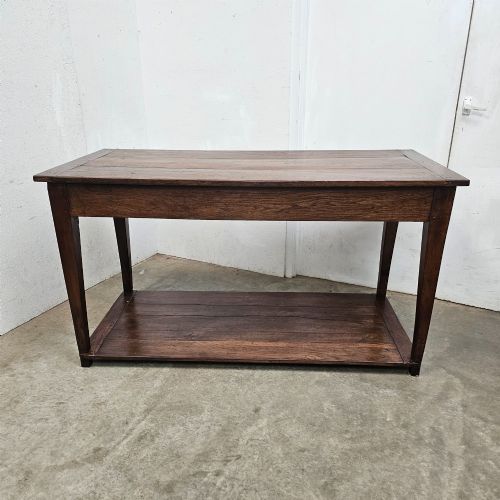
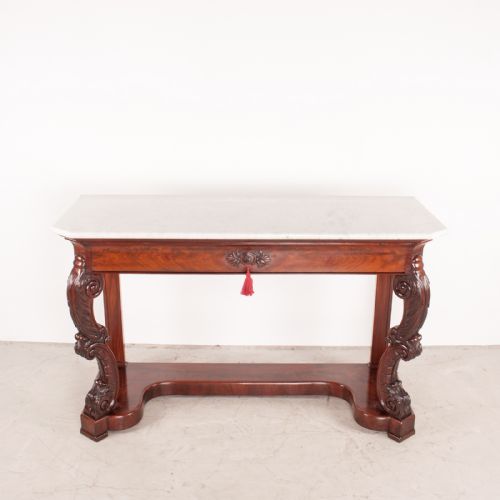
A large French console table encompasses robust drapers tables, grand Empire serving pieces, and heavily carved giltwood furniture designed for display or domestic work. You will frequently encounter nineteenth-century examples shaped by provincial utility or formal metropolitan styles.
The category spans diverse forms including marble-topped serving tables, oak work benches, and painted pine side tables originating from French country houses and urban salons. These surfaces served practical functions in domestic and professional contexts before entering the antique market.
Materials and construction
Carpenters utilised dense hardwoods such as oak, mahogany, walnut, and satinwood alongside softer timbers like pine to build the heavy frames of these tables. Natural wood finishes appear alongside painted, ebonised, and parcel gilt surfaces.
Heavy slabs of white Carrara and other marbles form the top surface on many formal and serving variations, supported by carved wood or wrought iron bases. Joinery relies on traditional hand-cut methods suited to supporting heavy stone tops or enduring daily workshop use.
Listings feature nineteenth-century pieces constructed from oak, mahogany, pine, walnut, and satinwood, often paired with marble tops.
Distinctions in craftsmanship
The standard of a large French console table rests on the depth of hand-carving in the wood, the weight and figuring of mahogany or satinwood veneers, and the integrity of original marble slabs. Finer examples display crisp botanical or classical motifs carved directly into solid timber or applied to giltwood structures.
Proportion and scale dictate the visual impact of each piece, distinguishing utilitarian work tables from elaborately mounted Empire and Rococo reception furniture. The presence of original paint finishes, gilt detailing, and matching structural elements elevates certain pieces above standard utility forms.
The Large French Console Table Glossary
- Console table
- A table designed to stand against a wall, historically supported by wall brackets or decorative front legs.
- Drapers table
- A long, utilitarian wooden table originally utilised in cloth merchants' shops, now sought after for domestic use.
- Giltwood
- Timber that has been coated with a thin layer of gold leaf or gold paint for decorative effect.
- Carrara marble
- A type of white or blue-grey marble quarried in the city of Carrara in Tuscany, frequently used for table tops.
- Flame mahogany
- Mahogany timber displaying a distinctive flame-like grain pattern created by cutting through the branch junctions of the tree.
Large French Console Table: Frequently Asked Questions
What rooms suit a large French console table?
These large pieces fit naturally into wide hallways, grand dining rooms, and expansive living spaces where their length and depth provide substantial surface area.
They function effectively as serving stations, sideboards, or decorative focal points against plain walls.
How were drapers tables used originally?
Drapers tables served as wide, sturdy work surfaces for measuring and cutting fabrics in textile merchant shops during the nineteenth century.
Their generous proportions and robust timber construction made them ideal for heavy daily labour before transitioning into domestic settings.
How do I care for a marble top?
Marble surfaces require regular wiping with a soft, damp cloth and gentle soap to prevent stains from liquids and oils.
Avoid placing acidic substances directly on the stone to protect the polished finish over time.
How do I distinguish Empire style tables?
Empire style pieces display restrained neoclassical forms, dark flame mahogany or satinwood veneers, and classical bronze mounts.
They emphasise architectural symmetry and solid dignity compared to the flowing, asymmetrical curves of Rococo furniture.