
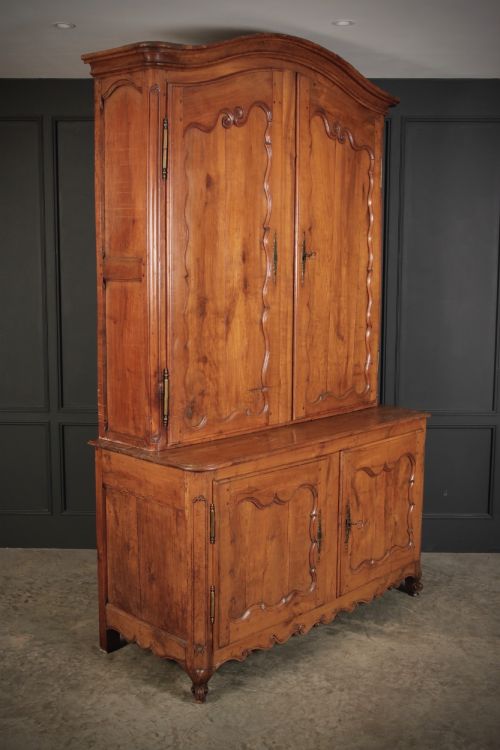
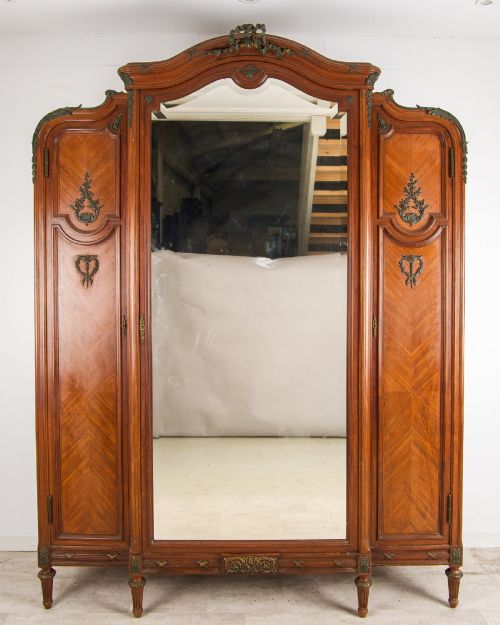


Large French Armoire
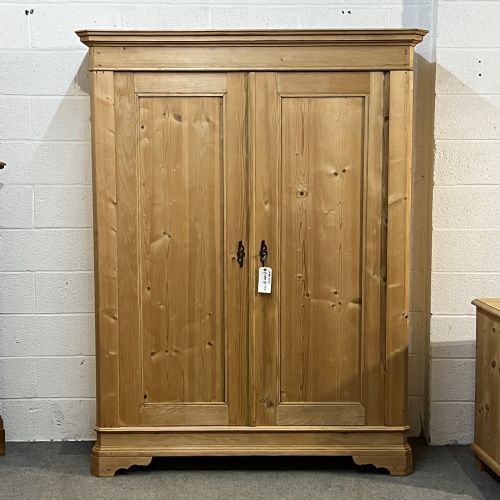
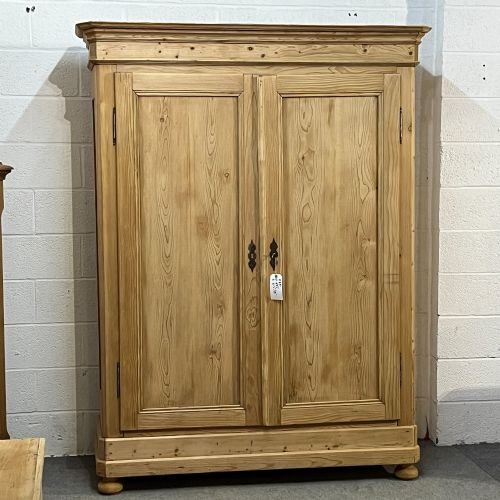
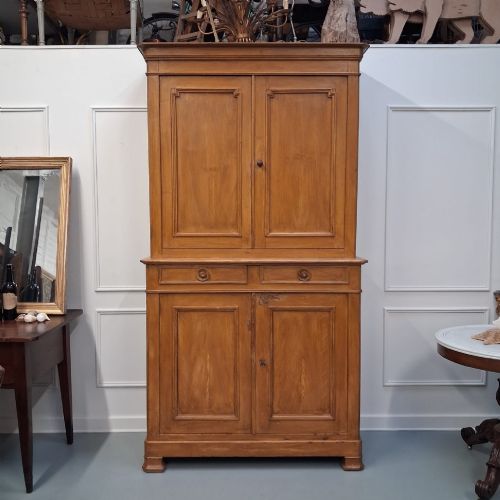
A large french armoire commands a room with impressive scale and provides essential storage through deep timber doors.
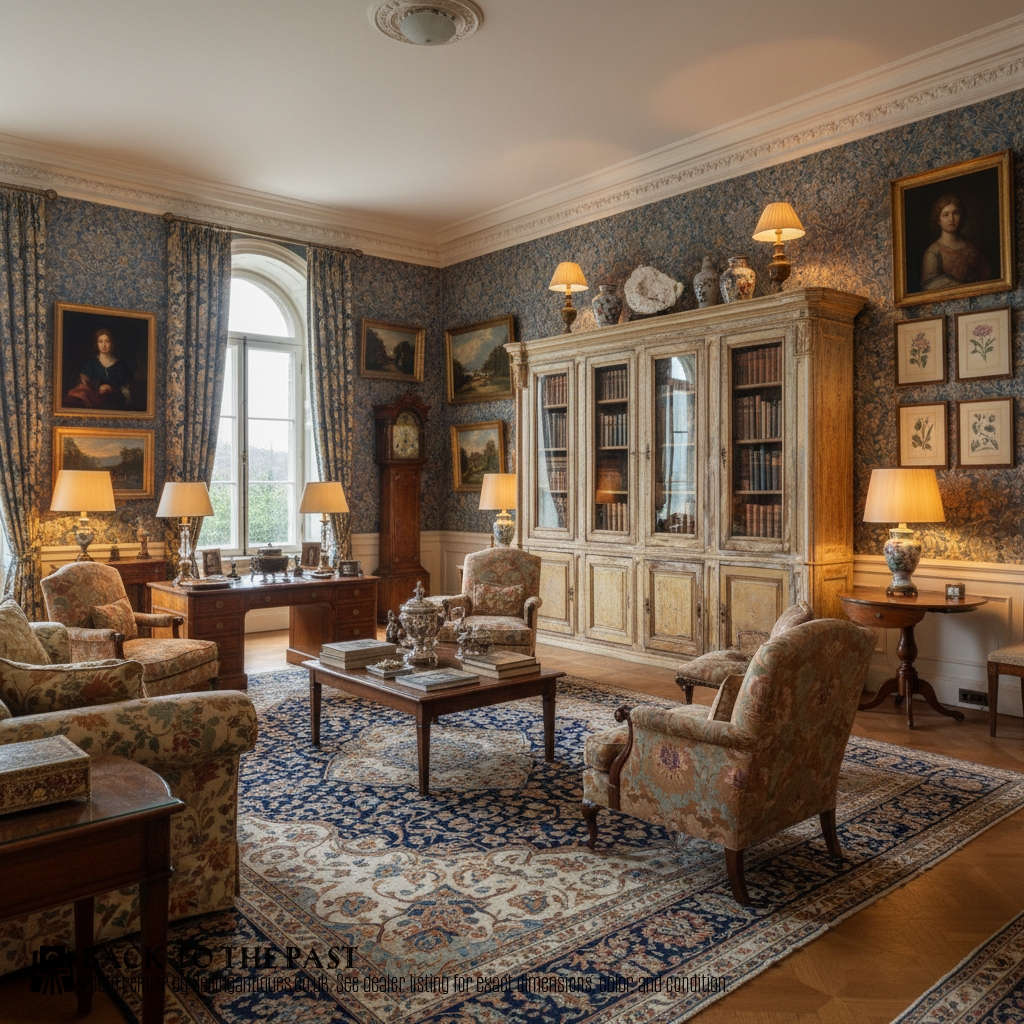
Large French Armoire
When you search for a large french armoire, you are looking at substantial freestanding storage furniture designed for clothes, linen, and books, originating from provincial homes, chateaux, and urban apartments across several centuries.
The version you are most likely to meet on this page is constructed from solid oak, pine, walnut, or mahogany, appearing in single, double, or grand triple configurations spanning the eighteenth, nineteenth, and early twentieth centuries.
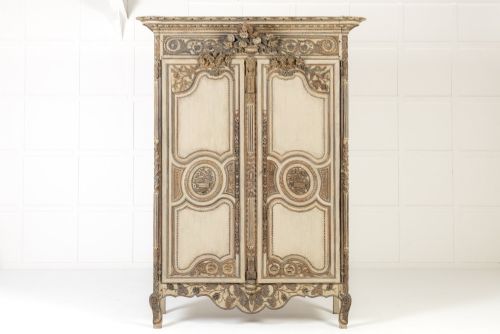
These storage pieces reflect diverse regional aesthetics, ranging from rustic painted finishes and simple panelled doors to elaborate carved crests, mirrored panels, and gilt bronze mounts.
How they were made
Cabinet makers utilised heavy native timbers such as oak, pine, walnut, and cherry, alongside imported hardwoods like mahogany and rosewood, constructing main frames with traditional mortise and tenon joints.
Surfaces received various treatments depending on regional workshop traditions, spanning hand-applied paint finishes, waxed patinas on figured grains, and intricate hand-carved decorative motifs directly into the solid wood.
Larger formats frequently incorporated clever knockdown construction methods, utilising pegged wooden joints or metal bolts so these massive timber structures could be disassembled for transport and reassembled in rooms upstairs.
Several examples retain ingenious secret drawers hidden away behind the main carcass mouldings for safeguarding valuables.
What varies in quality
The architectural presence of an armoire relies heavily on the integrity of its proportions, where balanced door panels, well-weighted cornices, and harmonious depth separate disciplined cabinet work from heavier, ungainly builds.
Refinement of detail distinguishes finer examples, visible in the crispness of hand-carved floral or scroll motifs, the quality of cast brass and ormolu mounts, and the integration of bevelled mirror glass.
Internal configuration and joinery execution reveal the maker's intent, from simple peg construction and straightforward shelving to sophisticated breakfront framing and concealed secret drawers.
The Large French Armoire Glossary
- Armoire
- A large wardrobe or cupboard, traditionally used for storing garments and household linen.
- Breakfront
- A cabinet design where the central section projects forward from the flanking outer sections, adding architectural depth.
- Ormolu
- Gilded bronze mounts and decorative hardware applied to cabinetry, popular in finer nineteenth-century workshops.
- Flat pack
- Early modular furniture construction using pegged wooden joints or knock-down bolts to allow disassembly and transport.
- Bombe
- A swelling, convex curved shape typical of advanced cabinet making, creating a bulbous profile on doors or sides.
Large French Armoire: Frequently Asked Questions
How do I assemble a flat pack armoire?
These historical knock-down pieces rely on numbered timber pegs, internal wooden wedges, or heavy iron bolts to secure the heavy panels together without modern fixings.
Working with a partner ensures the massive side panels, cornices, and heavy doors remain stable while aligning the original joinery slots correctly.
Where should I place a large armoire?
A substantial storage piece requires a wall with sufficient height and depth to accommodate its generous proportions without overwhelming the surrounding room.
Ensure the floor is reasonably level so the tall timber doors hang true and swing smoothly on their original hinges.
Can I adjust the internal shelving?
Many of these pieces were built originally as linen cupboards or wardrobes, meaning internal layouts feature fixed timber partitions, hanging rails, or stationary shelf notches.
Altering the interior often requires respecting the structural frame, as the deep sides and heavy panel doors rely on internal partitions for rigidity.
How do I identify a provincial piece?
Provincial furniture typically displays simpler regional characteristics, employing local timbers such as fruitwood, pine, or chestnut alongside hand-painted finishes rather than expensive imported veneers.
Regional makers focused on practical utility and sturdy pegged construction, resulting in charming imperfections and distinct local vernacular styles.