





Large Framed Seascape Canvas
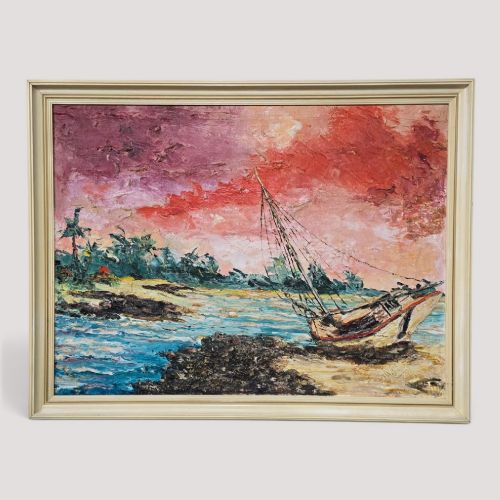
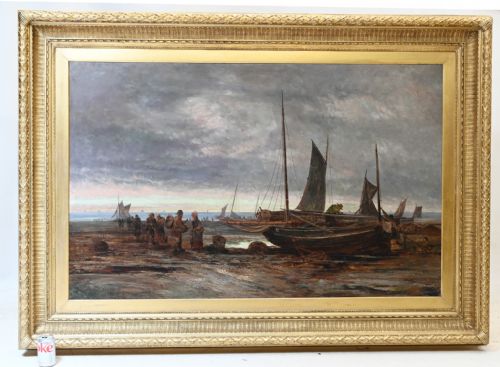
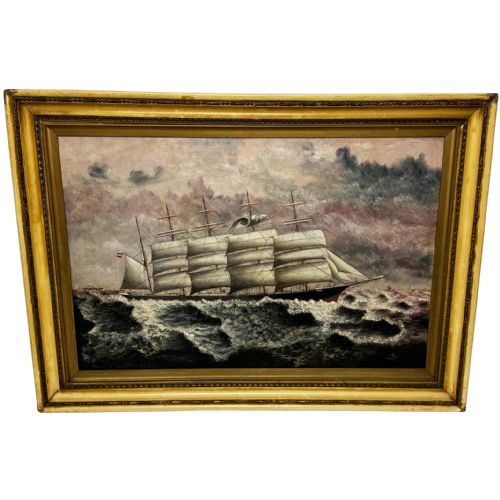
A large framed seascape canvas captures the restless power of the open water and coastlines, bringing scale and historic atmosphere straight into a room.
Large Framed Seascape Canvas
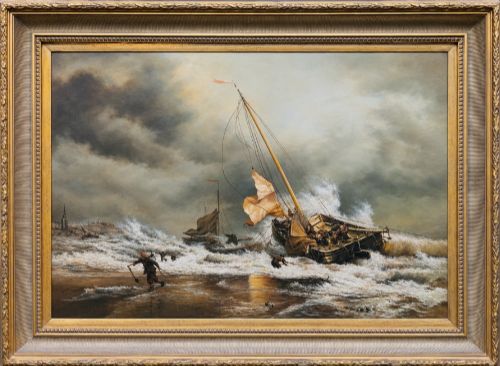
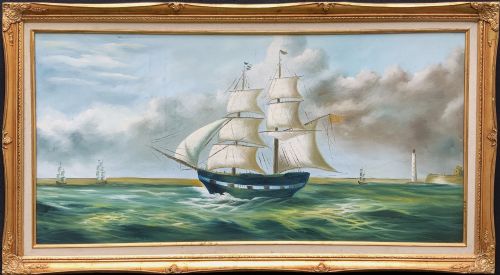
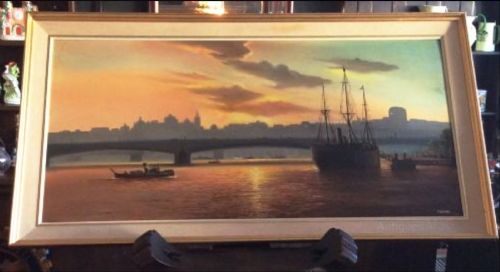
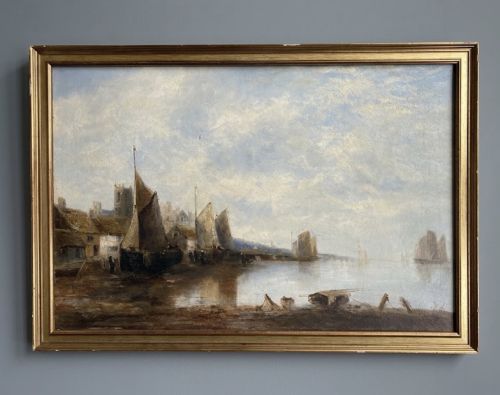
Buyers seeking a large framed seascape canvas encounter works spanning the nineteenth century through to the mid-twentieth century, capturing maritime scenes from Victorian coasts to mid-century harbours. These pieces typically present substantial proportions, often housed in original wood or gilt frames that complement the maritime subject matter.
The selection ranges from traditional Victorian maritime realism and detailed depictions of tall ships to mid-century modern interpretations of fishing trawlers and Welsh beaches. Works associated with named artists sit alongside primitive and atmospheric views of the Thames, Cornish harbours, and Mediterranean ports.
Subjects vary from serene coastal landscapes and lighthouses to dramatic scenes of ships navigating open water and steamers at sea. Most pieces present oil paint applied to canvas, preserving deep textures and varied palettes developed across different decades.
Materials and construction methods
These works rely on oil paint applied to stretched canvas surfaces, allowing artists to build thick impasto and capture light playing across water and sky. The physical depth of the oil medium accounts for the enduring vibrancy of coastal tones found across the period.
Surrounding the canvases are substantial frames constructed from timber, frequently finished in gilt wood or plain wood mouldings. These frames provide both structural support for large expanses of canvas and a distinct decorative boundary appropriate to each era.
Large Framed Seascape Canvas Retail Price Guide 2026
Typical asking prices for large framed seascape canvas among the pieces listed under this phrase on Sellingantiques today, from the lower quarter to the upper quarter. They describe what is for sale here now, not the wider market.
The listings show nineteenth-century works alongside 1950 and 1960 pieces, uniting Victorian realism and mid-century modern approaches to coastal scenes.
Distinctions in quality and execution
Quality in these works rests upon the artist's command of light, maritime anatomy, and atmospheric perspective, distinguishing masterly observations from simpler decorative efforts. Finer examples display precise control over water movement, rigging, and coastal architecture.
The relationship between the canvas and its housing plays a role, with period-matching gilt wood frames enhancing the visual authority of the painting. The handling of the oil medium itself - ranging from fluid, confident brushstrokes to flat, mechanical application - separates exceptional pieces from standard ones.
Edward William Cooke RA·George Henry Knight·Thomas Rose Miles·Paul Jean Clays·Herbert James·Donald McIntyre·John William Gilroy
The Large Framed Seascape Canvas Glossary
- Impasto
- Paint applied thickly to a canvas, standing out in relief from the surface. This technique allows artists to render the physical texture of crashing waves and turbulent skies.
- Gilt wood
- Wood that has been coated with a thin layer of gold leaf or metallic gilt finish. It is commonly found on traditional frames designed to highlight nineteenth-century oil paintings.
- Maritime realism
- An artistic style focused on accurate, detailed depictions of ships, coastal scenes, and marine environments. This approach prioritises observational truth over romantic abstraction.
- Primitive
- A style characterised by a naive, unpolished perspective and simplified forms. Such works offer a direct, unacademic charm distinct from formal academic marine art.
Large Framed Seascape Canvas: Frequently Asked Questions
How do I date an oil painting on canvas?
Dating relies on stylistic markers, the preparation of the canvas, and framing techniques characteristic of periods such as the nineteenth century or mid-twentieth century. Examining the stretcher bars and any signatures or inscriptions often provides further chronological context.
Changes in pigment composition and canvas weave also offer clues to the era of creation. Comparing the work to documented pieces by known artists helps narrow down the active period.
Where should I hang a large maritime painting?
A substantial canvas requires a wall with sufficient proportions and structural support to bear the weight of both the painting and its heavy timber frame. Placing it in a principal room allows the expansive marine subject to act as a natural focal point.
Avoid areas prone to excessive dampness or direct sunlight, which can damage both the oil pigments and the canvas substrate over time. Adequate ambient lighting helps bring out the tonal nuances in the water and sky.
What is the difference between Victorian and mid-century marine art?
Victorian marine art typically emphasises meticulous detail, dramatic lighting, and accurate rendering of sailing ships and coastal topography. Mid-century works often embrace looser brushwork, broader palettes, and simplified modernist interpretations of harbours and beaches.
These shifts reflect changing artistic priorities away from strict realism toward atmospheric and textural expression. Both approaches, however, remain rooted in traditional oil on canvas mediums.
How should I care for an antique oil painting?
Maintenance involves keeping the canvas in stable environmental conditions with minimal fluctuations in temperature and humidity. Dust should be removed gently from the surface and frame using a soft, dry brush without applying pressure.
Avoid using commercial cleaning fluids or water on the painted surface, as these can disrupt the varnish and oil layers. Professional conservation is recommended if the canvas shows signs of sagging or cracking.