






Large Framed Canvas
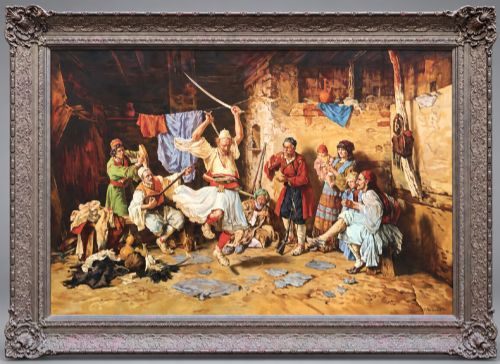
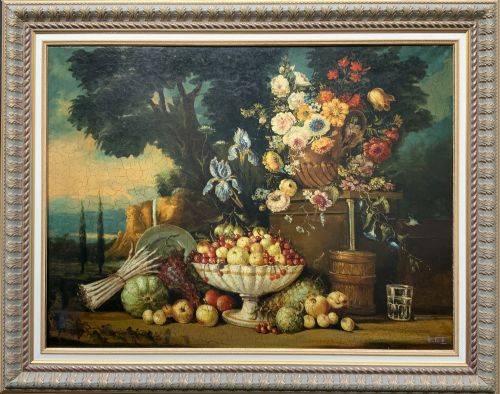
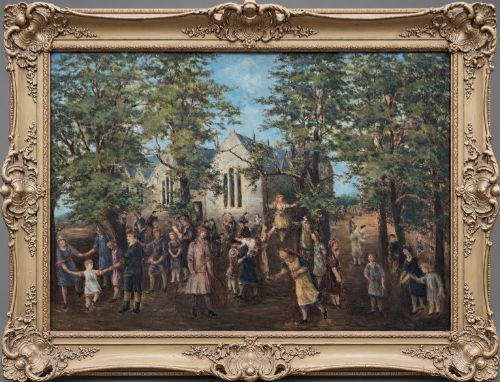
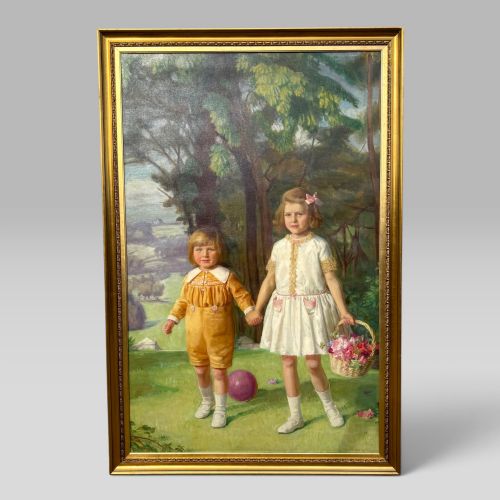
A large framed canvas brings scale and historical presence to a room, offering grand portraits, sweeping landscapes and rich still lifes.
Large Framed Canvas
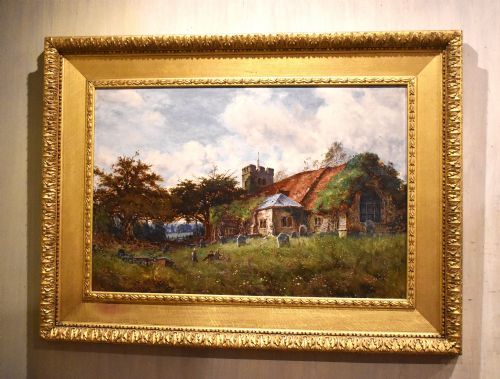
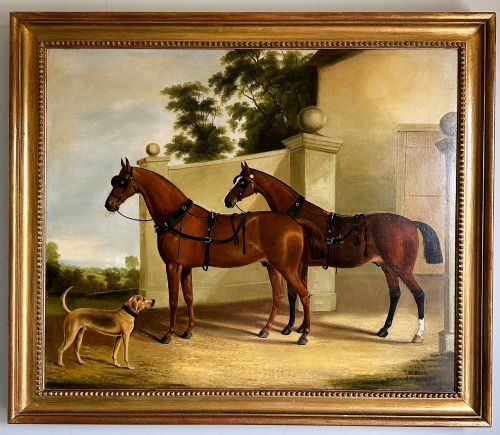
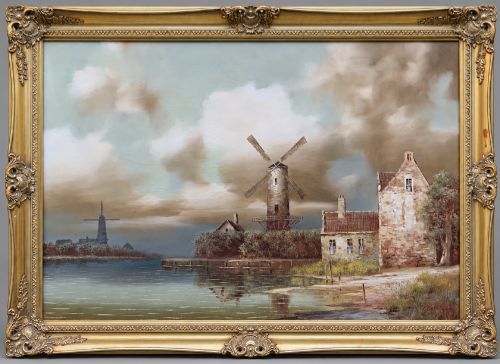
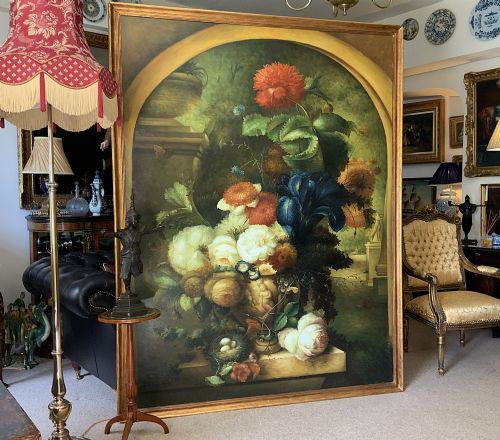
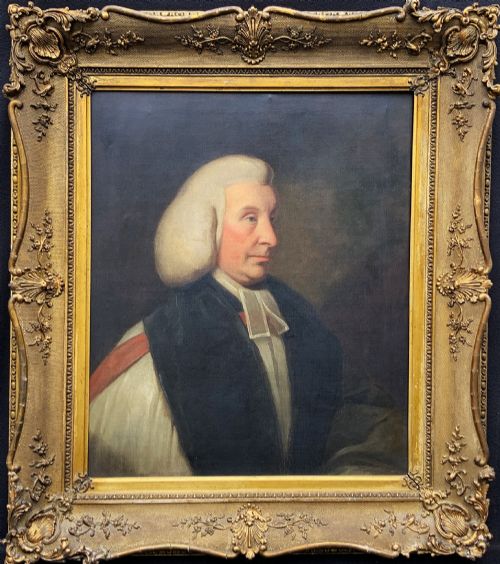
A large framed canvas encompasses significant works of fine art, predominantly oil paintings on fabric stretched over wooden supports and housed within substantial decorative borders. These pieces span centuries of artistic production, ranging from 18th-century portraits and mythological scenes to Victorian sporting subjects and mid-century impressionist cityscapes.
Buyers encountering this selection will frequently meet 19th-century and Victorian oils alongside mid-century compositions. The subjects vary widely, incorporating floral still lifes, maritime views, historical genre scenes and classical portraiture executed by named artists and continental schools.
The physical stature of these works demands considered placement within domestic or commercial interiors. Their substantial presence relies as much upon the architectural weight of the surrounding timber and gesso frames as upon the pigment applied to the fabric surface.
Materials and Technique
The foundation of these works is woven textile, predominantly traditional canvas stretched firmly across wooden strainer frames to provide a stable working surface for oil paint. Certain examples utilise alternative supports such as vinyl canvas or board, while the primary medium remains oil paint applied through layered brushwork and glazing techniques.
Enclosing these paintings are robust frames constructed from wood, embellished with moulded gesso and finished with layers of gold leaf, known as giltwood or gilt. These surrounds are often contemporaneous with the artwork, contributing structural integrity and decorative depth through ornate corner cartouches and leaf motifs.
Listings feature oil paintings on canvas alongside works on textile and vinyl canvas, housed in wooden and giltwood gesso frames from the 18th century onward.
Evaluating Quality
Distinction across the range rests upon the fidelity of the draughtsmanship and the expressive capability of the brushwork. Masterful handling of light, shadow and anatomical proportion in portraiture or landscape execution elevates certain canvases above standard decorative workshop output.
The relationship between the painting and its housing dictates visual success. An original, period-appropriate giltwood frame that complements the palette and era of the canvas demonstrates superior integrity compared to a later or mismatched replacement.
Richard Sebastian Bond·Felix Stone Moscheles·Georges de La Tour·Cornelis Van Der Voort·Sir Joshua Reynolds·Eric Robertson·Thomas Smythe·W.R. Waters·Konstantin Stoitzner·John Opie·James Hamilton·Rene Levrel·Harold Knight·Erich Mercker·Robert Cleminson·Frans Hals·Godfried Schalcken·G.W. Butland·R.G. Fraser·Kevin Platt
The Large Framed Canvas Glossary
- Gesso
- A plaster-like preparation mixture used on frames to create a smooth surface before gilding. This material is built up in layers and carved to form intricate decorative mouldings.
- Giltwood
- Timber that has been coated with a thin layer of gold leaf or gold paint. It provides a luminous border that catches interior light and frames the painted canvas.
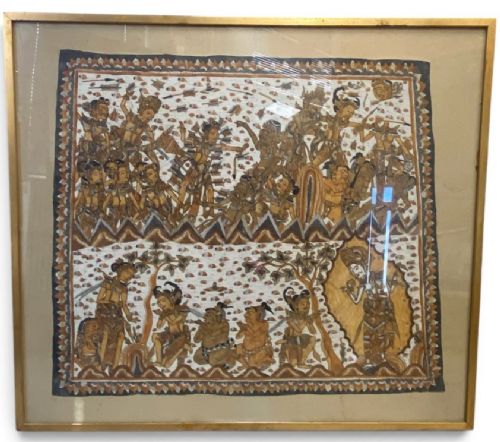
- Kamasan
- A traditional style of classical painting originating from Bali, typically depicting narratives from Hindu epics on textile. These works feature distinct flat perspectives and detailed register lines.
- Old Master
- A term applied to European painters of high skill working before the 19th century. It also describes paintings executed by these recognised artists or their immediate studio circles.
- Stretcher
- The internal wooden framework that holds the canvas taut. Traditional versions utilise corner keys to allow minor adjustments to tension over time.
Large Framed Canvas: Frequently Asked Questions
How do I hang a heavy framed canvas safely?
Substantial canvases require fixing directly into wall studs or using heavy-duty masonry anchors capable of supporting the combined weight of the timber stretcher and ornate gesso frame.
Distributing the load across two attachment points using steel picture wire or strap hangers prevents the frame from tilting and maintains stability.
How do I identify the period of a frame?
Frame construction methods, such as hand-carved wooden corners versus cast composition ornament, offer clear indicators of age. Early frames exhibit distinct tool marks and material shrinkage beneath the gilt layers.
Changes in moulding profiles and the composition of the underlying gesso align closely with prevailing decorative tastes of specific centuries.
What is the difference between canvas and board supports?
Traditional canvas consists of woven fabric stretched over a wooden frame, providing a flexible surface that responds to atmospheric humidity fluctuations.
Board or panel supports offer a rigid substrate, which eliminates the need for stretching but changes the physical resistance experienced by the artist during paint application.