


Large Enamel Urn
A large enamel urn brings monumental scale and intricate colour to a room, drawing the eye with its commanding presence.
Large Enamel Urn
A large enamel urn functions as a striking decorative vessel, often standing as a floor vase, temple jar, or grand centrepiece. These substantial pieces frequently originate from Qing Dynasty China or the Japanese Meiji and Edo periods, alongside Victorian European interpretations.
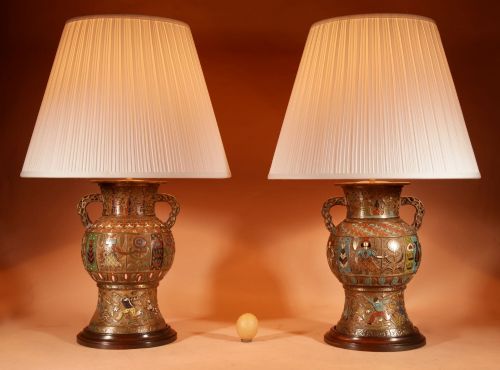
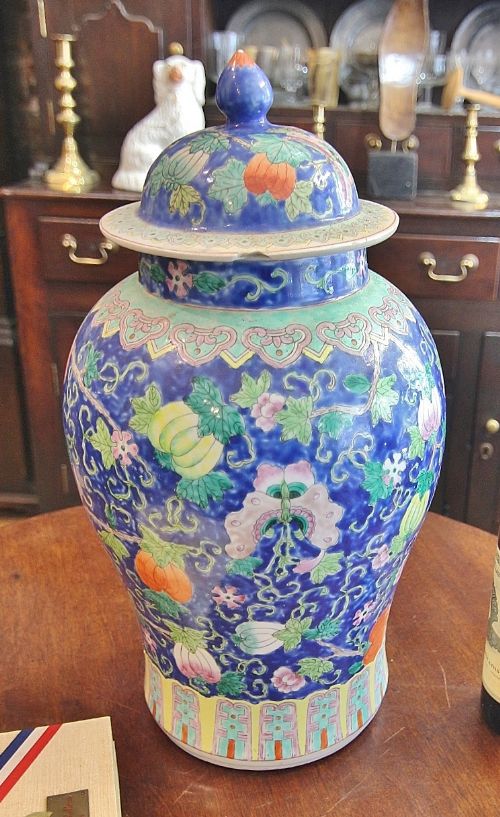
Buyers seeking a large enamel urn encounter works rendered in cloisonné, champlevé, and painted porcelain techniques. Forms range from towering palace vases and temple water dispensers to jardinieres and covered vessels.
How they were made
Metalwork forms the structural foundation for many pieces, utilising bronze, copper, and brass beaten or cast into heavy vessels. Artisans then soldered thin metal wires to the body to create cellular compartments for the coloured glass paste.
Firing fused the powdered glass pastes within their designated cells, after which the surface was ground and polished to a smooth finish. Other pieces relied on direct hand-painted glazes over porcelain, earthenware, or opaque glass.
Listings for this phrase feature 19th-century Chinese and Japanese pieces alongside Victorian European glass and bronze works.
What varies in quality
The precision of the metal wirework and the complexity of the colour palette dictate the artistic standard of a vessel. Tighter cellular partitions and balanced, vibrant enamel tones separate masterworks from simpler production pieces.
Scale and proportion influence desirability, particularly when pieces survive as matched pairs or retain original stands and covers. The clarity of the polished finish and the intricacy of motifs such as dragons, phoenixes, or koi fish determine the overall impact.
Mary Gregory·Seiko en Chokei
The Large Enamel Urn Glossary
- Cloisonné
- A decorative metalwork technique where fine wires are soldered to a metal body to form cells that hold enamel paste before firing.
- Champlevé
- A method where troughs or cavities are gouged into a thick metal surface and filled with enamel powder prior to heating.
- Satsuma
- A type of Japanese earthenware featuring a pale, crackled ivory glaze decorated with intricate polychrome enamel and gold leaf.
- Famille Rose
- A palette of opaque rose-pink and other soft enamel colours introduced to Chinese porcelain during the Qing Dynasty.
Large Enamel Urn: Frequently Asked Questions
How do I style a large enamel urn?
These commanding vessels demand open floor space or a sturdy pedestal where their height and colour can be appreciated without obstruction. Placing them away from direct sunlight preserves the rich tones of the enamel and gilt highlights.
Pairing a solitary urn with neutral backgrounds allows the intricate motifs of birds, dragons, or floral sprays to stand out. Alternatively, matched pairs anchor symmetrical spaces such as entryways or grand mantelpieces.
What is the difference between cloisonné and champlevé?
Cloisonné relies on thin metal wires soldered onto the surface of a copper or bronze base to outline the decorative pattern and hold the glass paste. This method creates a delicate grid of fine lines across the entire design.
Champlevé involves carving or gouging channels directly into a thicker metal plate to form the recessed areas for the enamel. The resulting metal boundaries appear broader and more integrated into the structural body of the object.
How should I clean a large enamel urn?
Dust the surface regularly with a soft, dry feather duster or a clean microfibre cloth to prevent particulate buildup in the recessed wirework. Avoid chemical cleaners, abrasive cloths, or immersion in water, as these can damage exposed metal and historical glazes.
If the vessel requires deeper cleaning, consult a specialist conservator rather than attempting DIY restoration. Preserving the original patina on the bronze or brass elements maintains the historical integrity of the piece.