

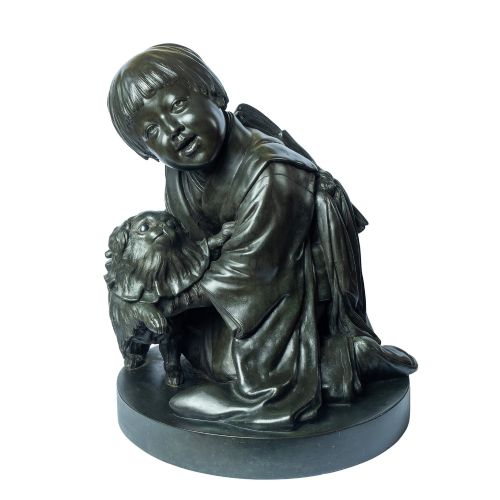


Large Dog Figure
A large dog figure brings presence to a room, cast in bronze, carved in terracotta, or moulded in Staffordshire earthenware.
Large Dog Figure
When you search for a large dog figure, you encounter sculptural works spanning the nineteenth century up to the Art Deco period. These pieces range from substantial Staffordshire pairs meant for a mantelpiece to monumental temple lions and lifesize terracotta hounds.
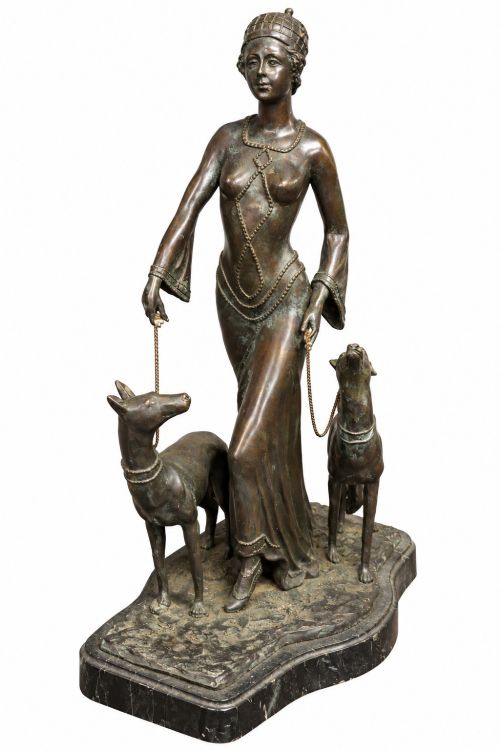
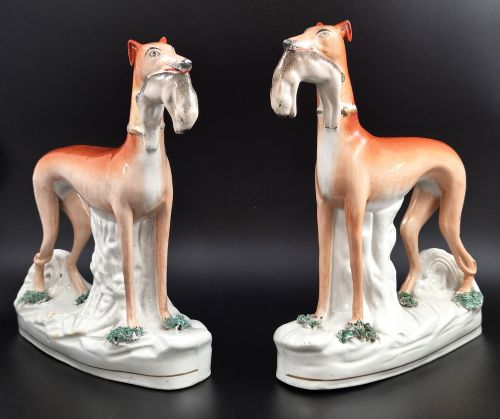
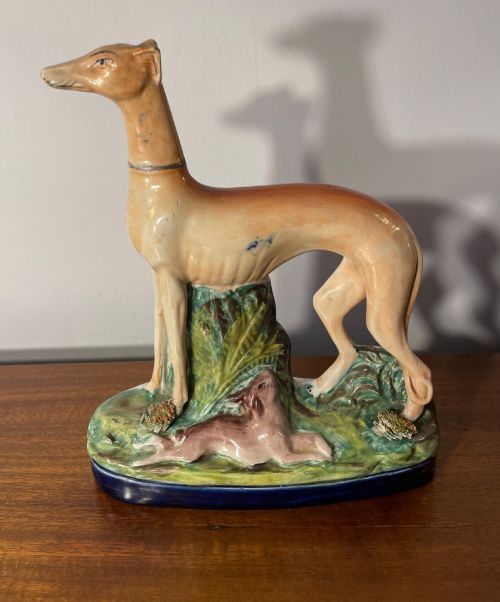
The Staffordshire spaniels and greyhounds dominate the ceramic offerings, frequently recorded in pairs with glass eyes or accompanying hares. Alongside these sit continental bronzes, Austrian terracotta pugs, and Bohemian porcelain figures from makers such as Royal Dux.
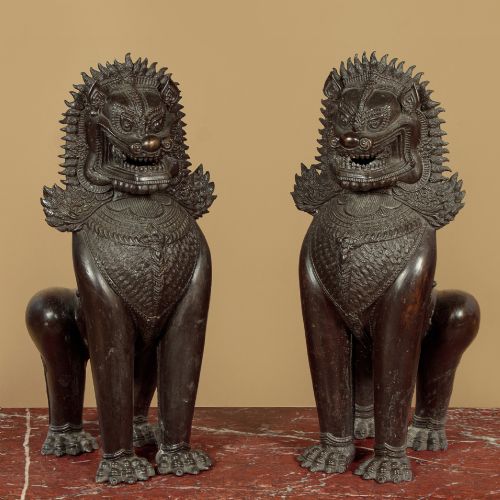
Asian metalwork and carvings also appear prominently within this category, notably Tibetan and Japanese bronze temple lions or foo dogs. These diverse cultural traditions share a common scale and sculptural ambition.
Materials and construction
Ceramic pieces rely on earthenware and porcelain, often finished with lead glaze or enamel colours, while Staffordshire works employ traditional slip-casting and hand-painting techniques. Terracotta provides a porous, warm medium suited to substantial figures like the Austrian pug or lifesize hounds.
Metal sculptures utilise bronze and spelter, sometimes cast via the lost-wax method and finished with patination or cold-painting. Marble frequently serves as a heavy, supportive base for Art Deco group figures and night lights.
Large Dog Figure Retail Price Guide 2026
Typical asking prices for large dog figure among the pieces listed under this phrase on Sellingantiques today, from the lower quarter to the upper quarter. They describe what is for sale here now, not the wider market.
The category encompasses diverse cultural traditions, including Victorian Staffordshire pottery, Japanese okimono, and Tibetan temple bronzes.
Assessing the work
The integrity of the material dictates longevity, particularly in large terracottas and heavy bronzes where the weight demands robust internal structure. Original finishing, such as period glass eyes in Staffordshire dogs or authentic patination on bronzes, elevates the integrity of the piece.
Georges Gori·Christophe Fratin·Royal Dux·Bernard Bloch·John Durham
The Large Dog Figure Glossary
- Animalier
- A nineteenth-century artistic movement dedicated to the realistic portrayal of animals. Sculptors in this tradition focused on anatomical accuracy and dynamic posture.
- Parian
- A fine-grained, unglazed porcelain developed in the nineteenth century to imitate marble. It was frequently utilised for classical and literary statuary.
- Okimono
- A Japanese freestanding decorative sculpture designed for display on a shelf or in a tokonoma alcove. These bronzes and carvings display minute attention to detail.
- Spelter
- A zinc alloy commonly used as a less expensive substitute for bronze in decorative figures. It is often given a bronze-like finish.
- Staffordshire figure
- Pottery figures produced in the Staffordshire potteries in England. They range from utilitarian mantel ornaments to elaborate portrait pieces.
Large Dog Figure: Frequently Asked Questions
Where were Staffordshire dog figures displayed?
These earthenware dogs traditionally sat on cottage and parlour mantelpieces, often arranged as mirror-image pairs facing inward toward the clock.
Their substantial scale allowed them to anchor the room decor, serving as familiar household guardians in nineteenth-century domestic interiors.
How do I distinguish bronze from spelter?
Bronze is heavier, colder to the touch, and develops a stable, rich patina over decades of exposure to air. Spelter is softer, lighter, and tends to flake or reveal a greyish metal underneath where the surface finish has worn away.
Examining the underside or hidden joints often reveals the base metal beneath the patination.
What is a foo dog?
Foo dogs are stylized guardian lions originating in Chinese art and spreading across Asian Buddhist traditions. They traditionally stood outside temples to ward off malevolent spirits.
In western collections, these substantial bronze and stone figures function as striking interior ornaments.
How do I care for terracotta figures?
Terracotta is a porous material that absorbs moisture and oils, meaning it requires dry indoor environments away from damp walls. Gentle dusting with a soft, dry brush preserves the surface without scratching the fired clay.
Lifting these heavy pieces requires supporting the base entirely rather than relying on protruding ears or tails.