


Large Decorative Persian Rug
A large decorative persian rug grounds a substantial room with centuries of woven tradition.
Large Decorative Persian Rug
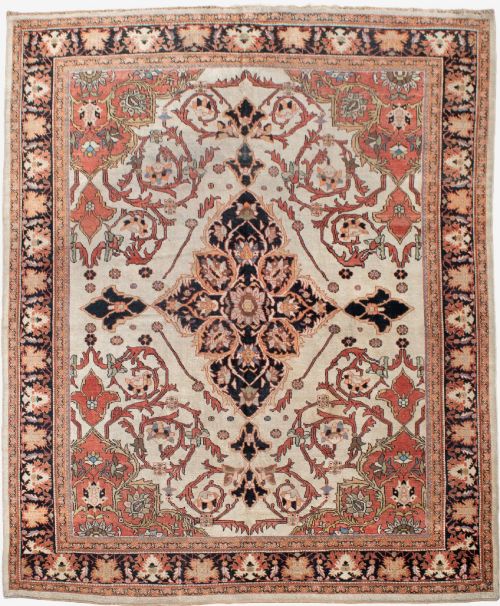
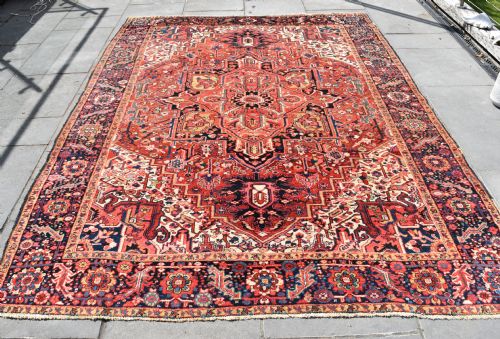
A large decorative persian rug comprises room-sized floor coverings originating from various workshops and districts across Persia during the late nineteenth and early twentieth centuries. These pieces arrive in styles such as Heriz, Mahal, Sultanabad, Ziegler, Sarouk, Farahan, Karadja, and Oushak.
Buyers encountering this selection will frequently find substantial dimensions, including oversized formats measuring several metres in length and width. The forms span distinct regional weaving traditions, each bringing specific design vocabularies to the floor.
How they were made
These carpets are constructed primarily from wool pile woven onto sturdy cotton foundations. The natural fibres allow for deep saturation of dye and durable daily use over generations.
Weavers employed traditional hand-knotting techniques to execute complex geometric and floral patterns. The combination of durable wool and precise foundation weaving ensures structural integrity across large room formats.
The listings show pieces originating from periods between 1880 and 1920, utilising wool and cotton materials.
What varies in quality
Quality differences emerge in the finesse of the weave and the visual balance of the field design. Finer knotting permits sharper rendering of intricate medallions and border motifs.
The handling of natural dyes creates subtle tonal variations across the wool pile that elevate the visual depth. Strong structural condition in oversized formats also separates standard examples from exceptional survivals.
The Large Decorative Persian Rug Glossary
- Pile
- The vertical or slanted loops of yarn that form the soft surface of the rug. This wool layer absorbs dye and bears the brunt of foot traffic.
- Foundation
- The underlying grid of warp and weft threads that supports the knotted pile. Cotton serves as the standard material for this structural framework.
- Medallion
- A large central ornamental design motif placed in the middle of the carpet field. Many regional styles build their entire composition around this focal point.
- Field
- The central background area of the rug enclosed by the borders. This expanse displays the primary patterns and signature colours of the specific weaving tradition.
Large Decorative Persian Rug: Frequently Asked Questions
How do I style a large carpet?
These expansive pieces anchor large living spaces, dining rooms, or libraries by defining the seating arrangement or central floor area. Allow a uniform border of exposed flooring around the edges to frame the piece properly.
Keep surrounding furniture lower in profile to let the complex patterns and room-sized scale remain the visual focus of the interior.
What rooms suit oversized rugs?
Generous room dimensions provide the ideal setting for carpets measuring over four or five metres in length. Open-plan reception spaces and grand entrance halls benefit most from such substantial floor coverings.
Ensure doorways can clear the thickness of the wool pile and heavy cotton foundation before placing the rug in high-traffic zones.
How do regional styles differ?
Heriz and Karadja carpets typically feature bold geometric medallions and strong architectural lines. In contrast, Sultanabad, Mahal, and Ziegler types often display more relaxed, open floral patterns designed for Western decorative tastes.
Sarouk and Farahan pieces introduce refined details and tighter knotting, while Oushak carpets bring softer, lighter fields into the room.
How should I care for wool pile?
Regular vacuuming without a rotating brush roll keeps dust from settling deep into the cotton foundation and wool fibres. Professional cleaning by specialists in antique textiles ensures the natural dyes remain stable.
Rotate the carpet periodically to distribute foot traffic evenly across the surface and balance natural fading from sunlight.