




Large Cream Wall Mirror
A large cream wall mirror anchors a room with scale and light, bringing period presence to an interior through substantial frames and soft tones.
Large Cream Wall Mirror
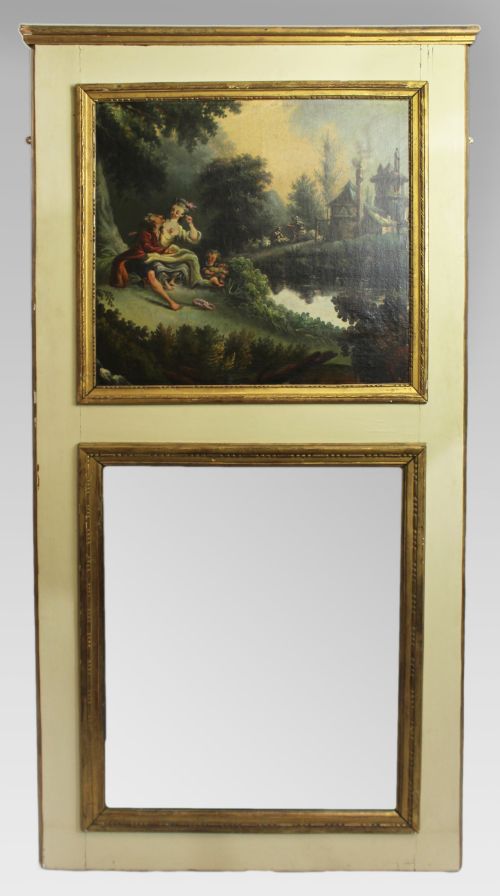
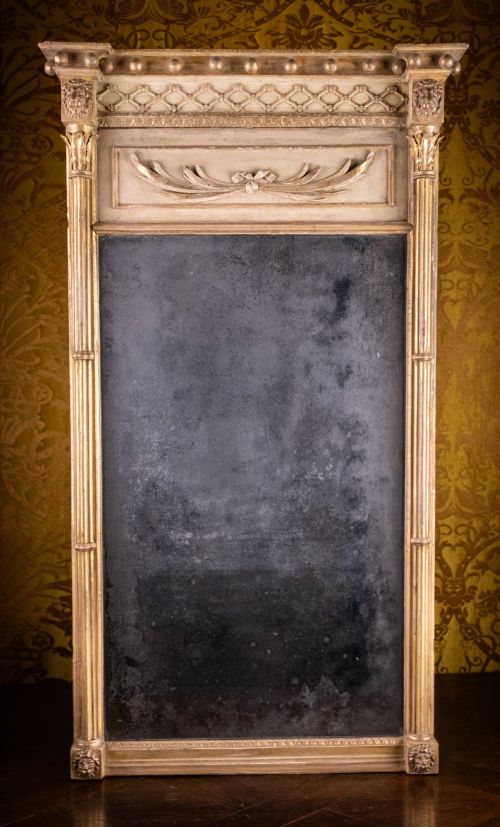
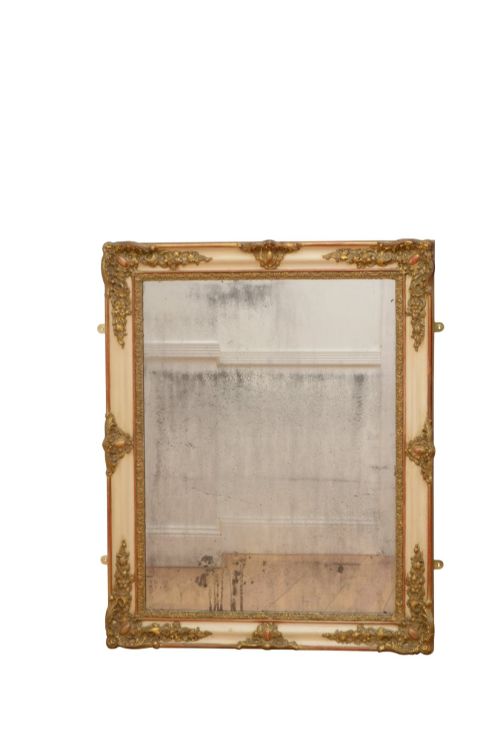
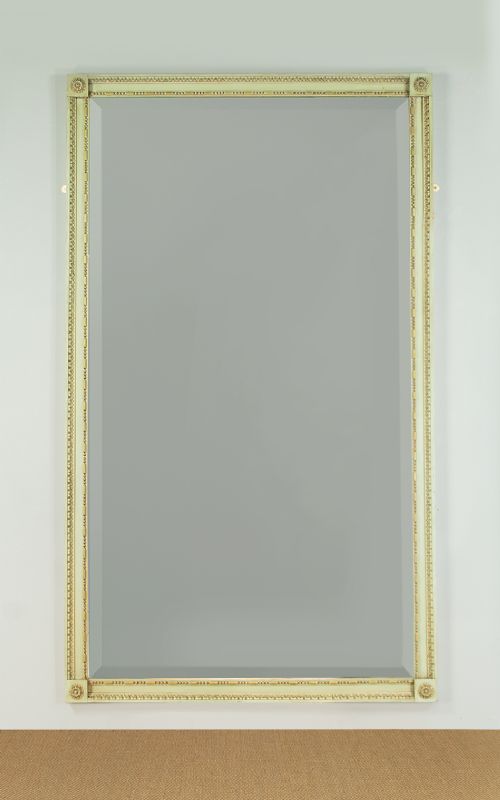
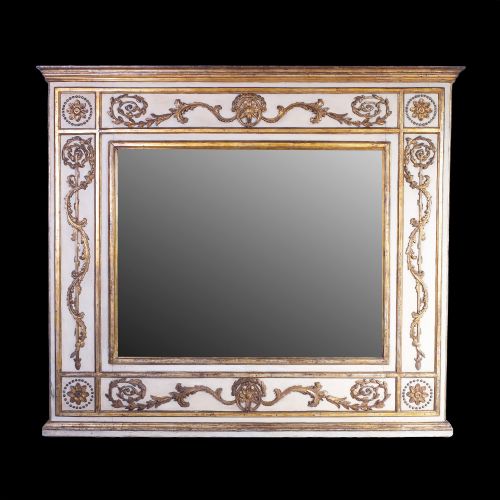
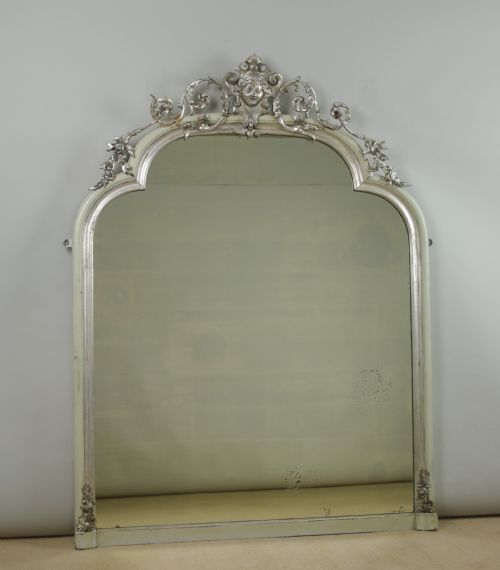
A large cream wall mirror primarily takes the form of an overmantel, pier, or trumeau glass designed to hang above a fireplace or span a substantial wall space. These pieces emerge predominantly from nineteenth-century English and French workshops, encompassing styles from Regency and Victorian to Rococo Revival and French Provincial.
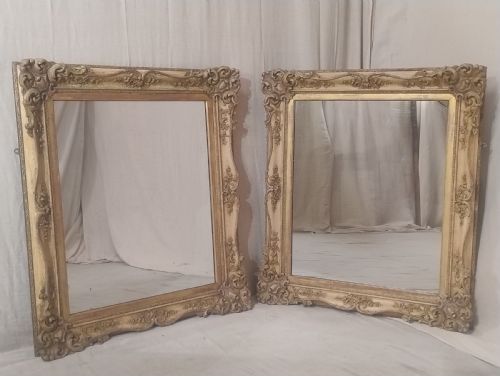
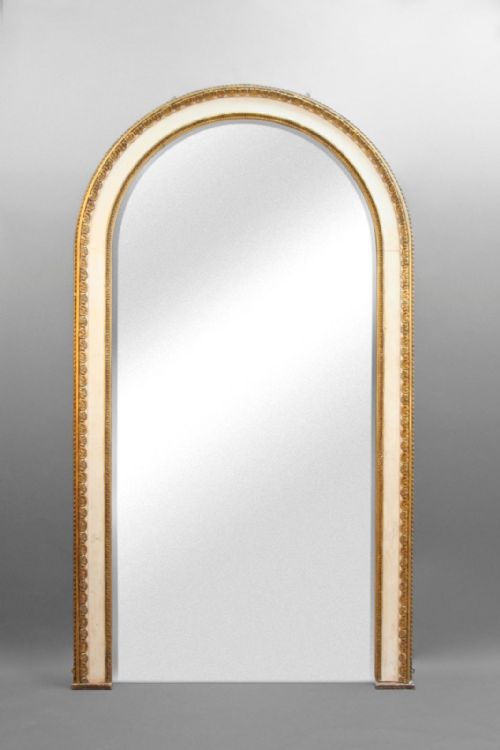
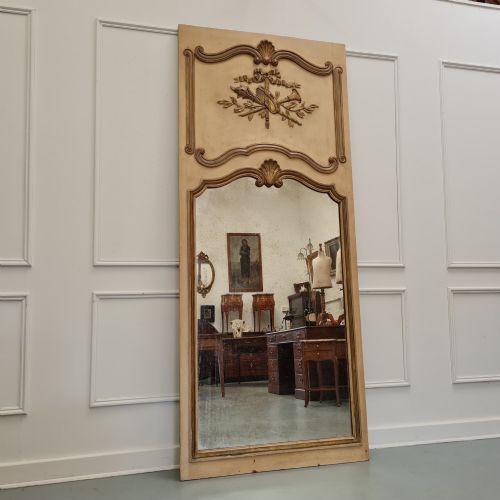
The surface finishes typically combine painted cream grounds with parcel gilt accents, revealing underlying gesso and wood. Surviving examples frequently display arched tops, carved floral details, or pastoral oil paintings set into the upper panels of trumeau frames.
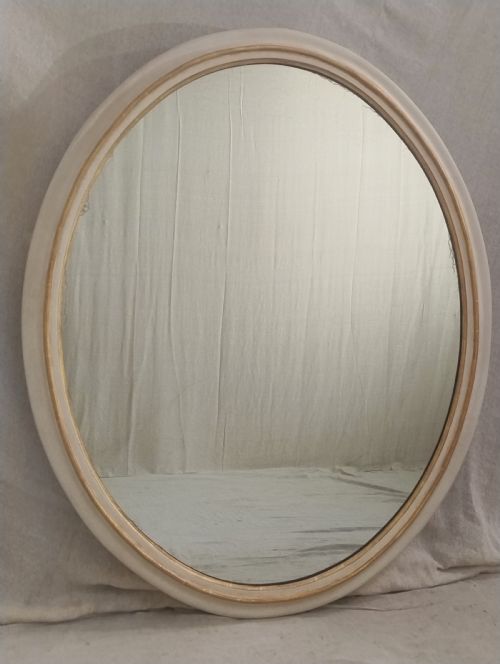
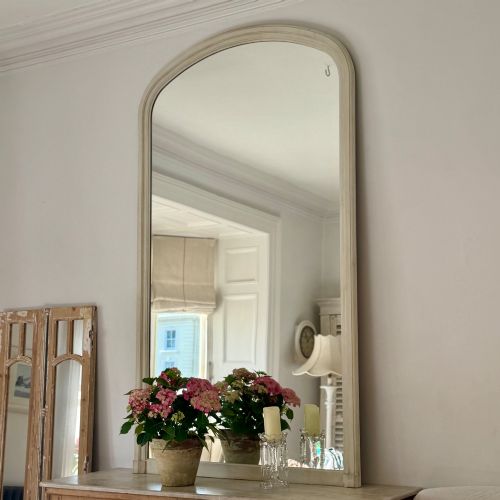
Buyers encountering this selection find formats ranging from grand architectural overmantels with column frames to oval shapes and convex witch's eye mirrors. The unifying element across these varied forms is the cream painted treatment applied over carved wooden structures.
How they were made
Frames start with solid timber foundations, often carved directly or built up with layers of gesso to form intricate relief decoration such as scrolls, lion masks, or floral motifs. Craftsmen then apply multiple coats of paint, frequently finishing the raised carved details with gold leaf or parcel gilding.
The glass plates are set within these heavy wooden structures, utilising traditional silvering techniques that result in the characteristic depth and subtle oxidation seen in antique mirrors. Distressed finishes and layered overpainting occur through both original decorative choices and the natural ageing of the paint and gesso over the centuries.
Listings feature pieces spanning the eighteenth to early twentieth centuries, constructed from wood, gesso, and glass with painted and gilt finishes.
What varies in quality
Quality rests upon the crispness of the original carved wood and gesso relief work beneath the paint layers, where deeply undercut moulding distinguishes superior frames from simpler cast or flat alternatives. The proportion of the mirror plate relative to the frame also dictates the visual balance of the piece.
The integrity of the surface finish matters significantly, as original or early cream paint and parcel gilt highlights hold greater distinction than later heavy-handed overpainting. Furthermore, the retention of the original mirror glass plate adds considerable character to an antique piece.
The Large Cream Wall Mirror Glossary
- Overmantel mirror
- A wide mirror specifically proportioned to hang on the wall directly above a fireplace mantelpiece. These often incorporate architectural elements such as columns or shaped arched tops.
- Trumeau mirror
- A decorative wall mirror featuring an upper panel that holds a painting or a carved relief, integrated into a unified framed structure. They originate largely from French interior design traditions.
- Gesso
- A plaster-like mixture applied to wood frames and carved to create raised decorative details before gilding or painting. Its smooth surface accepts fine detail work.
- Parcel gilt
- A decoration technique where only specific raised portions or carved details of a frame are covered in gold leaf while the rest is painted. This creates a contrasting two-tone effect.
- Pier mirror
- A tall, narrow mirror designed to hang on the wall space between two windows, frequently placed above a matching pier table.
Large Cream Wall Mirror: Frequently Asked Questions
How do I hang a heavy antique mirror?
These substantial frames require heavy-duty fixings secured directly into wall studs or masonry using appropriate wall anchors. Professional installation is strongly recommended due to the considerable combined weight of the wood, gesso, and glass.
Position the mirror at a height that reflects natural light from windows or balances the proportions of surrounding furniture, typically centered above a mantelpiece or console.
Are the mirror plates original?
Many surviving pieces retain their original glass plates, which often display characteristic foxing, light speckling, or subtle distortions acquired over generations. These optical imperfections confirm the age of the glass.
Replacement plates do occur in pieces that have undergone restoration during their long histories, though period-appropriate glass is frequently retained to preserve the antique character.
How do I clean the painted frame?
Dust the carved gesso and painted wooden surfaces gently using a soft, dry brush to prevent accumulation in the crevices of the relief work. Avoid using liquid cleaners or harsh chemicals that can strip delicate historical paint layers or damage parcel gilt highlights.
Glass plates can be wiped carefully with a microfibre cloth and a minimal amount of glass cleaner applied to the cloth rather than sprayed directly onto the mirror, protecting the surrounding frame from moisture.
What is a trumeau mirror?
A trumeau mirror is a traditional French wall mirror that incorporates a painted panel or an oil painting directly into the upper section of the wooden frame. These pieces served as permanent architectural decorations in formal rooms.
The lower section holds the glass plate, while the upper artwork often depicts pastoral scenes or classical motifs typical of nineteenth-century French interior design.