



Large Country Armoire
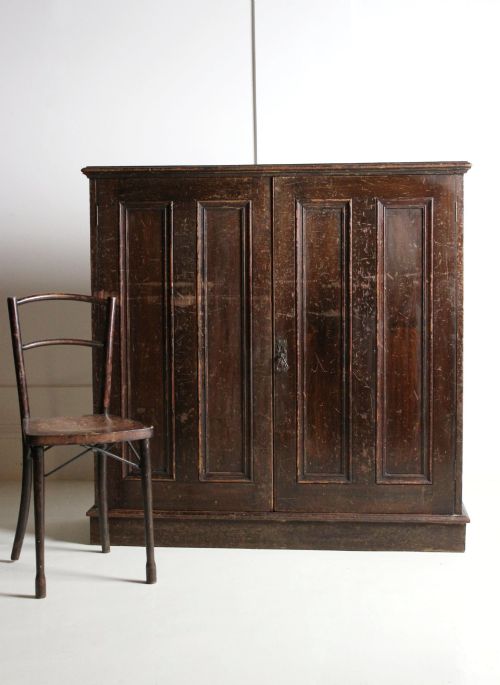
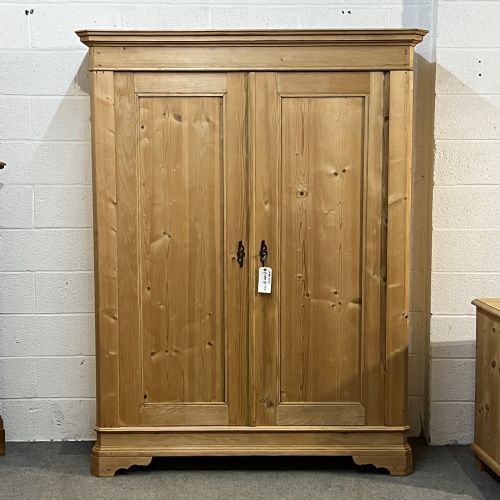
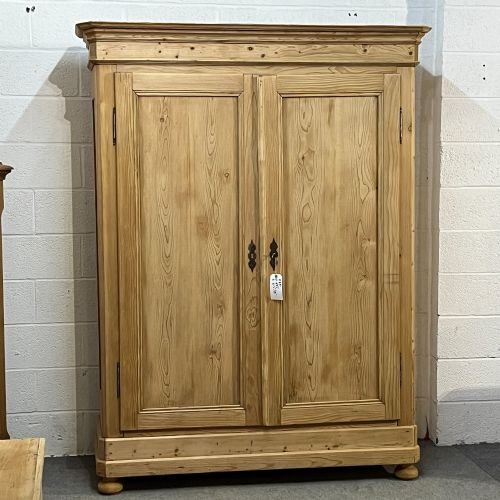
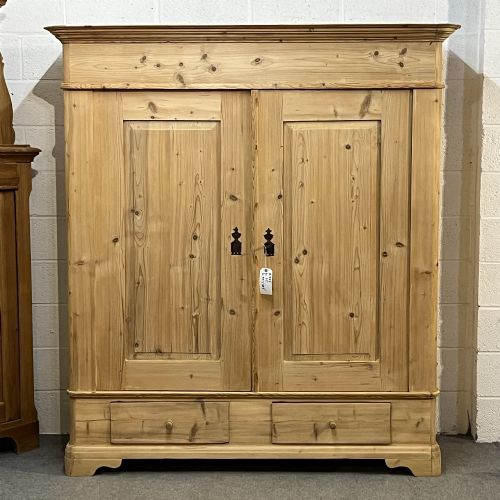
A large country armoire offers serious storage in substantial timber, bringing practical presence to a room through traditional regional craftsmanship.
Large Country Armoire
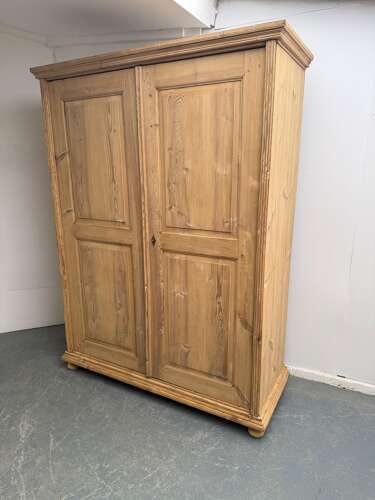
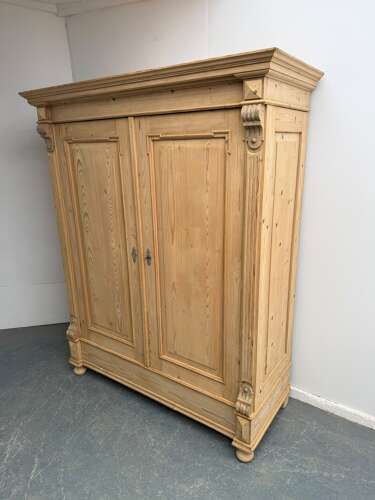
A large country armoire is a robust storage piece designed for domestic utility, taking the form of wardrobes, housekeepers cupboards, and large cabinets. These pieces serve as the primary storage vessel in traditional interiors, offering generous interior capacity behind substantial doors.
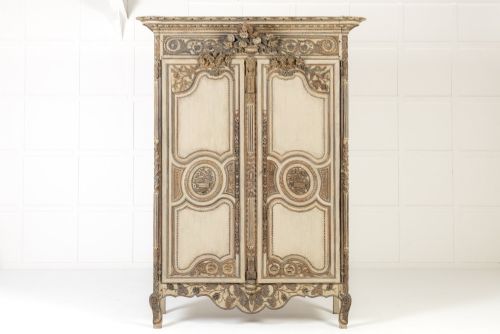
Pine and oak dominate the selection, often found in regional English, French, and Dutch variations spanning the eighteenth and nineteenth centuries. Buyers frequently encounter painted or waxed finishes that reflect domestic use over generations.
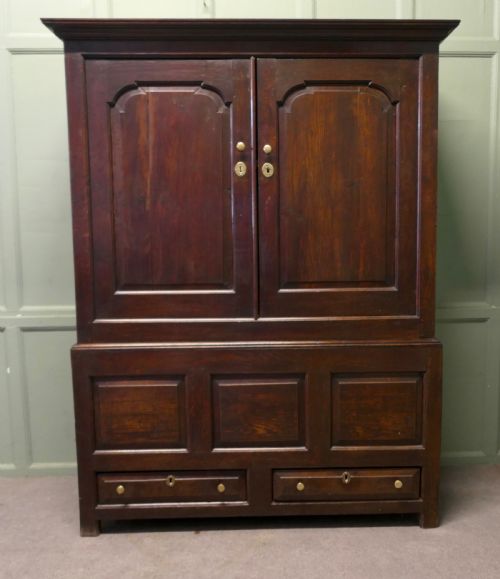
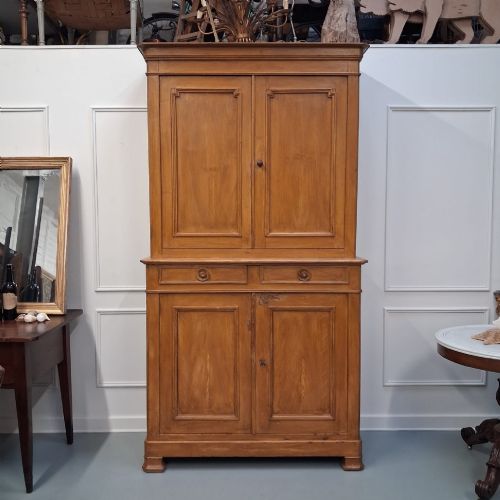
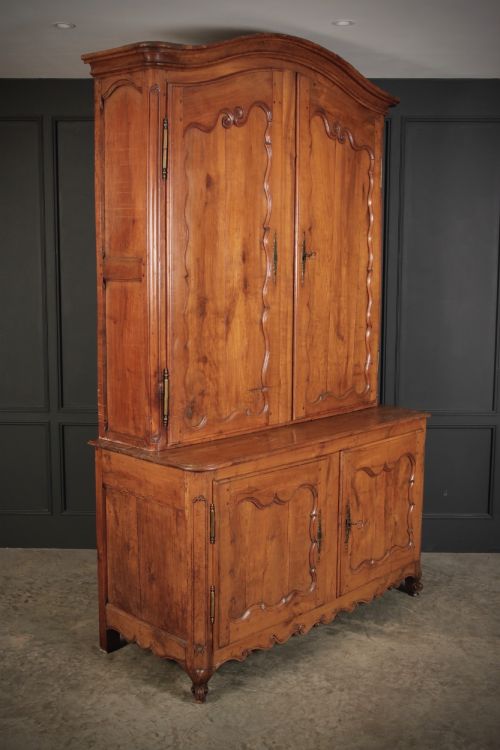
The scale ranges from double wardrobes with internal drawer banks to tall housekeepers cupboards and library bookcases. Many eighteenth and nineteenth-century examples incorporate knockdown construction to facilitate movement through domestic spaces.
Materials and construction methods
Makers utilised solid timbers such as pine, oak, cherry, and chestnut, selecting woods available within regional workshops. Construction frequently involved panelled doors, pegged joints, and iron or brass hardware.
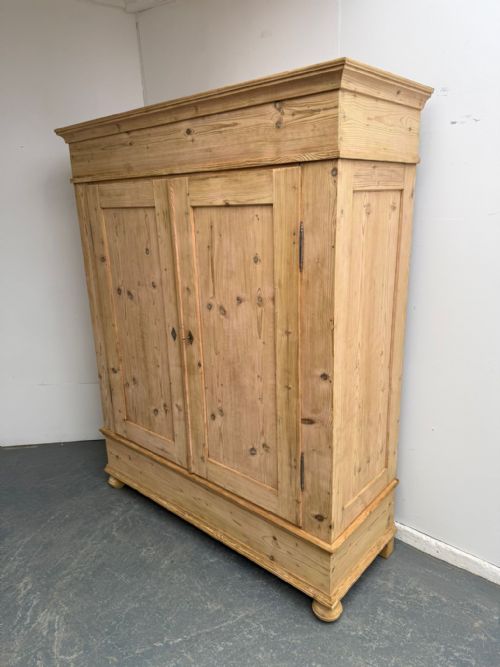
Surfaces exhibit varying treatments, from original or later paint to waxed pine and bleached oak. Many nineteenth-century wardrobes adopted knockdown construction, allowing large carcases to dismantle for transport.
Distinguishing quality and build
Quality rests in the integrity of the timber selection and the retention of original structural elements like panelled doors and internal drawers. Substantial proportions and well-executed mouldings separate exceptional regional pieces from standard utilitarian storage.
The preservation of original surface treatments, whether historic paint or aged beeswax, dictates the character of the piece. Superior examples maintain balanced proportions despite their massive scale, with sound joinery ensuring stability across centuries.
The Large Country Armoire Glossary
- Armoire
- A large upright cupboard or wardrobe used primarily for hanging or folding garments. Traditional examples feature double doors and generous interior depth.
- Knockdown
- A piece of furniture engineered to be dismantled into sections for ease of transport and assembly. This technique was common in large nineteenth-century wardrobes.
- Housekeepers cupboard
- A tall storage piece traditionally utilised for linens, dry goods, and domestic supplies. These functional cupboards often incorporate drawer sections beneath upper cabinet doors.
- Linen press
- A specialised cupboard designed for storing textiles, frequently fitted with internal sliding trays or shelves rather than open hanging space.
Large Country Armoire: Frequently Asked Questions
How do I dismantle a knockdown wardrobe?
Many nineteenth-century wardrobes utilise wedged tenons or internal bolts that secure the cornices, sides, and base together without permanent fixings. Marking each component before removal ensures proper alignment during reassembly in a new room.
Enlisting an extra pair of hands is essential given the heavy timber components involved in these large pieces.
What is the difference between an armoire and a housekeepers cupboard?
An armoire typically provides vertical space for hanging garments behind full-length doors, while a housekeepers cupboard prioritises shelving and internal drawers for linen and household stores. Both share a commanding presence but serve different domestic functions.
Regional variations further distinguish them, with French workshops favouring the armoire form and English makers producing extensive housekeepers cupboards.
How should I care for waxed pine surfaces?
Maintenance involves applying a quality beeswax paste with a soft cloth and buffing to a natural sheen once or twice a year. This nourishes the historic timber and protects against dryness.
Avoid placing these large wooden pieces near direct heat sources or in areas of high humidity to prevent timber movement.
Can these large cupboards fit through standard doorways?
Many period examples feature knockdown construction specifically designed to take apart into flat sections, allowing passage through narrow openings. Solid carcases require careful measurement of both the room access points and the piece itself before purchase.
Checking the dimensions of stairwells and hallways avoids placement issues upon delivery.