
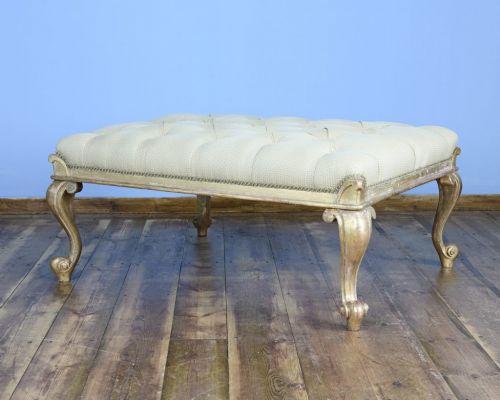
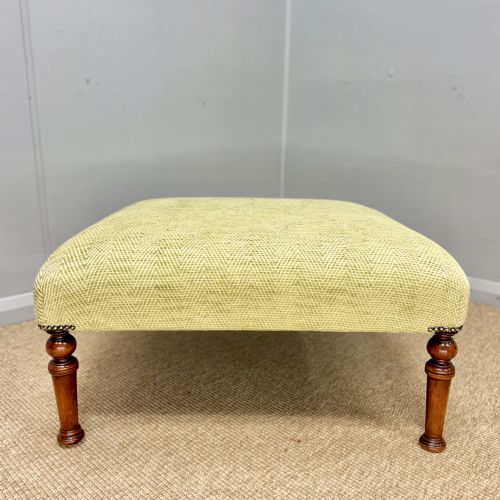

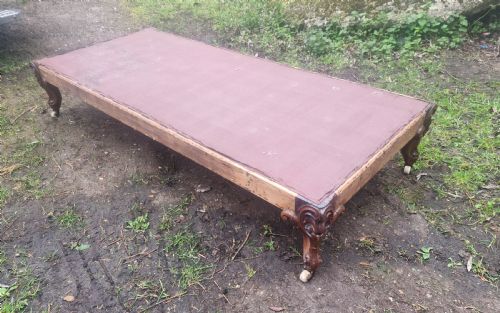


Large Coffee Table Stool
These large coffee table stools bring generous proportions and sturdy wooden frames to a room, serving as flexible low tables or extra seats.
Large Coffee Table Stool
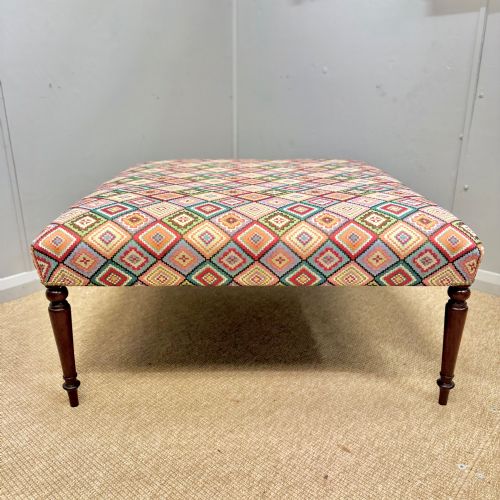
When searching for a large coffee table stool, buyers encounter substantial pieces designed to sit centrally in a room or alongside larger seating arrangements. The examples seen here span the nineteenth century into the nineteen-thirties, taking forms such as centre stools, ottomans, and generous footstools.
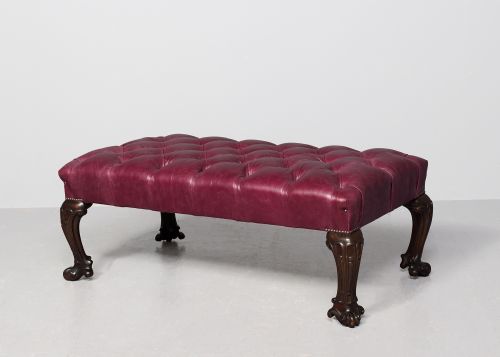
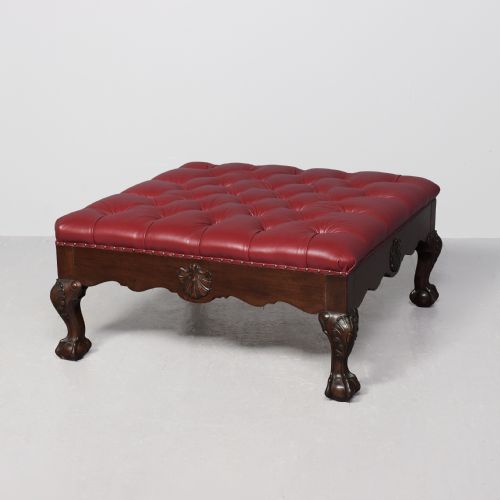
Most pieces on this page originate from the Victorian era and the broader nineteenth century, frequently described as English country house types or Georgian revivals. Woods like mahogany, walnut, oak, and rosewood form the structural bases, often paired with buttoned leather or woven cane tops.
Many items recorded in the evidence double as coffee tables or window seats, showing how low seating adapts to modern living spaces. Plain wooden frames sit alongside carved rosewood, parcel gilt, and Chippendale-style mahogany frames supporting upholstery in hide, fabric, or tapestry.
How they were made
Makers constructed the frames of these large stools from dense hardwoods including mahogany, walnut, oak, and rosewood, ensuring stability across wide spans. Joinery relied on traditional framing techniques to support the weight placed upon deep upholstery or cane seating.
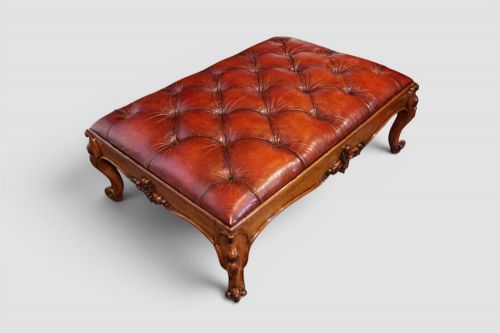
Upholstered surfaces combined supportive webbing or cane bases with padding finished in leather, fabric, or aubusson tapestry. Buttoning secured the hides and textiles firmly to the internal padding, creating the characteristic tufted appearance seen on Victorian and later examples.
Surface treatments varied from hand-dyed finishes on red and burgundy hide to parcel gilding and polished timber grains. Carved details appeared on rosewood and mahogany framework, while simpler oak and cane versions relied on clean structural lines.
One versatile nineteenth-century survivor doubles as a campaign bed when a quick nap calls.
What varies in quality
The choice of timber and the ambition of the frame carving set individual pieces apart. Dense, highly figured walnut and richly carved mahogany command attention, while simpler pine or secondary timbers anchor the more utilitarian country house variants.
Upholstery finish and leather selection dictate the tactile presence of each piece. Hand-dyed hides with deep buttoning and traditional joinery elevate certain stools, while other listings note frames offered specifically for reupholstering.
Proportion and scale distinguish grander examples from standard domestic seating. Pieces built on a grand scale with parcel gilding or elaborate Chippendale-style frames represent the upper tier of nineteenth-century production.
The Large Coffee Table Stool Glossary
- Centre stool
- A large, freestanding stool designed to sit in the middle of a room rather than against a wall. These pieces often function as low tables.
- Ottoman
- A padded seat or footstool without a back or arms, typically upholstered over its entire top surface. Nineteenth-century versions frequently double as coffee tables.
- Buttoned
- An upholstery technique where cords or twine pull the surface down into recessed tufts, securing the internal padding. This method is common on Victorian leather stools.
- Hide
- Animal skin prepared for upholstery use, frequently hand-dyed in red or burgundy tones on nineteenth-century frames. It provides a durable surface for daily domestic placement.
- Chippendale-style
- A revival design drawing on eighteenth-century cabinet-making patterns, characterised by carved mahogany frames and sturdy legs. These pieces reflect later nineteenth-century interpretations of earlier forms.
- Aubusson tapestry
- Woven textile art originating from French workshops, used on the tops of select large stools and window seats. Such panels add pictorial detail to the wooden frame.
Large Coffee Table Stool: Frequently Asked Questions
What is a centre stool?
A centre stool is a large, freestanding piece designed to occupy the middle of a room rather than rest against a perimeter wall. These substantial items provide both low surface space and flexible seating.
In period settings, they functioned as central decorative elements or comfortable footrests, and today they serve widely as generous coffee tables.
How do I use an ottoman as a coffee table?
Using an upholstered ottoman as a coffee table involves placing a stable tray on top to hold books, cups, or decorative objects. The soft surface underneath brings texture and warmth to a room layout.
Many nineteenth-century examples listed in the evidence were built with sturdy wooden frames capable of supporting everyday items alongside occasional seating.
Are these stools sturdy enough for daily seating?
These large nineteenth-century and early twentieth-century stools utilise dense hardwoods like oak, mahogany, and walnut to build stable, weight-bearing frames. Their traditional joinery supports regular use as extra seats.
Buyers should inspect the condition of the internal webbing and upholstery support, as some pieces arrive ready for reupholstering while others retain sound period padding.