



Large Chinese Wall Art
Large Chinese wall art brings striking scale and historic depth into a room, offering everything from reverse glass paintings to painted cart doors.
Large Chinese Wall Art
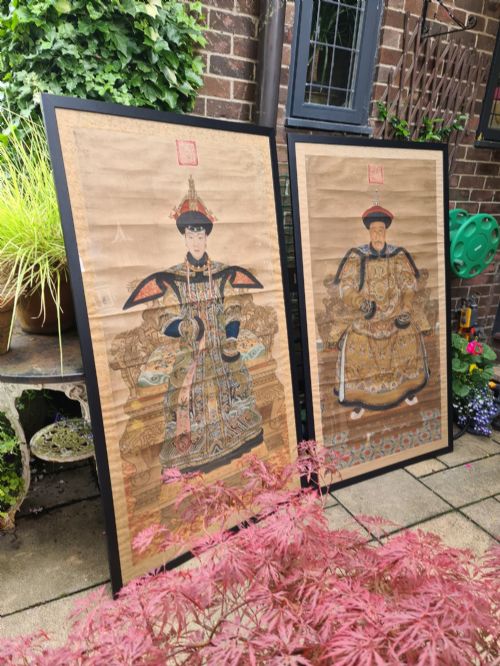
Large Chinese wall art comprises substantial hanging works and architectural elements produced across the eighteenth and nineteenth centuries, alongside early twentieth-century examples. Buyers searching this phrase encounter formats ranging from ancestral scrolls and pith paper gouaches to reverse paintings on glass and painted architectural timbers.
The materials span delicate paper and silk to heavy wood and glass, reflecting both export markets and domestic traditions. Pieces often display styles associated with the Qing dynasty and Chinese export aesthetic, capturing historic subjects and traditional scenes on a grand scale.
How they were made
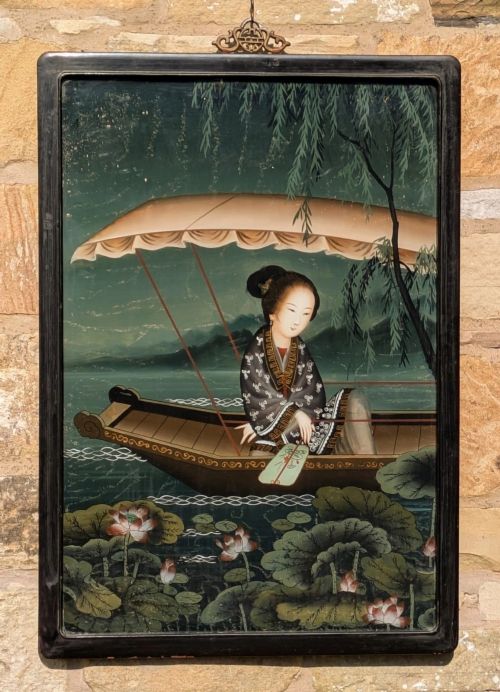
Maker techniques rely heavily on delicate media applied to fragile surfaces, such as ink and gouache on pith paper or watercolours on paper. Artisans also mastered reverse painting on glass, applying intricate details directly to the rear of the pane so the finished image appears clear from the front.
Wood pieces involve heavy structural elements like carved cart doors and display sets incorporating ornamental stones. Brass rubbings capture fine linear details onto textile surfaces, whilst framing often preserves these diverse materials for wall display.
Large Chinese Wall Art Retail Price Guide 2026
Typical asking prices for large chinese wall art among the pieces listed under this phrase on Sellingantiques today, from the lower quarter to the upper quarter. They describe what is for sale here now, not the wider market.
One exceptional listing repurposes a four-foot painted Chinese cart door from seventeen-ninety as a striking piece of wall art.
What varies in quality
Quality rests in the precision of the brushwork and the preservation of delicate materials like pith paper and glass. Finer examples display meticulous detail in facial expressions on ancestral scrolls or crisp execution in reverse glass panels.
The integrity of the original material substrate dictates overall desirability, as fragile paper and glass surfaces require careful historical survival. Structural elements like carved wooden doors show variation in the depth and sharpness of the carving.
The Large Chinese Wall Art Glossary
- Pith paper
- A delicate material formed from the pith of the Tetrapanax papyrifer plant, frequently used for detailed gouache painting in the eighteenth and nineteenth centuries. It has a characteristic velvet-like texture.
- Reverse painting on glass
- A technique where the artist paints directly onto the back of a glass pane, viewed from the unpainted front side to create a glossy finish. This method requires the composition to be planned in reverse.
- Ancestral scroll
- A formal portrait painting on silk or paper, traditionally hung to honour family lineage and domestic heritage. These scrolls often depict figures in official or ceremonial attire.
- Brass rubbing
- An impression taken by placing fabric or paper over a brass plaque or relief and applying rubbing media to capture the design. They record historic motifs and figures with graphic clarity.
- Gouache
- An opaque water-based paint that provides solid colour application and fine detail on paper or pith. It allows for layered highlights and rich chromatic depth.
Large Chinese Wall Art: Frequently Asked Questions
What is large Chinese wall art?
Large Chinese wall art encompasses substantial antique works including reverse glass paintings, ancestral scrolls, and pith paper gouaches.
These pieces reflect historic periods from the eighteenth century through to the early twentieth century, utilising traditional materials and techniques.
How were reverse glass paintings made?
Artists painted directly onto the rear side of a glass sheet, applying fine details and foreground elements first.
When viewed from the front, the glass protects the pigment and imparts a deep, luminous finish to the artwork.
What periods do these pieces date from?
The available selection primarily spans the eighteenth, nineteenth, and early twentieth centuries, capturing various Qing dynasty styles.
Items range from delicate gouaches on pith paper to heavy architectural wood elements and mid-century oil paintings.
How should I hang heavy wall art safely?
Substantial pieces like framed scrolls or painted architectural timbers require appropriate wall fixings suited to the weight of wood and glass.
Consulting a professional framer ensures that delicate antique frames and panels remain secure and properly supported.