


Large Ceramic Ginger Jars
Large ceramic ginger jars bring monumental scale and intricate hand-painted detail to a room, offering both traditional storage forms and striking decorative presence.
Large Ceramic Ginger Jars
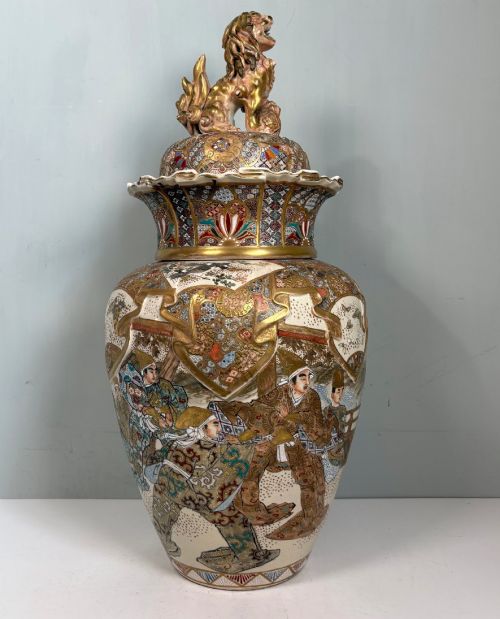
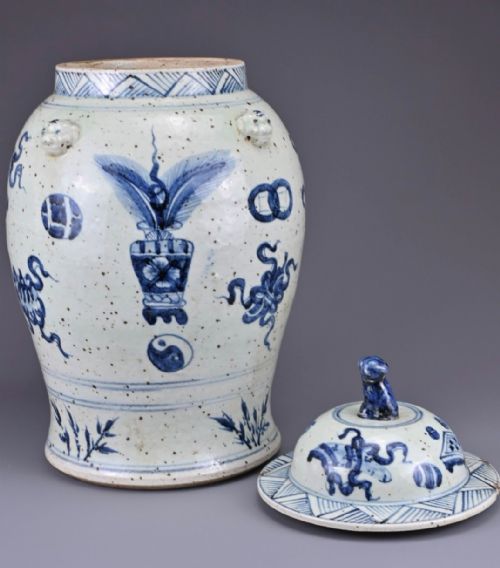
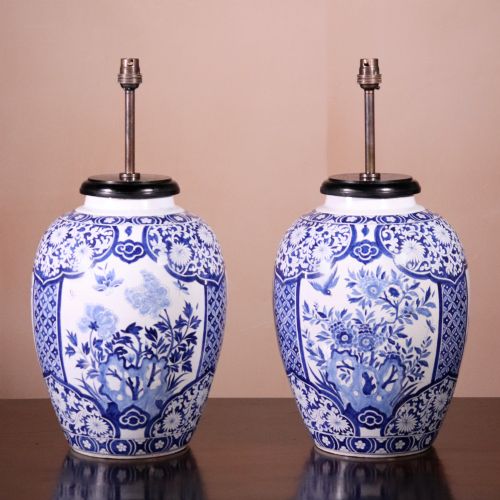
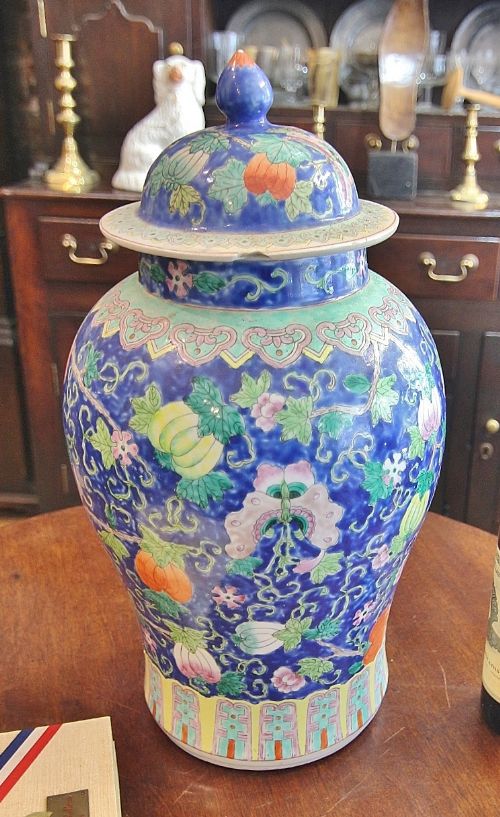
Large ceramic ginger jars encompass substantial lidded vessels, table lamps, and decorative vases originating from Chinese, Japanese, and European kilns. When searching for large ceramic ginger jars, buyers encounter robust nineteenth-century porcelain and ironstone bodies, often decorated in blue and white, Imari, Satsuma, or Kutani palettes.
The selection ranges from eighteenth-century Delft jars and early nineteenth-century Masons ironstone to Meiji period Japanese porcelain and later twentieth-century Chinese pieces. Lidded vases and covered jars dominate the offerings, occasionally adapted into table lamps or paired as matching sets.
How they were made
Potters shaped these large vessels from porcelain, earthenware, and ironstone, applying detailed glazes and enamel pigments by hand. Many pieces incorporate cobalt blue underglaze, polychrome enamel decoration, and occasional gold leaf accents fired at high temperatures.
Makers utilised traditional throwing and moulding techniques to achieve substantial proportions, securing fitted ceramic covers that complete the classic silhouette. European workshops also produced tin-glazed earthenware and Continental maiolica interpretations of Asian forms.
Object forms include traditional lidded vases, heavy hall vases, decorative chargers, and converted table lamps.
What varies in quality
Quality rests in the crispness of the hand-painted brushwork, the depth and clarity of the glaze, and the preservation of the original matching cover. Pieces featuring rich Imari palettes, finely detailed Satsuma crackle glazes, or robust ironstone bodies display superior ceramic handling.
The sophistication of the design transfer, whether a faithful interpretation of earlier Kangxi styles or an elaborate Japanese Meiji period composition, dictates the visual weight and desirability of the vessel.
Masons Ironstone·Samson
The Large Ceramic Ginger Jars Glossary
- Imari palette
- A traditional Japanese decorative scheme utilising cobalt blue, iron red, and gold highlights on a white porcelain ground. This distinctive colour combination appears frequently on nineteenth-century lidded vases.
- Ironstone
- A heavy, durable type of earthenware patented in the nineteenth century to rival porcelain in strength. It provides a dense, opaque body suitable for large hall vases and jars.
- Satsuma
- A type of earthenware originating from Japan, characterised by an ivory-coloured, crackled glaze painted with polychrome enamels and gilding. These pieces often feature elaborate pictorial scenes.
- Maiolica
- Tin-glazed earthenware produced in Europe, particularly Italy and the Continent, often decorated with colourful pigments. Continental examples frequently imitate Chinese porcelain designs in a style known as Chinoiserie.
- Underglaze
- A method of decorating pottery before the final glaze application, where pigments are painted directly onto the unfired or biscuit body. Cobalt blue is the most common pigment used in this technique.
Large Ceramic Ginger Jars: Frequently Asked Questions
How do I date an antique ginger jar?
Dating relies on examining the characteristics of the ceramic body, the formulation of the glaze, and the style of hand-painted decoration. Nineteenth-century examples often exhibit heavier potting and specific regional palettes like Imari or Satsuma.
Base marks, where present, offer further clues, though many decorative pieces carry retrospective or honorary marks referencing earlier emperors or dynasties.
Are these jars waterproof for fresh flowers?
Most antique ceramic and porcelain jars hold water safely, but porous earthenware or pieces with historic hairline cracks require caution. Using a discreet internal glass liner protects the interior glaze from moisture damage.
Inspect the inside of the vessel for any prior restoration before filling it with water.
How should I style a lidded jar at home?
Large ginger jars work well as focal points on sideboards, mantels, or heavy timber tables where their height commands attention. Displaying pairs adds formal symmetry to a room, while single vessels introduce graphic pattern and colour.
Keep the surrounding surfaces relatively uncluttered to allow the intricate painted details of the porcelain to stand out.