

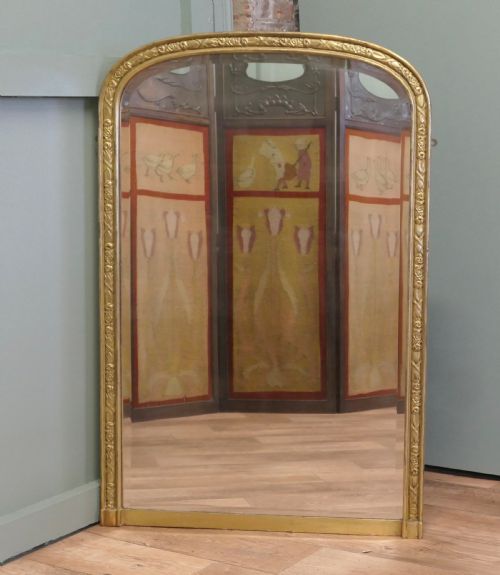
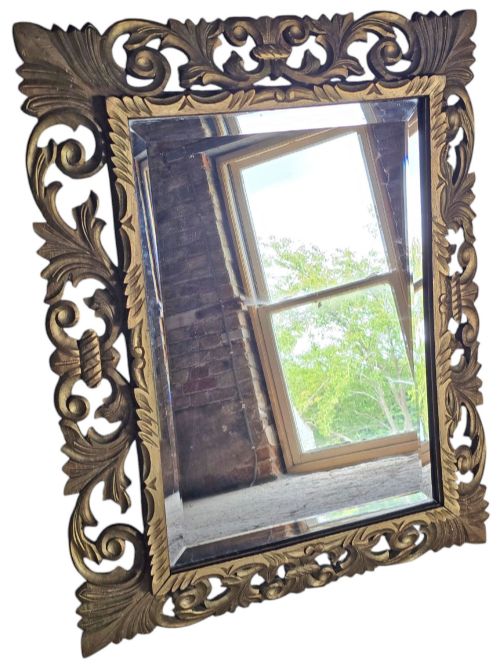
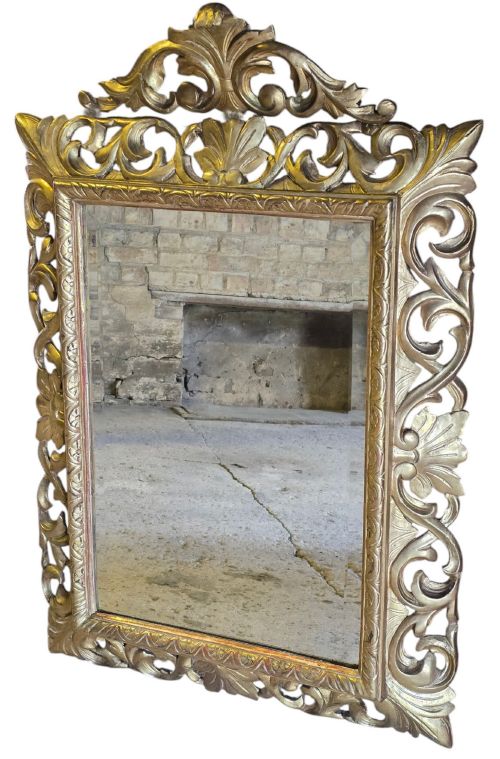
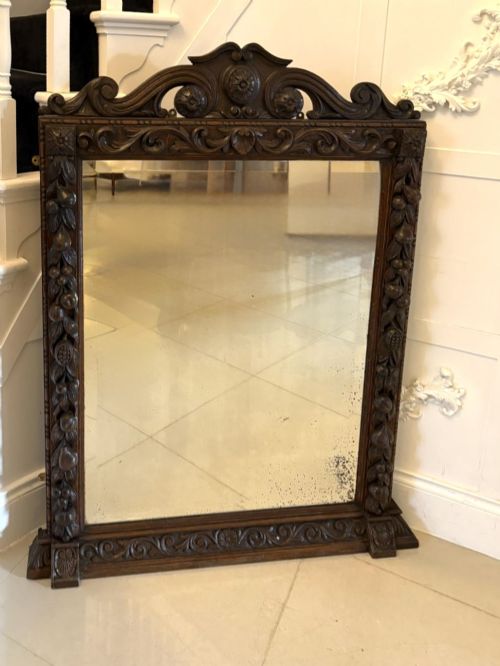
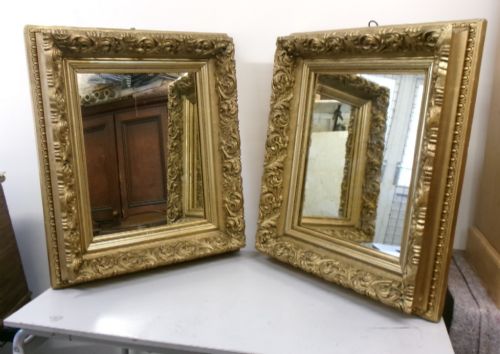


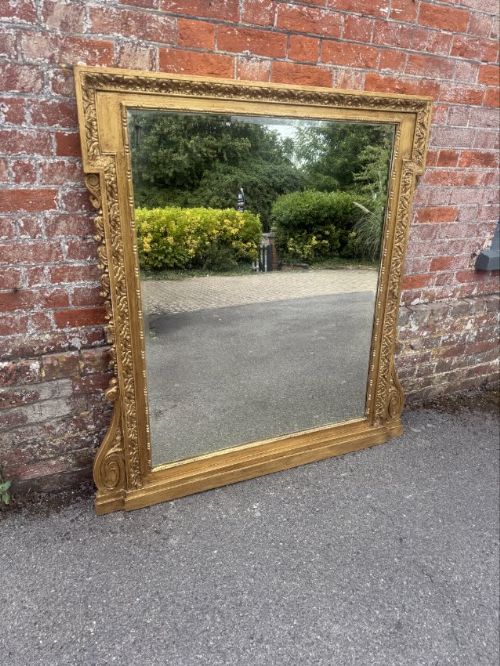
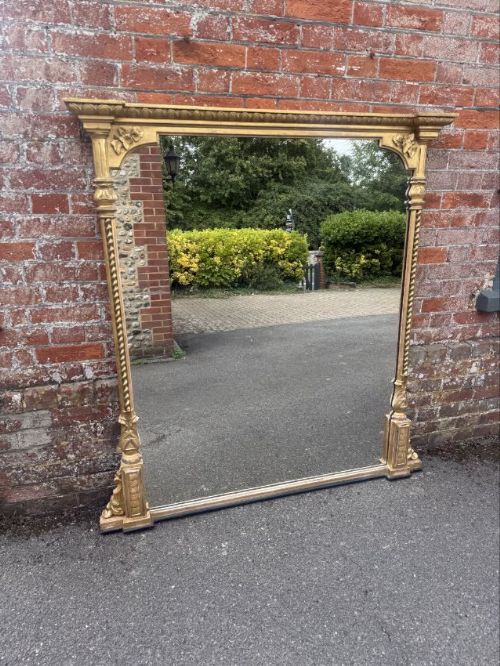
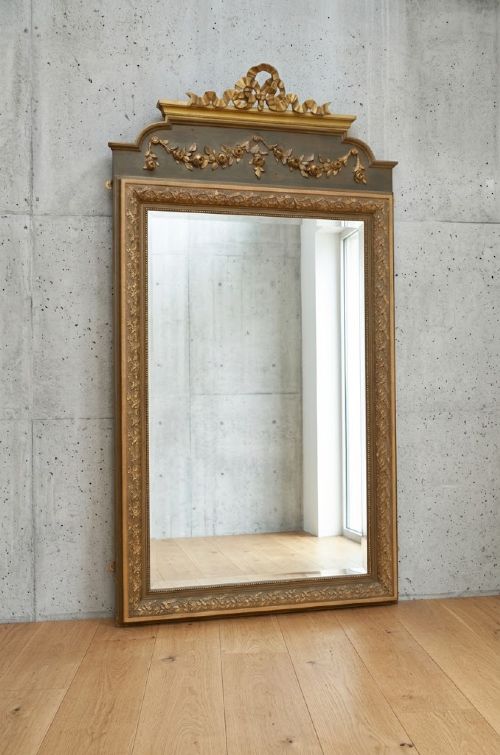
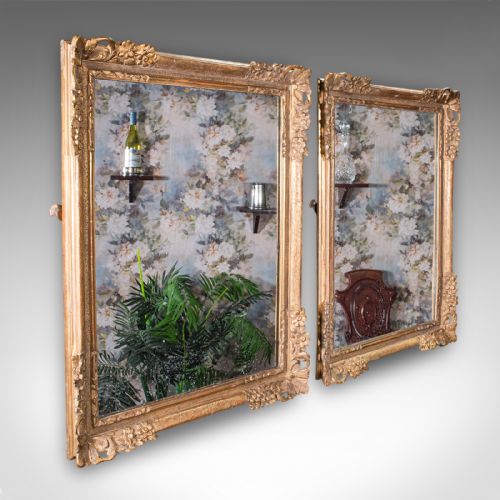
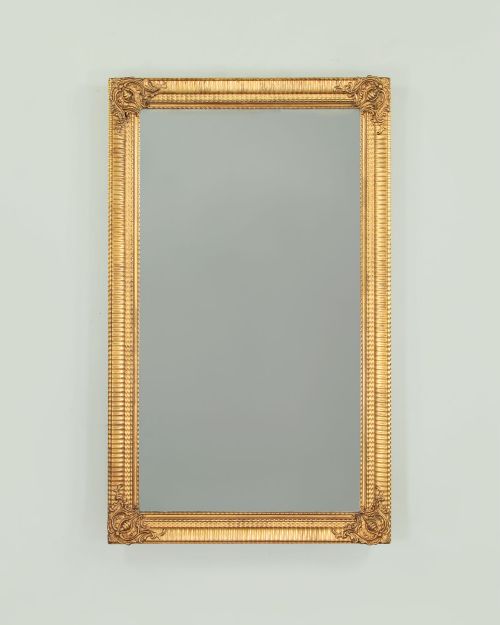
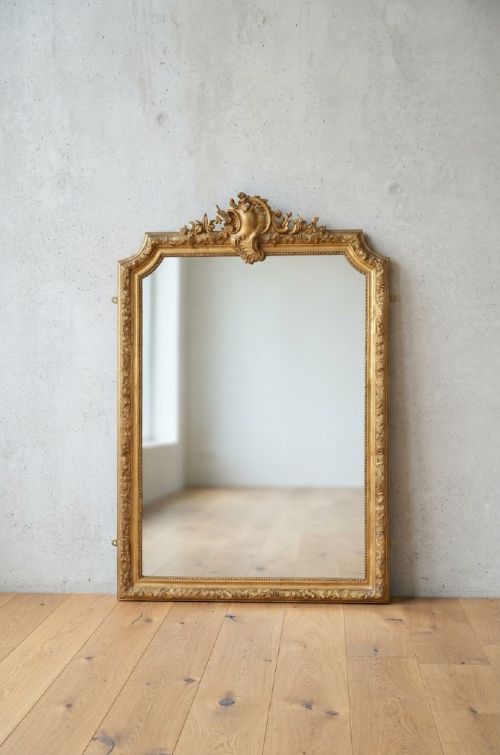
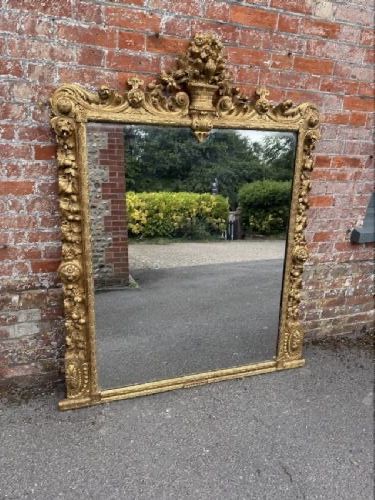
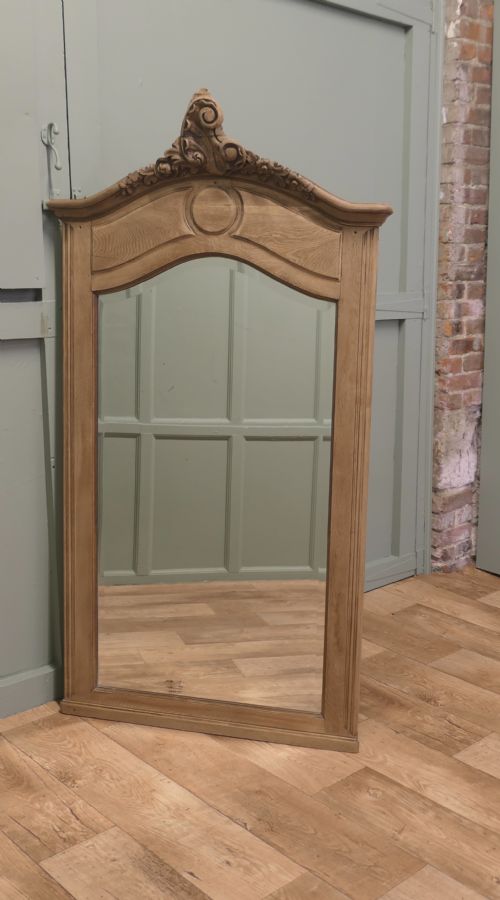
Large Carved Overmantel Frame
When you search for a large carved overmantel frame, you are looking for substantial architectural mirrors designed to anchor a room.
Large Carved Overmantel Frame
A large carved overmantel frame typically encounters the viewer as a substantial wall mirror designed to hang above a fireplace or serve as a leaner mirror in a principal room. You will most frequently meet these pieces shaped by nineteenth-century hands, spanning Victorian, French Chateau, and Florentine design idioms.
The objects take various physical forms in the listings, predominantly appearing as overmantel mirrors, wall mirrors, and pier glasses with arched, shaped, or rectangular tops. Walnut, oak, and mahogany provide the structural timber base for many examples, while others rely entirely upon gesso and giltwood for their decorative presence.
Originating largely from English and French workshops, these frames often incorporate specific ornamental motifs such as rope twists, tulip patterns, ribbon crests, and column framing. They function simultaneously as functional reflecting surfaces and prominent decorative statements within nineteenth-century domestic interiors.
How they were made
Maker's hands built the structural carcass of a large carved overmantel frame using solid timbers such as oak, walnut, or mahogany, providing a rigid foundation for the heavy glass plates. Carpenters carved decorative elements directly into the wood or assembled shaped mouldings to form the primary architectural profile.
Gilders applied gold leaf or composition over layers of gesso built up upon the carved wooden substrate, creating the characteristic reflective metallic surfaces seen across the period. This plaster-like gesso medium allowed artisans to achieve crisp relief details like rope twists, floral ribs, and elaborate crests before the gilding process took place.
Listings feature nineteenth-century pieces spanning the Victorian, Regency, and Edwardian eras, constructed from oak, walnut, giltwood, and gesso.
What varies in quality
Depth and crispness of the hand-carved ornament distinguish finer examples from simpler production, particularly where gesso is modelled into complex rope twists or floral motifs rather than cast in repetitive sections. The integrity of the underlying timber carcass and the survival of the original gilding dictate the overall authenticity and visual weight of the piece.
The nature of the mirror glass itself alters the character of the object, with original mercury plates or foxed glass offering distinct visual depth compared to modern replacements. Superior frames maintain tight joinery at the corners despite the immense physical strain exerted by heavy wooden frames and large glass plates over centuries.
The Large Carved Overmantel Frame Glossary
- Overmantel mirror
- A large mirror specifically designed to be positioned on the wall directly above a mantelpiece or fireplace. These pieces often feature wide horizontal proportions or tall arched tops.
- Gesso
- A plaster-like preparation mixture used as a base for moulding intricate surface ornament on wooden frames before gilding. Artisans apply it in layers to achieve sharp sculptural detail.
- Giltwood
- Wood, typically carved timber, that has been covered with gold leaf or metallic powder. It forms the primary decorative finish for many nineteenth-century wall mirrors.
- Pier glass
- A tall mirror designed specifically to hang on the narrow section of wall between two windows. They frequently match console tables placed below them.
- Foxed glass
- Mirror glass that has developed dark spots or mottled patches over time due to the degradation of the silver backing. Collectors often prize this characteristic for the gentle age it imparts.
Large Carved Overmantel Frame: Frequently Asked Questions
Where should an overmantel frame hang?
These large frames traditionally anchor the space directly above a fireplace mantel, where their horizontal or arched proportions balance the hearth below. They also function successfully as leaner mirrors placed directly on the floor against a principal wall.
Placement requires careful consideration of the wall structure due to the considerable weight of the timber and glass combined. Secure fixings into solid masonry or studwork are essential to support these heavy architectural pieces safely.
How do I identify nineteenth-century frames?
Nineteenth-century frames reveal their age through construction methods, tool marks on the timber backing, and the composition of the gesso ornaments. Examining the rabbet behind the glass often exposes hand-sawn boards and early fixings.
The style of the carving and the specific application of gold leaf over red bole provide further chronological markers. French Louis Philippe and Victorian revival pieces each carry distinct decorative vocabularies typical of their decades of origin.
What is mercury glass?
Mercury glass refers to antique mirror plates created by applying a tin and mercury amalgam behind the glass plate. This historical technique produces a softer, deeper reflection than modern aluminium-backed mirrors.
Over time, chemical interactions cause the backing to develop characteristic foxing and dark clouding. This natural ageing process distinguishes genuine early plates from modern replacements.
Are these mirrors very heavy?
These objects possess substantial physical weight resulting from dense hardwood carcasses, thick gesso mouldings, and heavy glass plates. Moving and hanging them demands at least two people to prevent damage to the frame corners.
The weight distribution requires robust hanging hardware attached securely to the wall studs or masonry. Standard picture wire is entirely inadequate for securing large antique overmantels.