
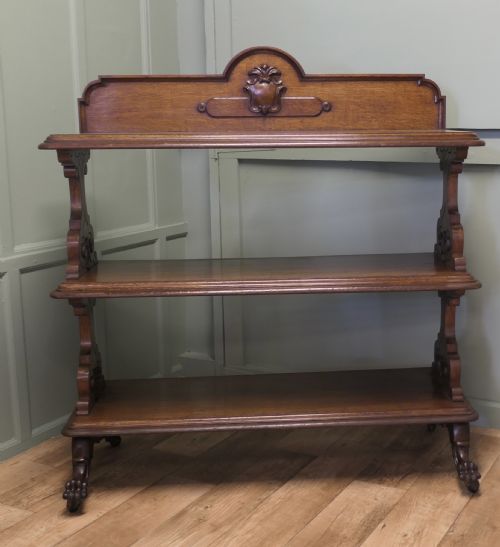
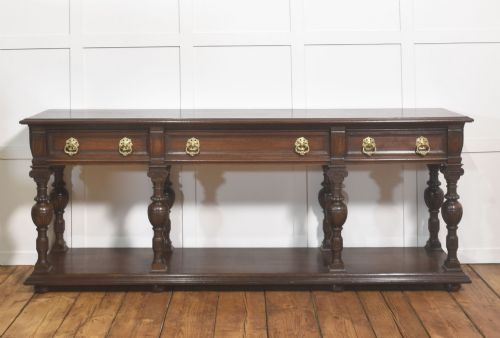
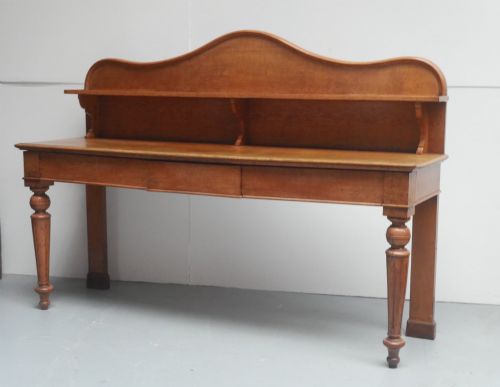
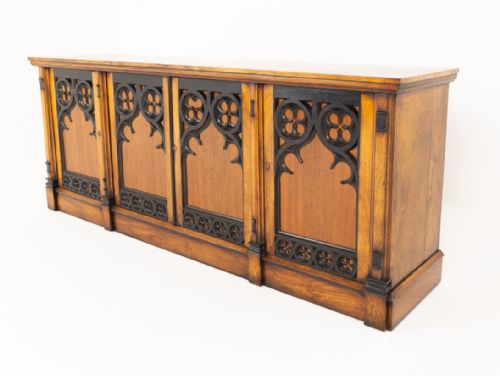

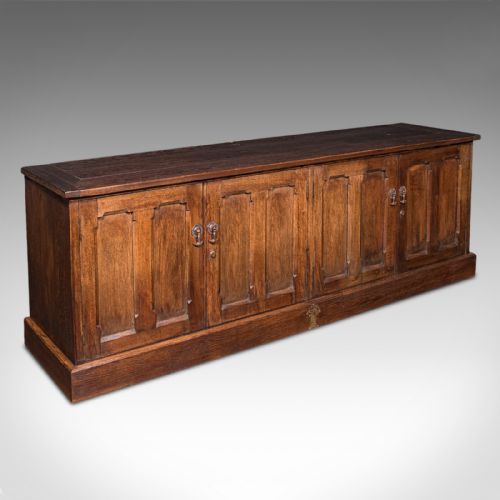


Large Carved Oak Sideboard
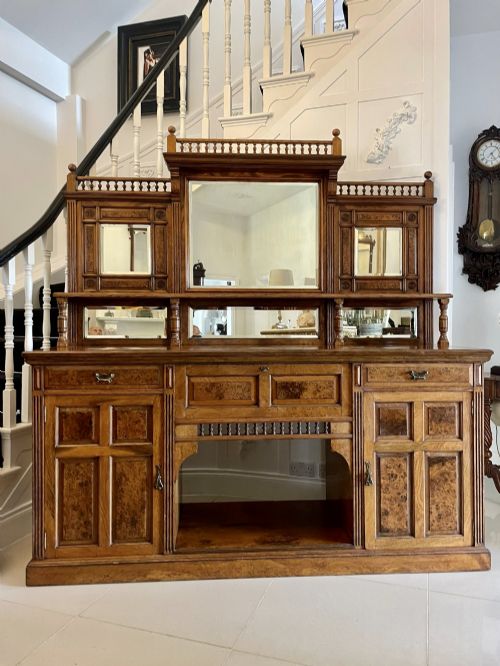
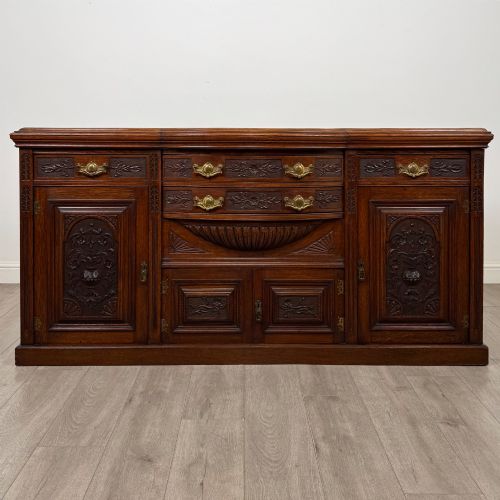
A large carved oak sideboard commands a room with architectural weight and deep timber grain.
Large Carved Oak Sideboard
When you search for a large carved oak sideboard, you encounter substantial dining room and hall furniture built to display wealth and store silver or linen. The pieces on this page span the eighteenth century to the early twentieth century, with a heavy concentration of Victorian and Edwardian examples.
The format ranges from mirror-backed pedestals and grand buffets to court cupboards and dresser bases. Scottish and English regional pieces appear frequently, alongside continental interpretations showing Flemish or baroque influences.
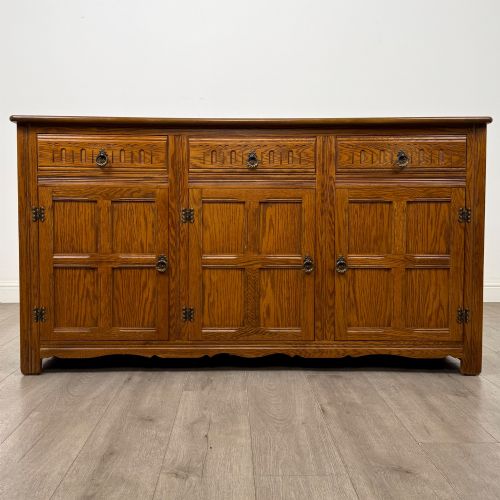
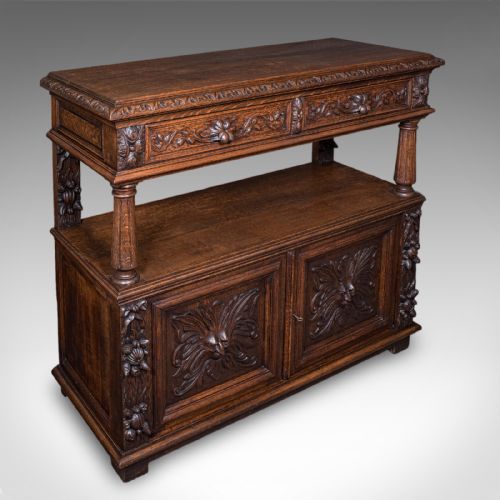
Victorian mirror-backed variations dominate the selection, often carrying deep relief carving, Green Man motifs, and flanking cabinets. Earlier eighteenth-century pieces favour panelled doors and simpler architectural mouldings over exuberant ornamentation.
Materials and Construction
Solid oak provides the primary structural framework for these pieces, supplemented by figured pollard oak veneers on grander Victorian facades. Timber was selected for durability and pronounced medullary rays, then seasoned to withstand domestic heating.
Carving was executed by hand using gouges and chisels to create deep relief foliage, strapwork, and figural elements. Secondary woods like pine or deal appear in internal carcases, drawer linings, and backboards.
Glass mirrors, brass drop handles, and iron hinges furnish the functional hardware. Mirror plates in Victorian examples are often bevelled and set into heavy carved wooden frames secured to the superstructure.
The listings span the eighteenth, nineteenth, and twentieth centuries, utilising materials including oak, pollard oak, brass, glass, and ebonised wood.
Judging Quality
The distinction between ordinary and exceptional pieces lies in the crispness and depth of the hand carving. Superior examples display undercut foliage and expressive figures rather than shallow, mechanical stamping.
Timber selection dictates visual hierarchy, with figured pollard oak and tightly quarter-sawn oak commanding attention over plain planks. Grain alignment across drawer fronts and door panels reveals the cabinetmaker's discipline.
Structural integrity depends on heavy dovetailed drawer construction and stable carcases that support massive superstructures without sagging. Original brass hardware and undamaged bevelled mirror glass elevate the standing of a piece.
The Large Carved Oak Sideboard Glossary
- Pollard oak
- Oak timber taken from a tree that was pruned at a height above animal browsing, producing highly figured, clustered grain patterns. This decorative veneer frequently surfaces on mid to late nineteenth-century cabinet work.
- Court cupboard
- An ancient form of heavy storage furniture featuring an upper enclosed section supported by columns above a larger lower cabinet. These early pieces emphasise panelled construction and linear mouldings.
- Green Man
- A sculptural architectural ornament depicting a human face disgorging or entwined in foliage and vines. It symbolizes rebirth and appears with frequency on nineteenth-century Gothic revival carvings.
- Pedestal sideboard
- A heavy dining room form featuring two large floor-standing pedestals connected by a central counter or serving surface. They often incorporate wine bins or cellarettes within the lower pedestals.
- Dresser base
- A low utilitarian table fitted with drawers and pot boards beneath, originating in the country kitchen. Later Victorian iterations adopted heavier proportions and elaborate oak carving to suit formal dining rooms.
Large Carved Oak Sideboard: Frequently Asked Questions
Where should I place a large carved oak sideboard?
These imposing cabinets require a spacious dining room, hallway, or grand reception room with sufficient wall space and ceiling height to absorb their bulk. Positioning them away from direct heat sources prevents the solid oak and veneers from drying and splitting.
Because mirror-backed versions reflect light, placing them opposite a window brightens darker corners while showcasing the carved details.
How do I care for antique oak furniture?
Maintain the timber by applying a natural beeswax polish sparingly and buffing it with a soft cloth to nourish the grain. Avoid silicone sprays and modern liquid polishes, which build up a hazy film over decades of accumulated wax.
Keep the room at a stable relative humidity to prevent the massive oak panels from expanding or shrinking against their joints.
How do I date an oak sideboard?
Examine the construction methods inside the drawers and at the back of the carcase to determine the period. Hand-cut dovetails, tool marks, and secondary woods like pine indicate nineteenth-century or earlier manufacture.
Stylistic cues such as Gothic arches, linenfold panels, or Renaissance revival strapwork provide a framework, though revival movements often replicated earlier centuries.
Can I store heavy items inside them?
The sturdy oak construction and thick shelving of these sideboards easily accommodate heavy dinner services, cast iron cookware, and large serving platters. The lower cupboards and cellarette drawers were originally designed to bear the weight of dense ceramics and bottled wine.
Ensure the floor beneath is level to prevent the heavy doors from dropping out of alignment over time.